



Tapered Column Candlesticks
Tapered column candlesticks bring architectural dignity to a table, offering upright lines forged in silver, brass and bronze across centuries of design.
Tapered Column Candlesticks
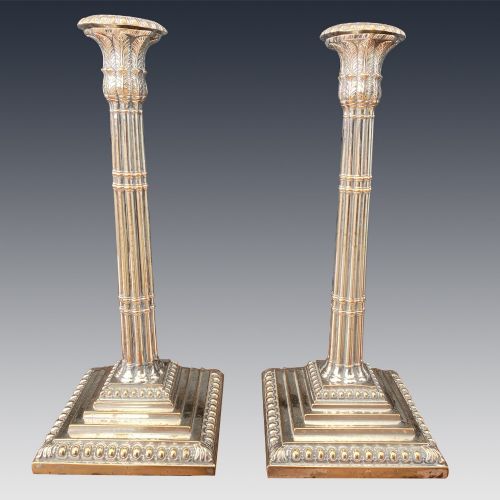
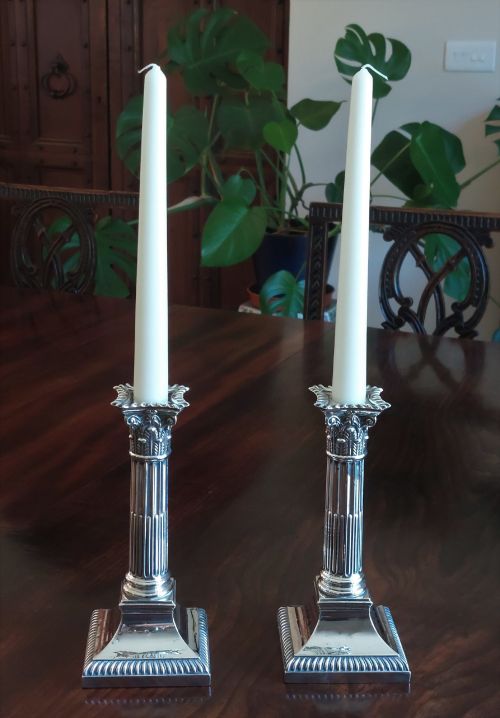
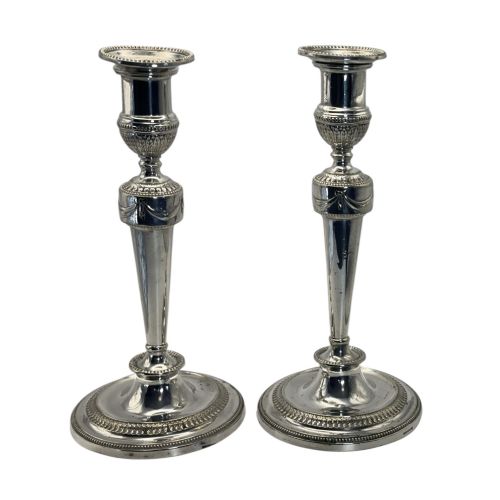
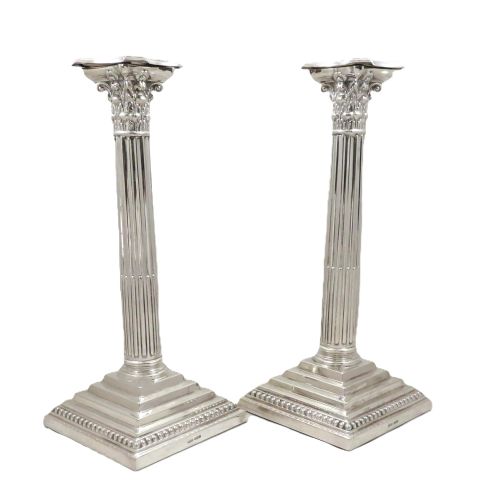
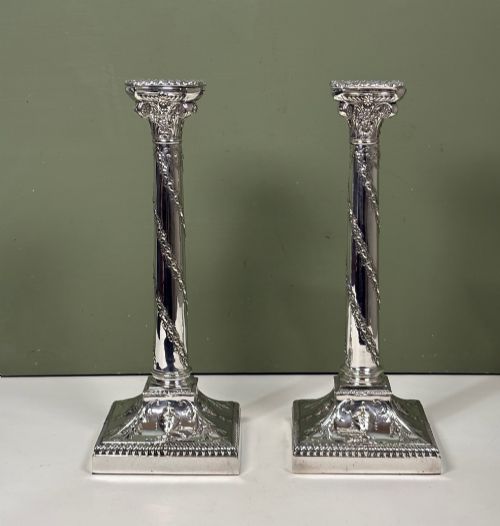
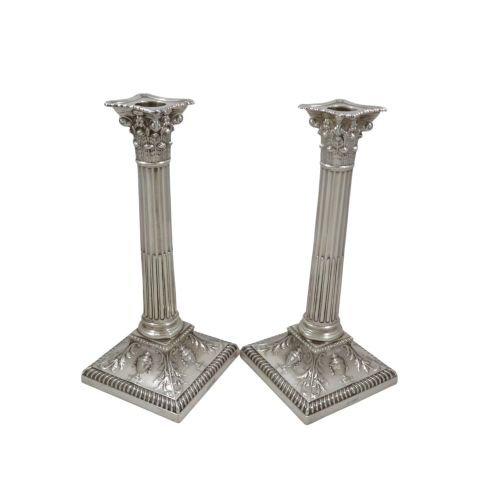
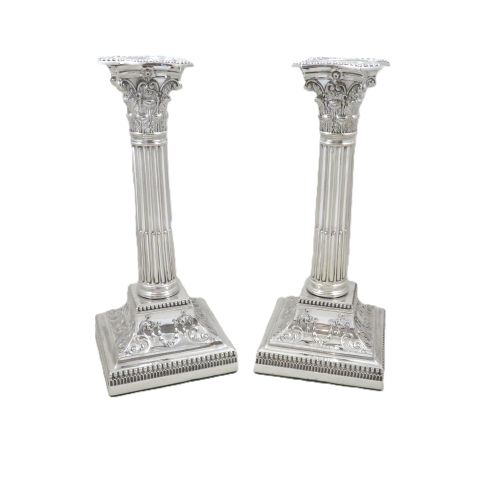
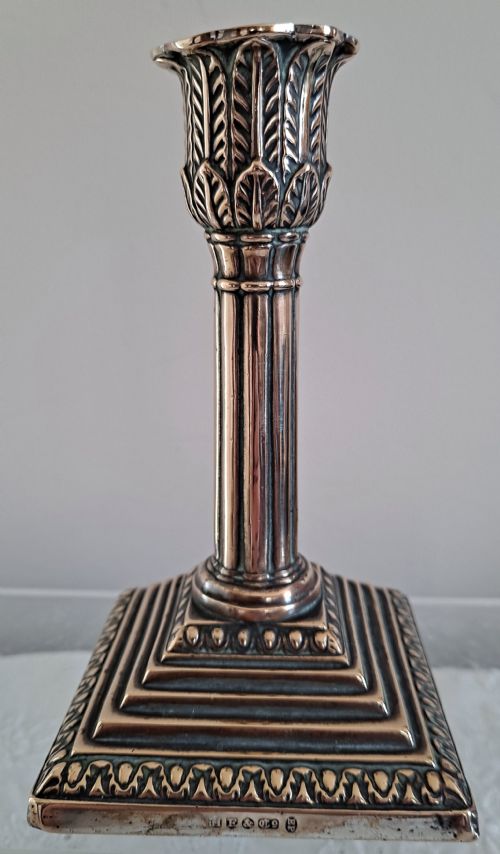
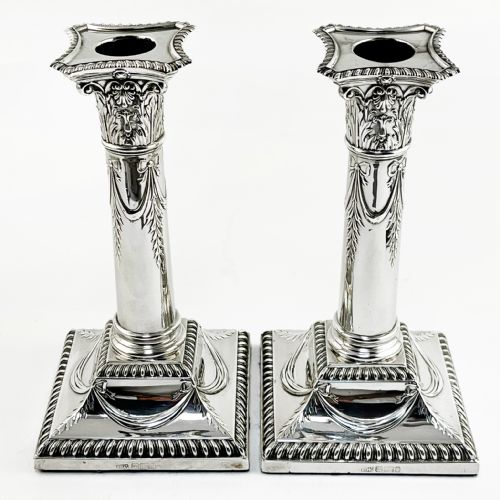
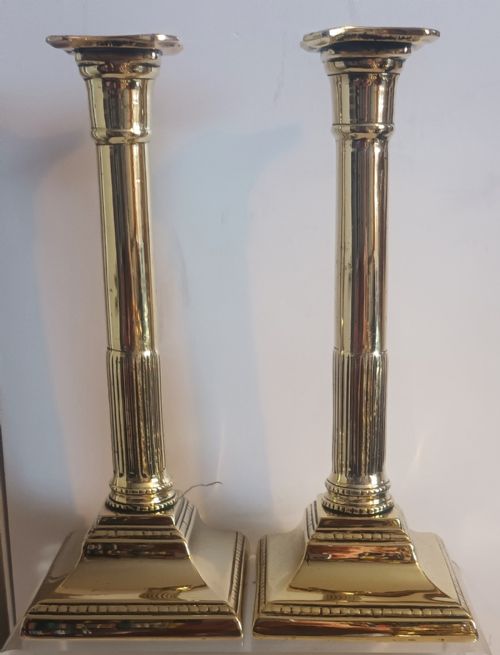
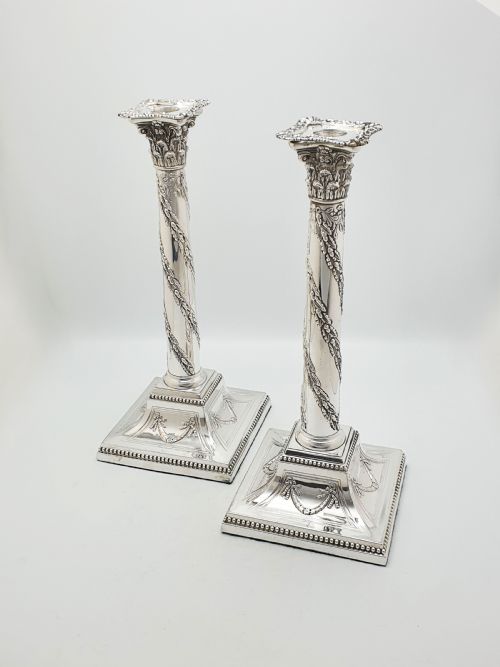
Tapered column candlesticks form an architectural group defined by shafts that narrow steadily toward the top beneath a supporting drip pan and nozzle. These lighting pieces emerge across various centuries, drawing inspiration from classical building orders adapted for domestic interiors.
The versions most commonly met on this page span the Georgian, Victorian and Edwardian eras, executed in sterling silver, silver plate and heavy brass. Makers frequently adopted the Corinthian order for the capitals, casting columns with fluting or smooth tapering profiles.
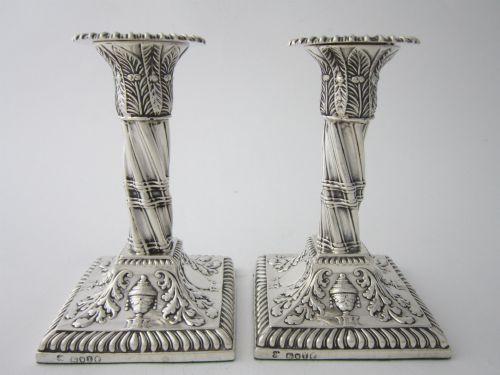
Examples range from compact desk variants to tall mantelpiece pairs and four-piece sets. Creators styled these items using Neoclassical, Empire and Art Deco motifs, matching the prevailing architectural tastes of their respective periods.
Materials and Techniques
Metalworking techniques dictate the construction of these items, utilising sterling silver, silver plate on copper or base metals, cast brass, bronze and silvered bronze. Silver smiths formed columns by spinning sheet metal or casting components separately before soldering them together around a weighted interior core.
Brass and bronze pieces rely heavily on sand casting or lost-wax methods, producing solid or hollow shafts with crisp surface detailing on the capitals and bases. Old Sheffield plate methods fuse a silver sheet onto a copper base before shaping, visible in older examples from the Georgian period.
Some nineteenth-century examples incorporate hidden glass inserts inside the column to add internal weight and prevent tipping during lively dinner parties.
Evaluating Quality
Quality rests in the crispness of the casting and the proportional balance between the stepped base, the slender shaft and the capital. Superior examples maintain sharp relief on acanthus leaves or fluting, whereas lesser pieces suffer from softened details due to worn moulds or excessive polishing.
Substance and structural integrity separate standard production from finer workshop output, particularly in silver and plate where weighted bases provide a reassuring heft. The presence of original removable sconces and matching hallmarks across multi-piece sets elevates the standing of the work.
Conrad Eduard Mappe·Garrard & Co·Mappin & Webb·John Pound & Co·Thomas Bradbury & Sons Ltd·Ferdinand Barbedienne
The Tapered Column Candlesticks Glossary
- Capital
- The uppermost decorative member of a column, situated directly beneath the candle nozzle. It frequently takes the form of carved acanthus leaves in the Corinthian style.
- Sconce
- A removable metal pan inserted at the top of the candlestick to catch dripping wax. This component protects the capital and makes cleaning easier.
- Old Sheffield Plate
- An early plating technique fusing a thin layer of sterling silver to a copper ingot. This method produces a distinct warm tone as the underlying copper occasionally telegraphs through.
- Neoclassical
- A decorative style inspired by the classical architecture of ancient Greece and Rome. It emphasises symmetry, straight vertical lines and classical orders.
Tapered Column Candlesticks: Frequently Asked Questions
What are tapered column candlesticks?
These items are domestic lighting fixtures featuring upright shafts that narrow toward the top, styled after classical architectural pillars.
Craftsmen produced them in precious metals and base alloys to illuminate dining tables, sideboards and desks during the eighteenth, nineteenth and early twentieth centuries.
How were tapered column candlesticks used?
Households deployed them in pairs or sets of four to provide ambient illumination in principal rooms before the widespread adoption of electric lighting.
Servants moved them between chambers using dedicated desk variants, or positioned them on mantelpieces to reflect candlelight off mirrors and polished wood.
How do I date a candlestick?
Dating relies on examining silver hallmarks, maker stamps, stylistic revival cues and manufacturing techniques like Old Sheffield plating.
Georgian and Victorian pieces display distinct base weightings, assembly seams and decorative motifs that align with the prevailing architecture of their era.
How do I live with antique candlesticks?
Integrating them into modern interiors involves placing pairs on dining tables, sideboards or mantels as sculptural metalwork objects.
Care requires gentle cleaning with appropriate metal polishes and avoiding abrasive cloths that wear down thin silver plate or crisp brass casting details.