





Church Altar Candlesticks
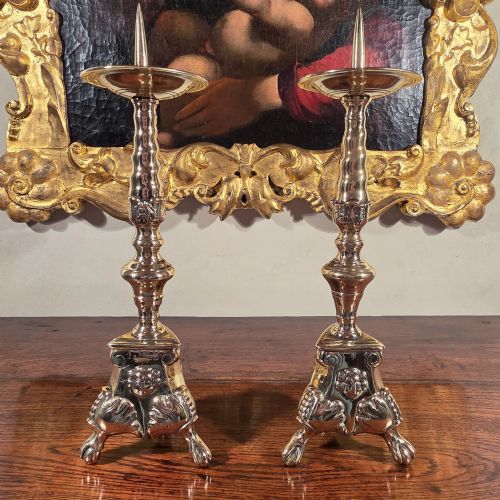
Church altar candlesticks bring heavy architectural presence and solemn liturgy into a room, most often appearing here as tall brass pairs from the Victorian period.
Church Altar Candlesticks
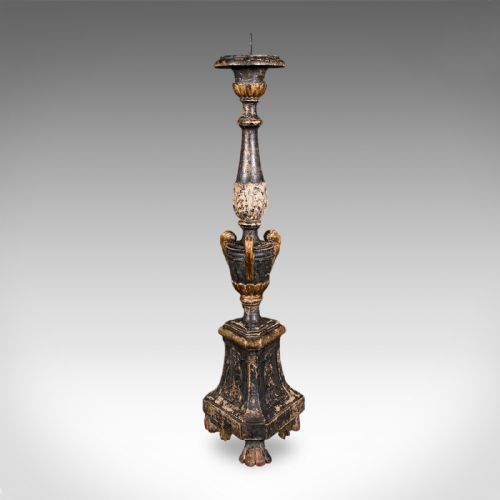
When you search for church altar candlesticks, you are looking at tall, imposing altar lighting designed for ecclesiastical spaces, ranging from solid brass pairs to carved wooden forms. The pieces available here draw heavily from the 19th century and the Victorian era, alongside Georgian and 18th-century Italian examples.
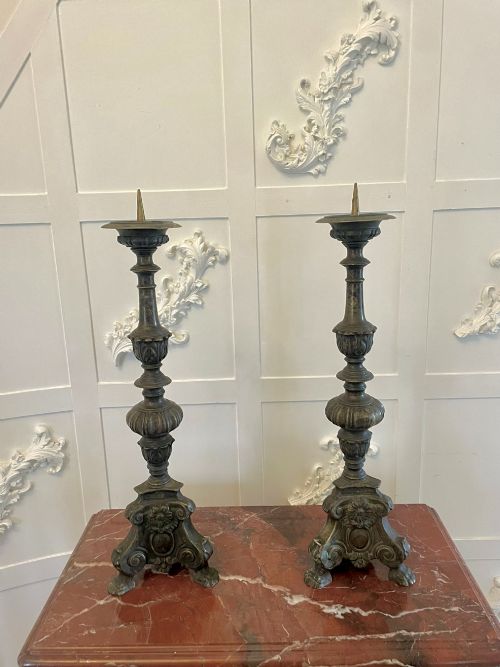
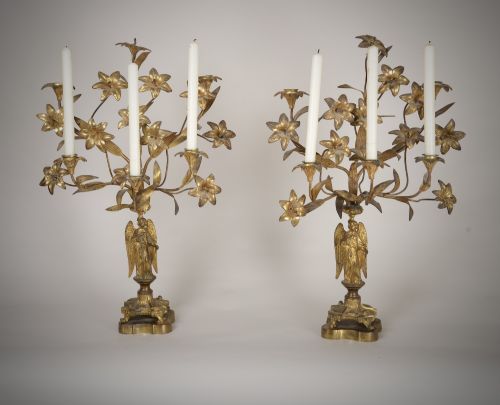
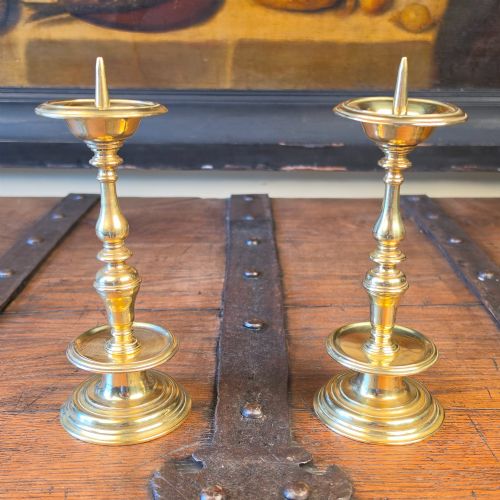
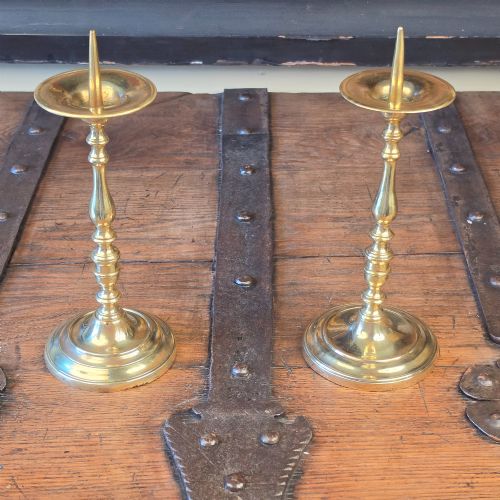
You will encounter standard candle holders, pricket sticks that hold candles on a central spike, and taller torcheres or candelabra. Many of these items originate from English, French, and Italian ecclesiastical workshops, spanning periods from the 17th century through to the early 20th century.
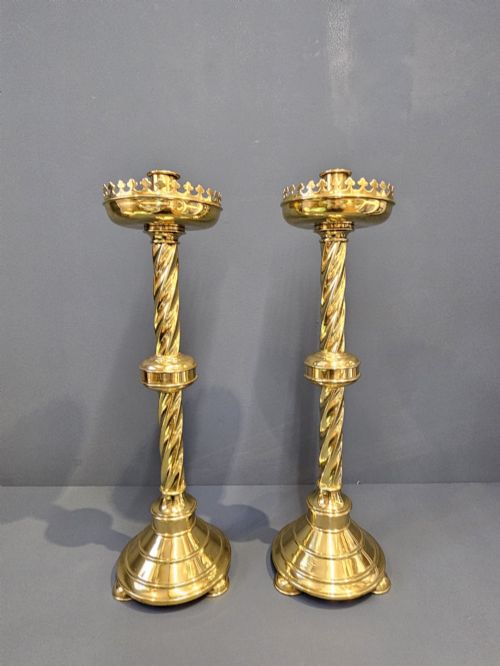
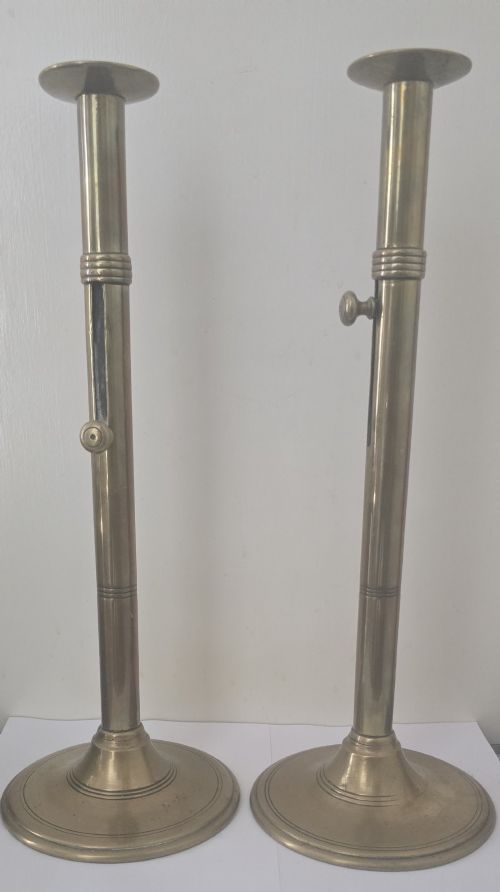
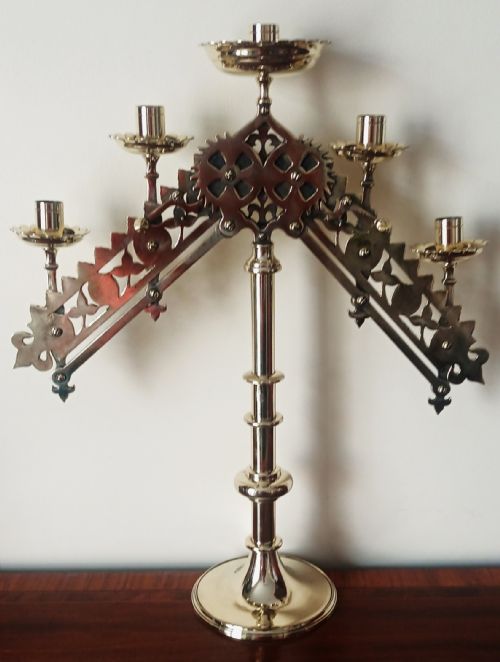
The most common version to meet on this page is the Victorian or 19th-century brass church candlestick, often standing with significant height. These range from plain shafts to ornate Gothic Revival designs, and occasionally appear adapted as table lamps.
Materials and Techniques
Brass dominates the metalwork in these listings, cast and turned into substantial columns, sockets, and heavy bases. Bronze and iron also appear, particularly in heavier pricket configurations and Amsterdam School designs.
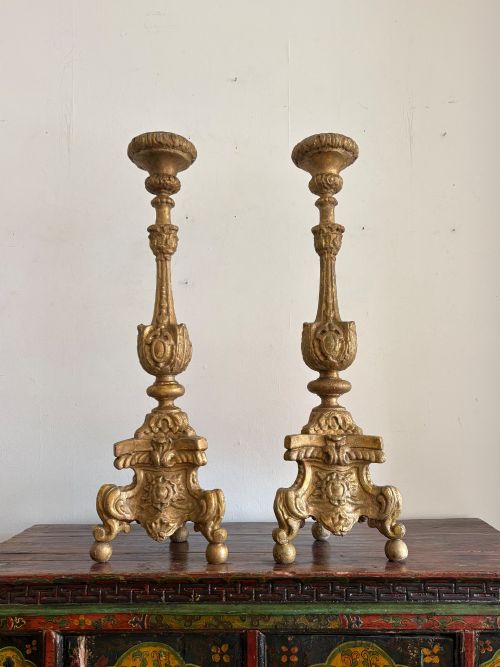
Wooden examples rely on carved pine, gesso, and giltwood, frequently finished with silver leaf or polychrome paint to mimic heavier gilding. These carved wooden altar pieces reflect traditional craftsmanship from continental workshops, notably in Italy and France.
Listings feature items spanning the 18th, 19th, and early 20th centuries, created in brass, giltwood, bronze, and carved wood.
Craftsmanship and Proportion
The distinction between ordinary and exceptional church altar candlesticks lies in the weight of the casting and the crispness of the turning. Heavy brass pieces with well-defined mouldings and original prickets hold their architectural integrity better than lighter, hollow forms.
For wooden pieces, the depth and hand-carving of the gesso and giltwood separate standard decorative items from superior liturgical pieces. Proportion and scale dictate the visual weight, with taller matched pairs commanding greater presence in a room.
The Church Altar Candlesticks Glossary
- Pricket
- A sharp metal spike on top of a candlestick designed to secure a large candle, common on ecclesiastical pieces. This spike predates standard socket holders.
- Giltwood
- Wood that has been coated with fine gold leaf or gold powder over a prepared gesso surface. It appears frequently on Italian and French altar pieces.
- Gothic Revival
- An architectural and decorative style popular during the Victorian period that imitates medieval Gothic forms. It uses pointed arches and heavy ecclesiastical motifs.
- Torchere
- A tall stand or ornamental candlestick designed to hold a light source high above the floor. These pieces often feature carved wooden shafts.
- Ejector
- A small internal mechanism found on certain candlesticks that pushes the candle stub upward. This practical addition appears on Georgian examples.
Church Altar Candlesticks: Frequently Asked Questions
How were church altar candlesticks used?
These candlesticks stood upon church altars to hold large candles during liturgical services and ceremonies. Their height ensured the light carried across the wider ecclesiastical interior.
Today, they function primarily as decorative architectural statements or floor-standing illumination within domestic interiors.
What is a pricket candlestick?
A pricket candlestick uses an upright metal spike instead of a hollow socket to mount the candle. The base of the candle is pressed directly onto this point.
This design was standard for large church candles before socket-style holders became widespread.
Can I use these candlesticks with modern candles?
Socket candlesticks accommodate standard tapered candles, though older diameters can vary slightly from modern sizing. Pricket candlesticks require candles with a soft base that can be pressed onto the spike.
Many people display them unlit purely for their sculptural and decorative form.
How do I date an antique church candlestick?
Dating relies on identifying the prevailing style, such as Georgian, Victorian Gothic Revival, or Amsterdam School, alongside the casting methods used on the metal. Wear patterns on the base and the construction of the joints also indicate the period.
Earlier pieces from the 17th and 18th centuries often show heavier hand-finishing and distinct patination compared to 20th-century reproductions.