
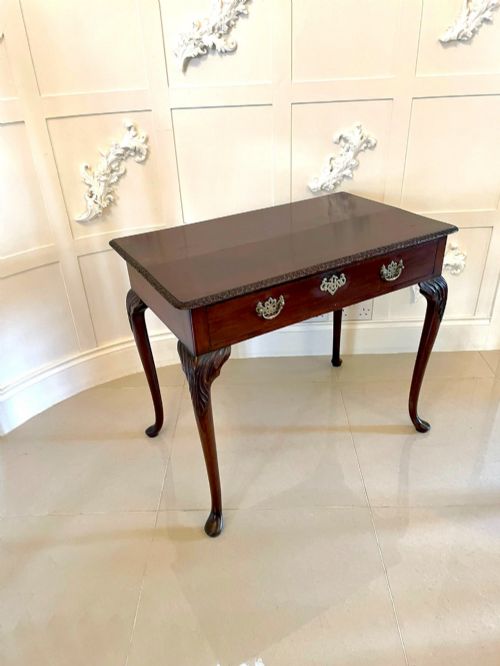
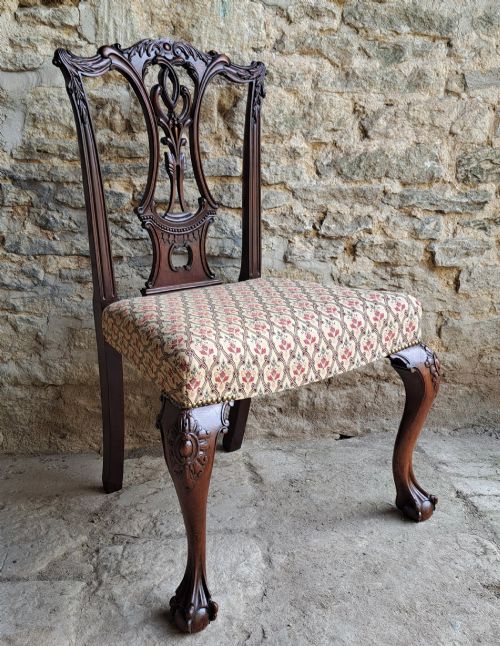
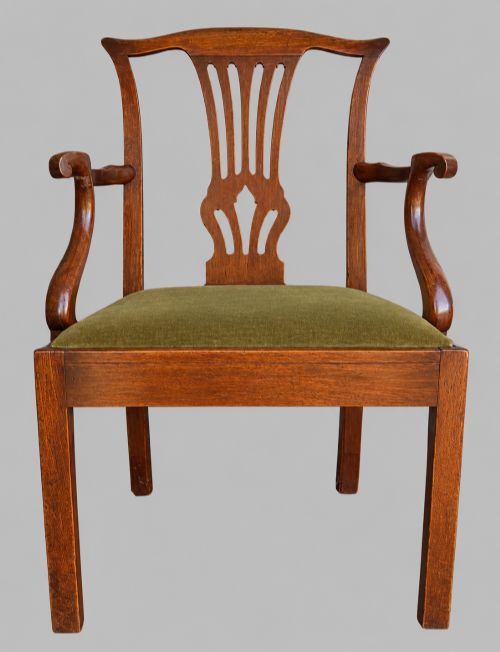
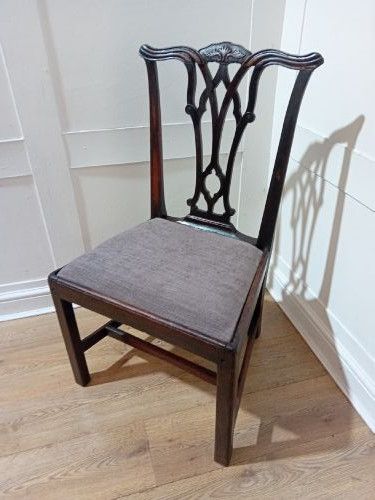

Chippendale Mahogany Desk
When you search for a chippendale mahogany desk, you enter a world of mid-eighteenth-century ambition and later revivals built around rich timber and confident carving.
Chippendale Mahogany Desk
A chippendale mahogany desk spans foundational eighteenth-century examples from the Georgian and George III periods alongside later nineteenth-century revivals and Edwardian interpretations.
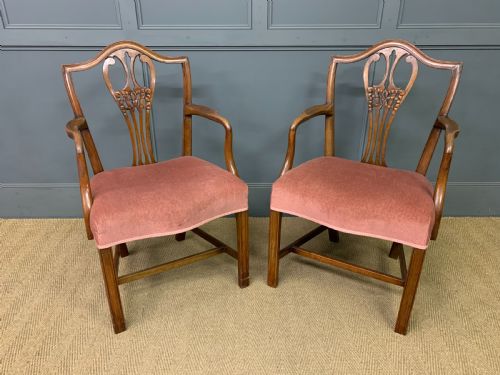
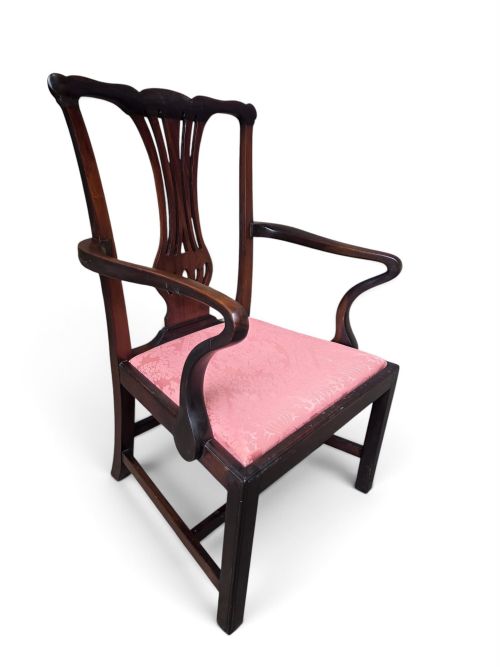
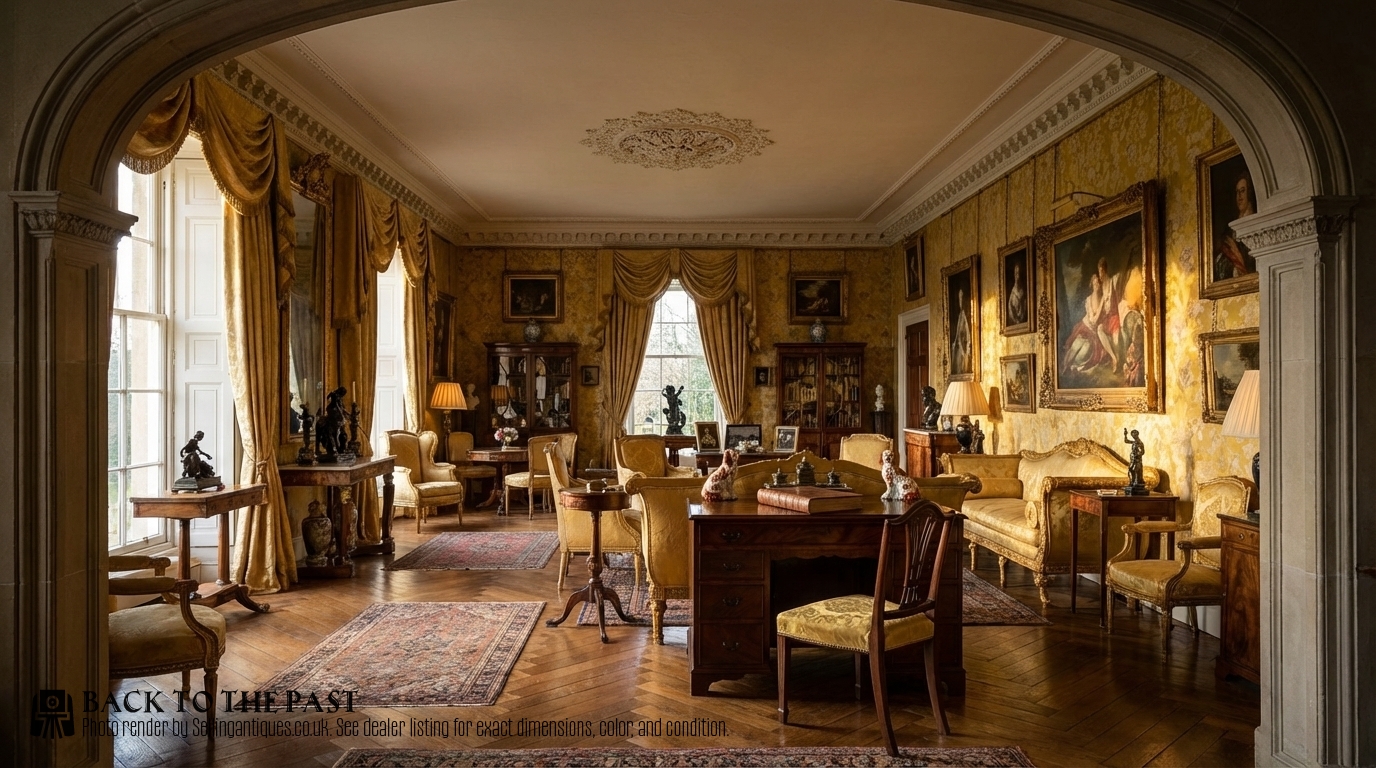
Buyers encounter pedestal desks, partners desks, writing tables, secretaire bookcases, and kneehole desks, often paired with matching library or elbow chairs.
Origins stretch from authentic eighteenth-century workshops to Victorian and Edwardian cabinet makers working in the established Chippendale style.
How They Were Made
Makers utilised dense mahogany timbers, occasionally selecting flame mahogany or Cuban mahogany for cabinet fronts and writing surfaces.
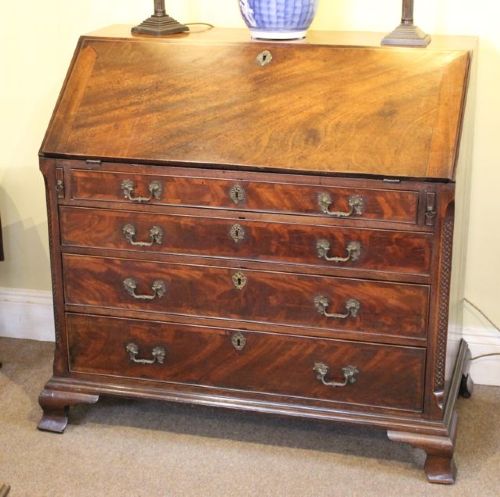
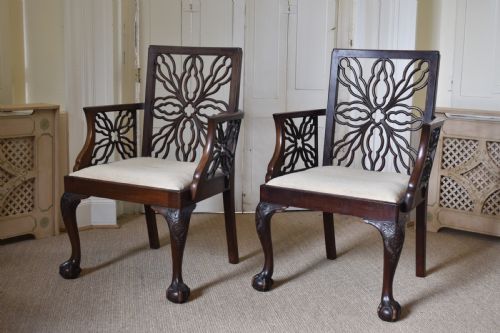
Structural integrity relied on traditional joinery, while decorative details incorporated hand-carved blind fretwork, gothic pierced brackets, and ball and claw feet.
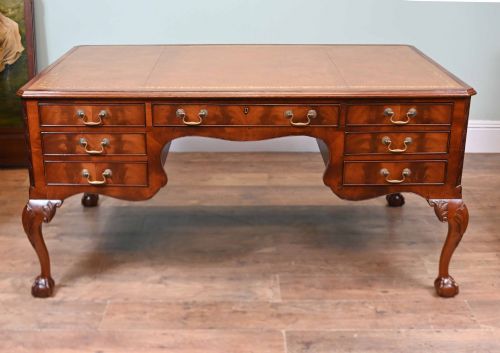
Working surfaces frequently integrated inset leather panels, complemented by brass handles and hardware fixtures.
What Varies in Quality
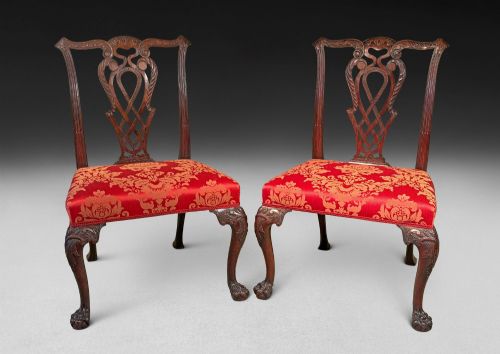
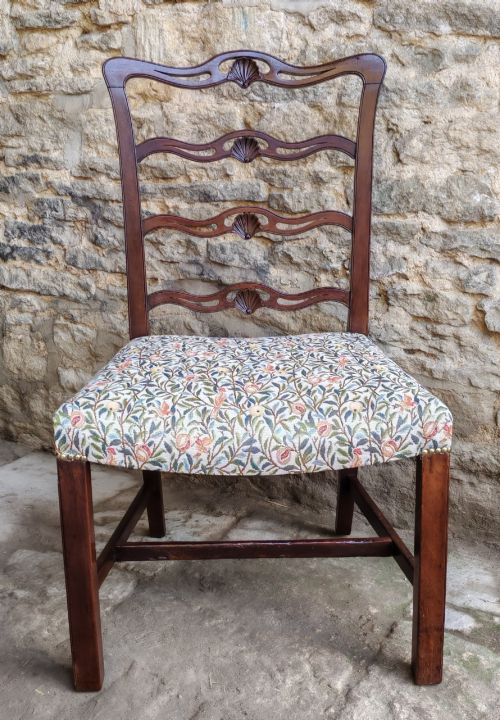
The degree of hand-carving separates standard production from exceptional pieces, particularly in the crispness of ribbon backs and blind fretwork.
Timber selection dictates overall character, with figured flame or Cuban grain commanding attention over plain sawn boards.
Originality of internal fittings, drawer configurations, and secondary timbers distinguishes untouched period survivals from heavily restored examples.
Alfred Allen of Birmingham·Gillows·S & H Jewell of London·Gill & Reigate
The Chippendale Mahogany Desk Glossary
- Chippendale Style
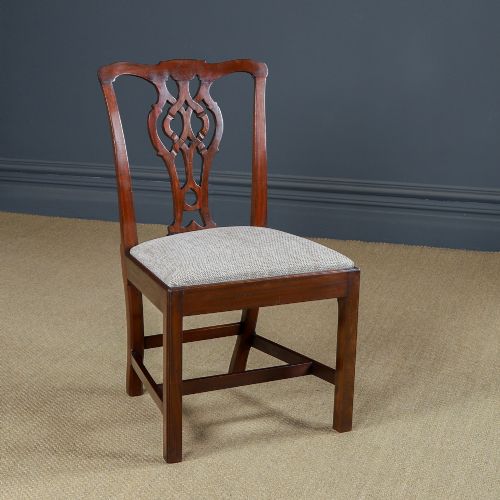
- A design vocabulary drawn from Thomas Chippendale's Director, characterised by carved ribbon backs, interlaced splats, and ornate cabriole legs.
- Blind Fretwork
- Carved ornamentation applied to a solid background rather than pierced through, frequently seen on square table legs and desk rails.
- Partners Desk
- A large pedestal desk designed with drawers and cupboards on both sides, allowing two people to work opposite one another.
- Kneehole Desk
- A compact writing desk featuring a central recessed space for the legs, flanked by pedestals of smaller drawers.
- Secretaire Bookcase
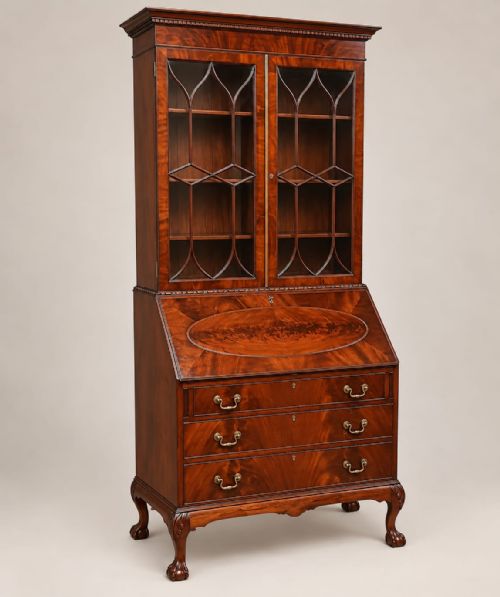
- A tall cabinet combining a shelved upper bookcase with a drop-front writing drawer concealing fitted pigeonholes and small drawers.
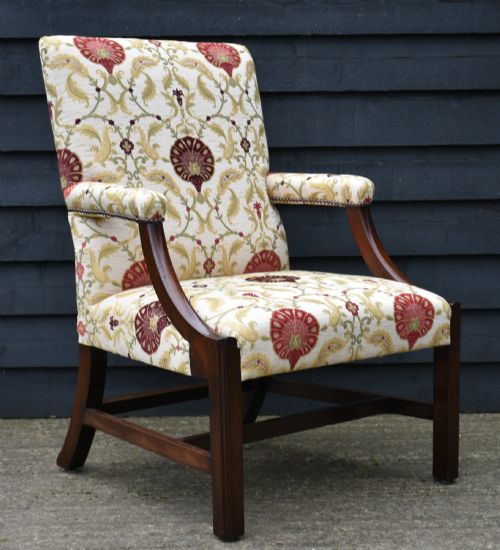
- Gainsborough Chair
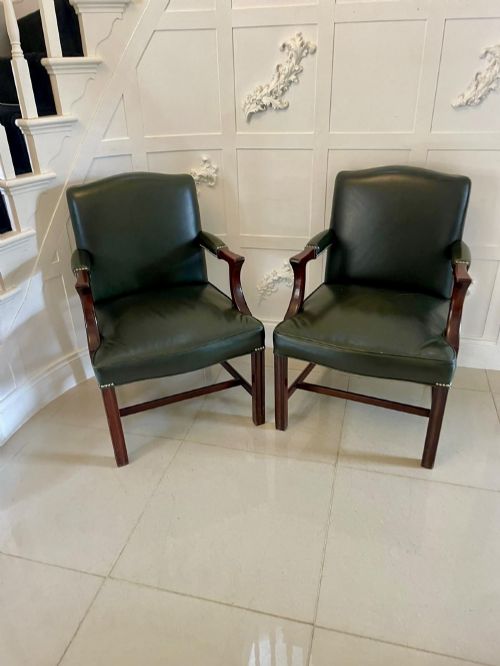
- A wide, upholstered armchair with open padded arms, usually raised on square or cabriole legs and associated with eighteenth-century libraries.
Chippendale Mahogany Desk: Frequently Asked Questions
How do I identify an eighteenth-century desk?
Authentic eighteenth-century examples exhibit period construction methods, hand-cut dovetails, and timber patination consistent with age.
Secondary woods like oak or pine are typically used for drawer linings rather than modern laminates or plywood.
What is a Chippendale revival desk?
Revival desks were produced during the Victorian and Edwardian eras, typically around nineteen hundred, when cabinet makers reproduced eighteenth-century forms.
These pieces borrow heavily from original pattern books while utilising the manufacturing techniques of their own period.
How should I care for leather desk inserts?
Leather writing surfaces require regular dusting and occasional treatment with suitable leather balms to prevent drying and cracking.
Keep desks away from direct sunlight and heat sources to preserve the original dye and tooling.
Are partners desks suitable for modern offices?
Partners desks offer substantial proportions and all-round storage, making them functional as large central workspaces.
Measure the room carefully to ensure adequate clearance for chairs on both sides of the pedestals.