
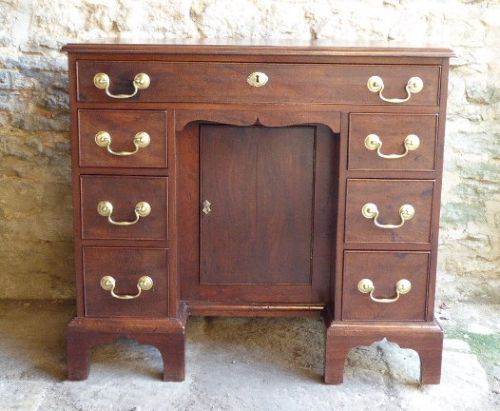
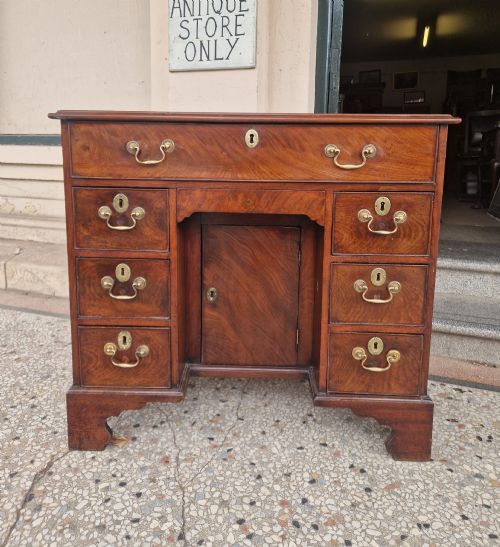


Antique Knee Hole Bureau
An antique knee hole bureau offers compact writing space with a central recess, combining practical drawers with a dedicated surface.
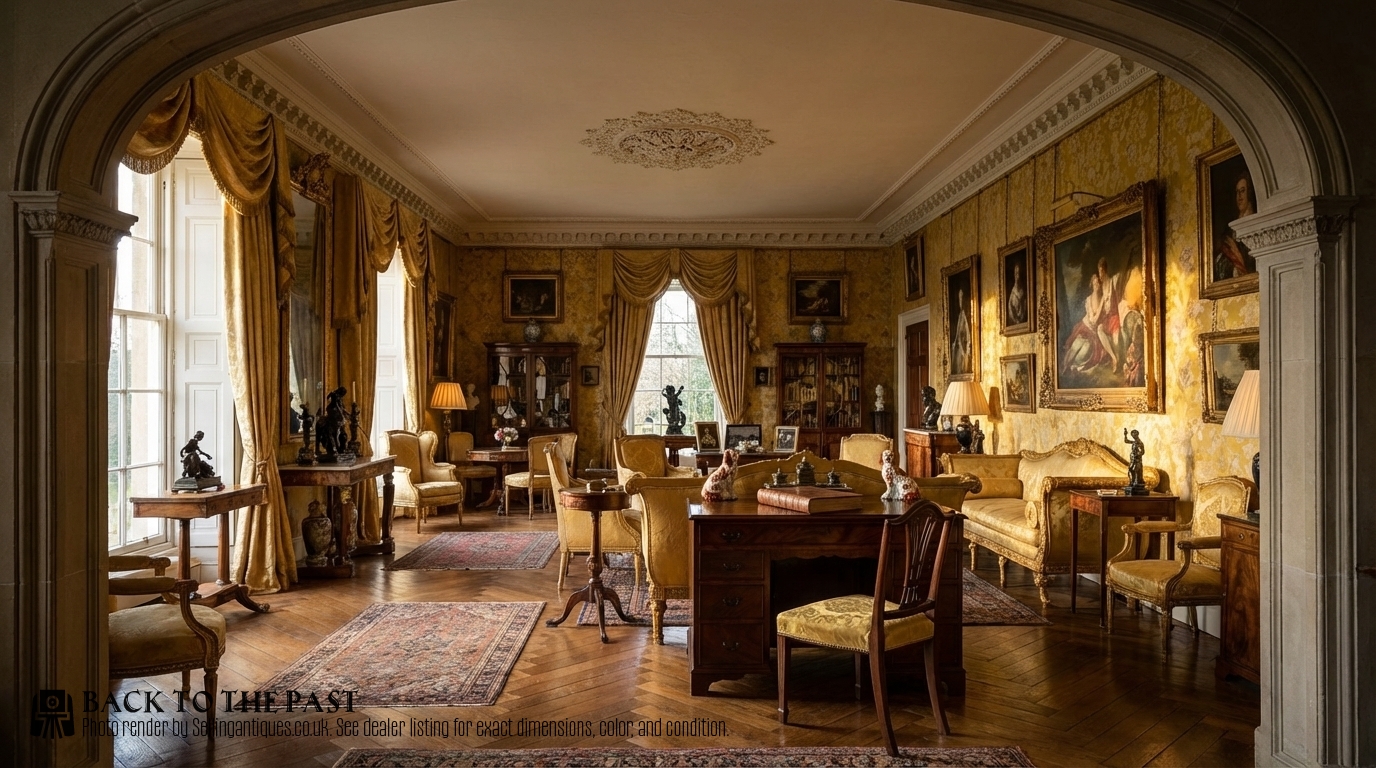
Antique Knee Hole Bureau
An antique knee hole bureau provides a writing surface supported by pedestals of drawers with a central recessed space for the legs. Buyers searching this phrase frequently encounter mahogany and walnut examples dating from the eighteenth century onwards.
The forms range from compact Georgian pieces to larger Victorian variants and Edwardian writing desks. Certain pieces incorporate leather writing surfaces or serpentine fronts, whilst others reflect Sheraton Revival or Louis XV Revival influences.
Materials and construction
Cabinetmakers utilised dense timbers such as mahogany, walnut, and oak to construct the foundational carcase and drawer linings. Finer examples incorporated satinwood and kingwood veneers, sometimes enhanced by marquetry inlay.
Hardware details such as brass handles and pulls secured the drawers, whilst occasional pieces featured ormolu mounts reflecting French revival tastes. Construction methods relied on traditional joinery to ensure stability across pedestals and writing surfaces.
Listings feature periods spanning the eighteenth century, Georgian era, nineteenth century, Victorian period, and Edwardian years.
Judging quality and proportion
Quality rests upon the selection of timber figures, particularly the grain matching across drawer fronts and top panels. Pieces featuring well-figured mahogany or walnut display greater depth and visual cohesion.
Proportion and execution distinguish finer items from standard production, seen in the crispness of marquetry work and the harmonious scale of the central knee recess relative to the outer drawer banks.
The Antique Knee Hole Bureau Glossary
- Knee hole
- A recessed central space beneath a desk or bureau designed to accommodate the user's legs while seated. This architectural feature allows flanking stacks of drawers to support the main writing surface.
- Serpentine
- A furniture front curving outward at the centre and inward toward the edges in a continuous wave line. This contour requires precise woodworking skill to shape drawer fronts and carcases.
- Marquetry
- Decorative patterns formed by fitting together thin veneers of various wood types, metals, or shells onto a surface. Cabinetmakers utilise this technique to create pictorial or geometric designs on desk tops and drawer faces.
- Ormolu
- Gilded bronze ornamentation applied to furniture mounts, popular in revival styles. It adds metallic contrast and decorative detail to the wooden structure.
- Pedestal
- A structural support column or housing containing a vertical stack of drawers. Knee hole desks typically employ two pedestals flanking the central recess.
Antique Knee Hole Bureau: Frequently Asked Questions
What is a knee hole bureau?
A knee hole bureau is a form of writing furniture featuring a recessed central opening flanked by pedestals of drawers. It provides a dedicated surface for correspondence and document storage.
Such pieces range from compact Georgian designs to larger nineteenth-century variations, combining enclosed storage with a comfortable seated workspace.
How do I date an antique bureau?
Dating relies on examining timber selection, construction techniques, and stylistic markers such as hardware and bracket feet. Eighteenth-century examples often utilise solid mahogany or walnut with hand-cut dovetails.
Later Victorian and Edwardian pieces frequently introduce different secondary woods and machine-assisted joinery while continuing traditional forms.
Where should I place a knee hole desk?
These desks suit studies, living rooms, or bedrooms due to their compact footprint and finished rear elevations on free-standing variants. Their modest depth allows placement against walls or within smaller spaces.
Placing the desk away from direct sunlight and heat sources preserves the antique timber and veneer finishes over time.
What woods were used for these desks?
Cabinetmakers primarily relied on mahogany and walnut for primary surfaces and structural elements throughout the Georgian and Victorian eras. Oak frequently served for internal drawer linings and secondary framing.
Finer decorative examples incorporate satinwood, kingwood, and intricate marquetry veneers to create contrasting patterns across the writing surface and drawers.