
Pedestal Study Desk
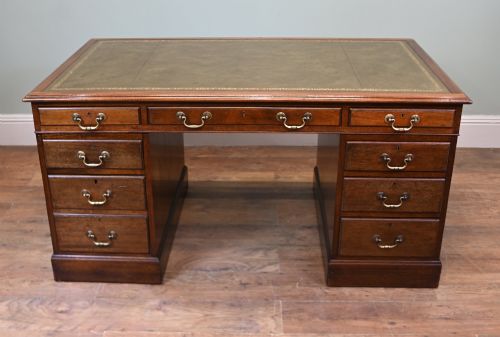
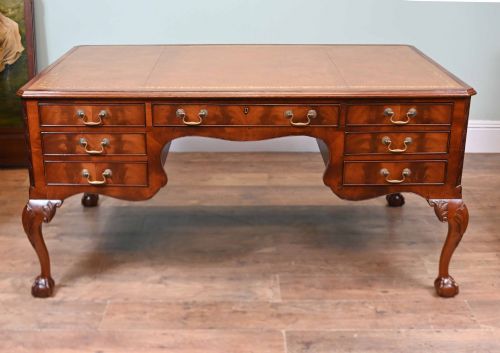
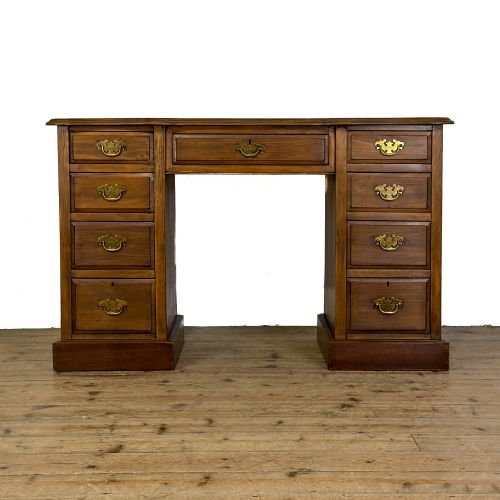
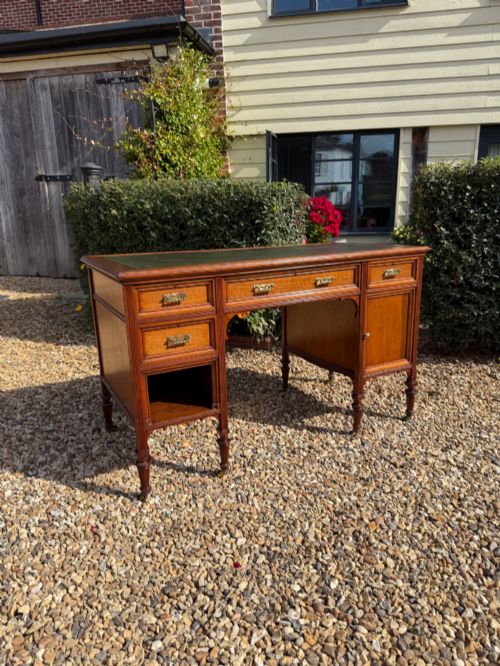
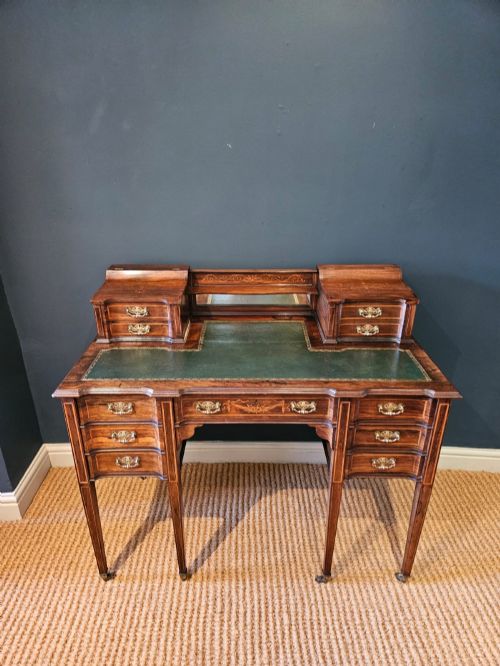
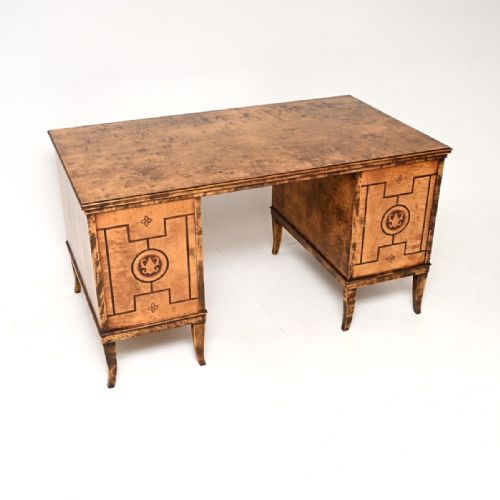
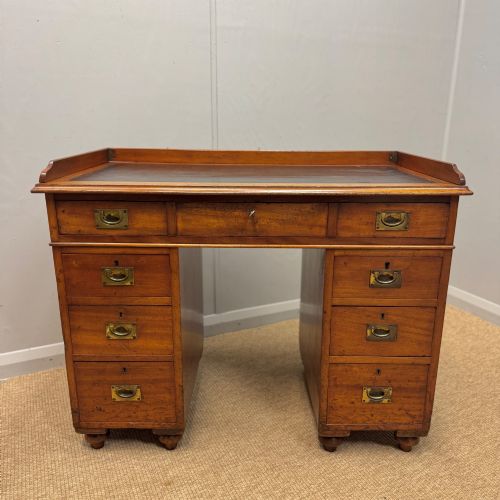
A pedestal study desk anchors a room with substantial surface area, deep drawer pedestals and period presence.
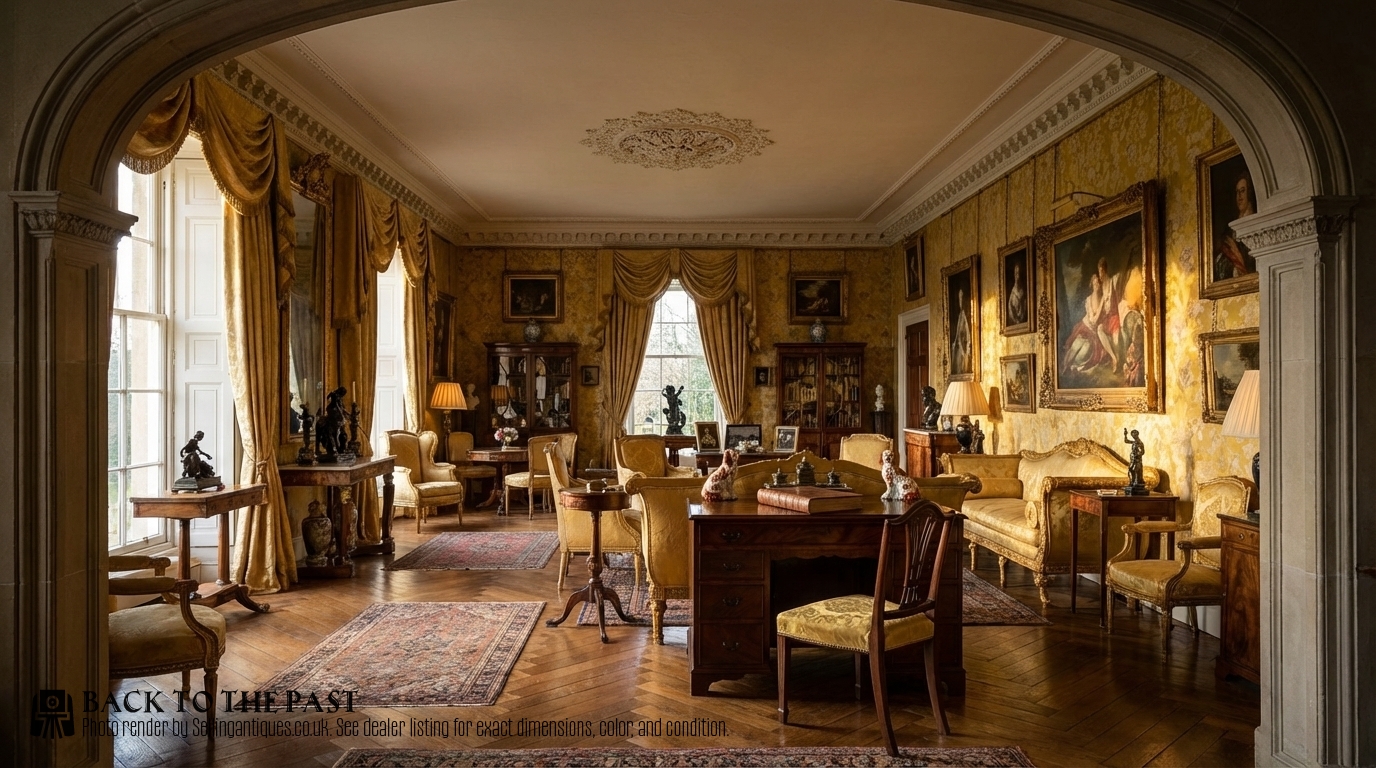
Pedestal Study Desk
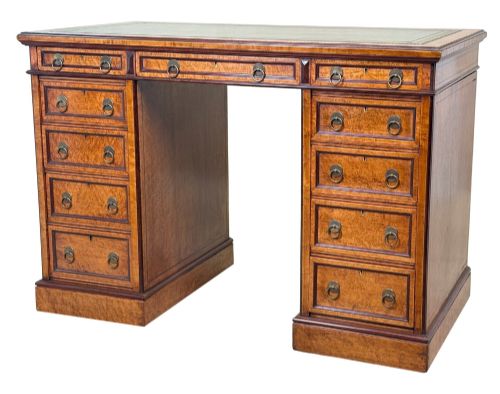
A pedestal study desk organises a workspace through twin banks of drawers supporting a wide writing surface. You encounter these most frequently in Victorian and Edwardian iterations built from mahogany, oak and walnut.
The layout accommodates daily correspondence and bookkeeping through pedestal configurations or kneehole arrangements. Partners desks extend this utility by providing workspace on both sides of the central frame.
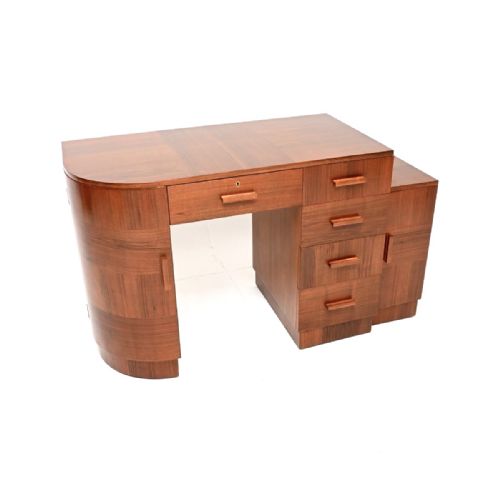
Design vocabulary spans from George III and William IV revivals to Art Deco modernist lines and Arts and Crafts pitch pine execution. These forms originate across the nineteenth and early twentieth centuries to serve private libraries, administrative offices and domestic studies.
Materials and construction methods
Cabinetmakers constructed the primary carcases and drawers using dense hardwoods like mahogany, oak and walnut, often applying burr walnut or flame mahogany veneers to visible surfaces. Solid timber framing ensures structural rigidity across multi-drawer pedestals and heavy writing tops.
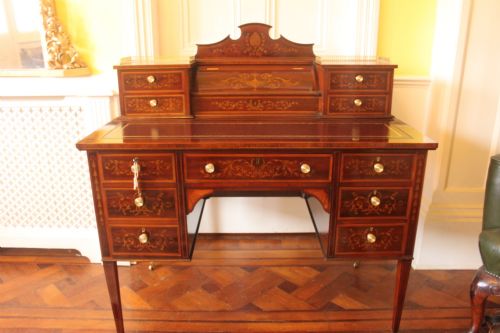
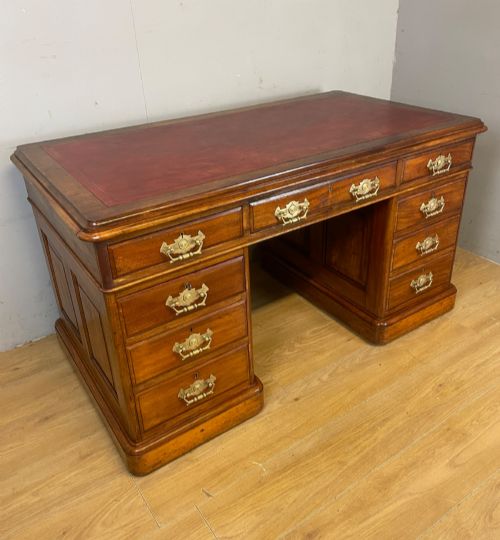
Writing surfaces frequently incorporate inset tooled leather surfaces bordered by blind or gilt tooling. Brass hardware, original handles and occasional inlay details complete the structural and decorative assembly.
The archive records pedestal study desks produced in English workshops alongside specialised forms like library tables and partners desks.
Factors separating standards of execution
Superior execution shows in the selection of figured timbers, such as burr walnut and flame mahogany, matched carefully across drawer fronts and top panels. Cabinetmaking standards appear in the thickness of drawer linings, the precision of dovetail joints and the retention of original brass hardware.
The integration of secondary decorative elements, including royal commemorative leather tooling, Wedgwood plaques or ivory inlay, elevates standard utility furniture into master cabinetmaker output. Superior pieces maintain structural integrity in their plinths and pedestals while preserving patinated finishes.
Trollope and sons·Edwards and Roberts·Maple and Co·Jackson and Graham·Charles Andrea Nosotti
The Pedestal Study Desk Glossary
- Pedestal desk
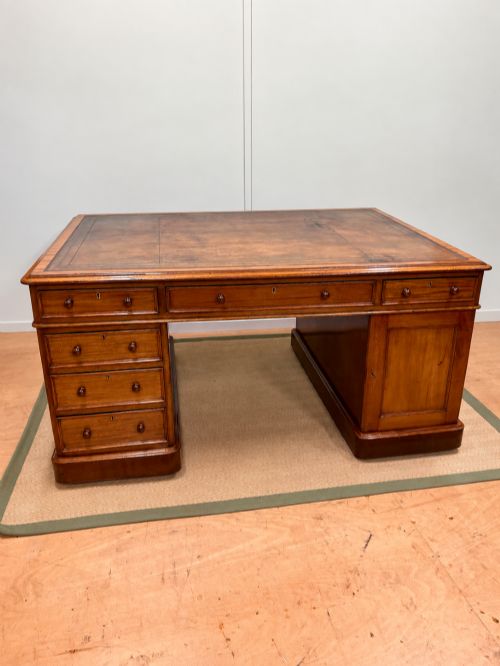
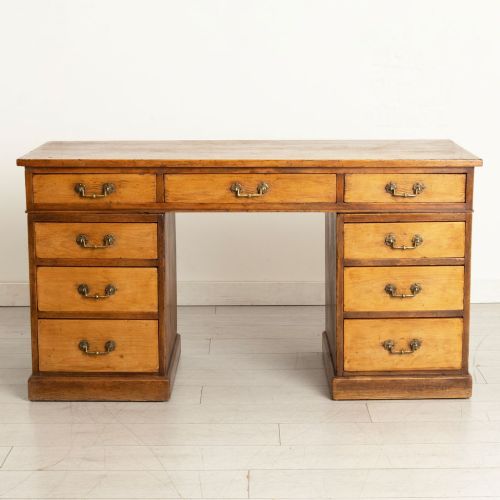
- A freestanding writing table supported by two vertical columns of drawers with a central kneehole. This form provides substantial storage capacity while maintaining balanced proportions in a study.
- Partners desk
- A large two-sided desk designed for two people to work opposite one another simultaneously. Drawers and cupboards are duplicated on both long sides.
- Kneehole desk
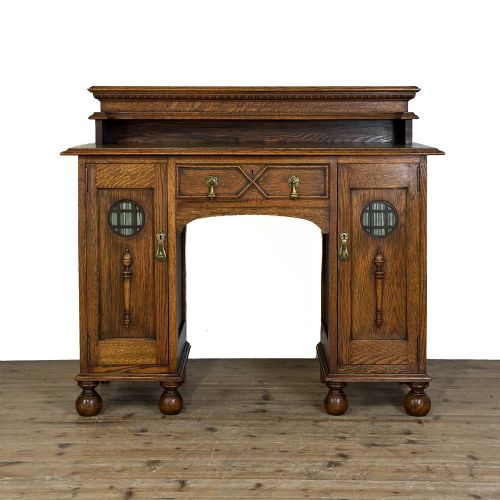
- A compact pedestal desk featuring a central recessed space for the sitter's legs beneath the writing surface. These typically house a single shallow drawer directly above the opening.
- Leather top
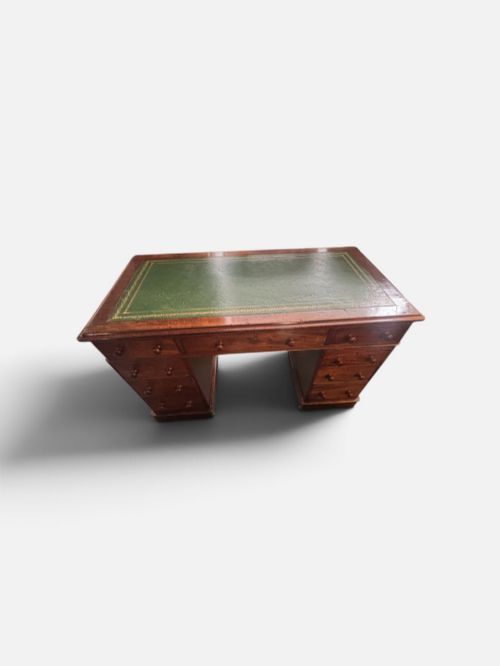
- A writing surface inset with coloured hide, frequently ornamented with gold leaf tooling around the perimeter. This material provides a smooth, durable texture for handwriting.
- Roll top desk
- A writing desk fitted with a flexible tambour cylinder shutter that slides down to conceal the pigeonholes and inner drawers. This mechanism secures the working surface when not in use.
Pedestal Study Desk: Frequently Asked Questions
What is a pedestal study desk?
A pedestal study desk is a heavy timber writing table built with two banks of drawers supporting a broad top.
They provide extensive archive storage and a stable platform for daily administration in private libraries and studies.
How do partners desks differ?
Partners desks feature working drawers and cupboards accessible from both the front and the back.
This double-sided construction allows two people to use the desk simultaneously from opposite directions.
What woods were used?
Cabinetmakers built these desks primarily using mahogany, oak, walnut and rosewood.
Decorative variations often incorporated burr walnut veneers, flame mahogany or pitch pine depending on the period and style.
How are periods identified?
Periods are identified through structural proportions, timber choice, hardware design and decorative motifs such as revival styles.
Victorian and Edwardian pieces show distinct shifts from heavy classical revival forms toward streamlined Art Deco execution.
How do I care for the leather?
The leather top requires gentle dusting and occasional conditioning to prevent the surface from drying out.
Avoid placing damp items directly onto the hide to preserve the gilt tooling and dyed finish.