




Chippendale Period Writing Table
A Chippendale period writing table offers the functional grace of eighteenth-century craftsmanship, built for serious correspondence and study.
Chippendale Period Writing Table
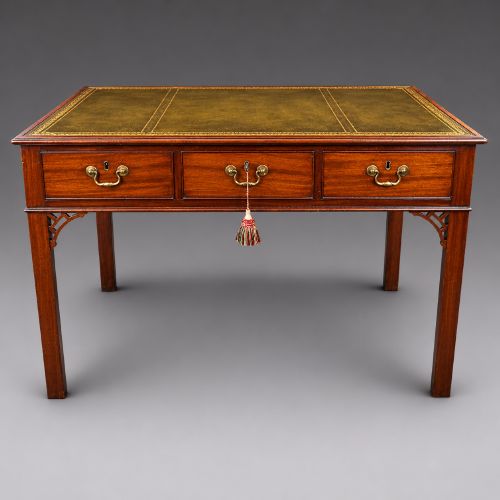
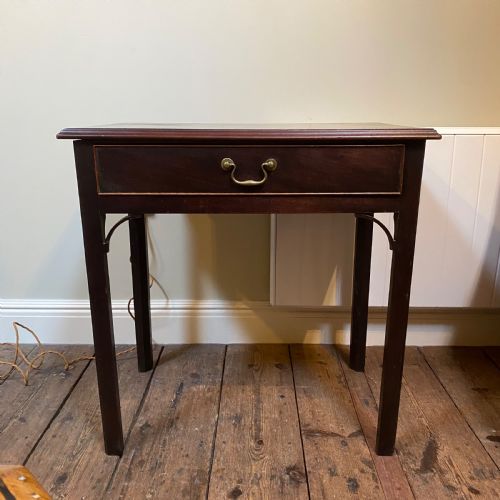
The search for a chippendale period writing table brings forth pieces from the eighteenth century, including George III examples and later Chippendale Revival pieces from nineteen hundred. These items encompass side tables, centre tables, kneehole desks, and partners desks constructed during the Georgian era.
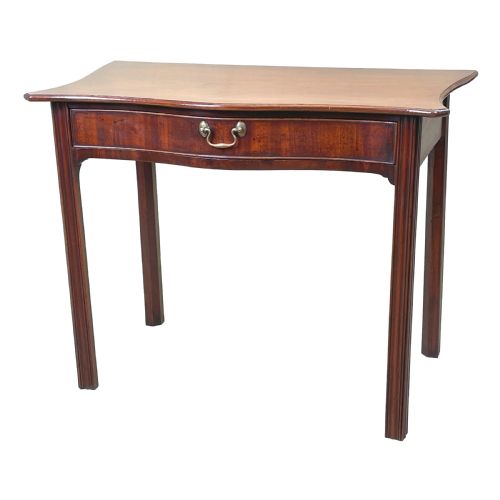
Mahogany dominates the available forms, alongside walnut and oak surfaces paired with brass hardware and leather inserts. The designs span from simple side tables to substantial pedestal desks and serpentine side tables.
Most pieces date to the eighteenth century, though later nineteenth-century revivals also appear on the market. Buyers encounter various configurations ranging from compact writing desks to expansive partners desks.
Materials and construction
Makers utilised solid mahogany, walnut, and oak to build these tables, ensuring robust structural integrity for daily writing tasks. Brass handles and escutcheons adorn the drawers, while integrated leather writing surfaces provide durable utility.
Cabinetmakers employed traditional joinery techniques suitable for eighteenth-century furniture production, combining dense hardwoods with metal fittings. The construction supports varied forms such as pedestal desks and kneehole configurations.
Chippendale Period Writing Table Retail Price Guide 2026
Typical asking prices for chippendale period writing table among the pieces listed under this phrase on Sellingantiques today, from the lower quarter to the upper quarter. They describe what is for sale here now, not the wider market.
Secret compartments in eighteenth-century kneehole desks often concealed love letters from prying eyes.
Assessing quality
Quality rests on the selection of timber, such as well-figured mahogany, walnut, or oak, and the precision of the joinery. Superior examples exhibit harmonious proportions and refined detailing across the drawers and legs.
Original brass hardware and intact leather writing surfaces elevate a piece above simpler utilitarian versions. The distinction between eighteenth-century originals and later revival pieces also influences the character of the table.
The Chippendale Period Writing Table Glossary
- Chippendale
- A style of eighteenth-century English furniture associated with the designs of Thomas Chippendale, characterised by classical motifs and solid proportions. This aesthetic defined much of the Georgian period.
- Kneehole desk
- A compact desk featuring a central recess for the user's legs, flanked by pedestals of small drawers. This form became popular during the eighteenth century for private studies.
- Partners desk
- A large double-sided desk designed for two people to work opposite one another, featuring drawers on both faces. These pieces typically command substantial floor space in a room.
- Serpentine
- A curved line of furniture fronts that undulates outward in the centre and inward at the sides. This shaping demands advanced woodworking skill.
- Revival
- A later artistic movement that reinterprets historical styles, such as Chippendale designs produced around nineteen hundred. These pieces replicate earlier aesthetic standards using the manufacturing methods of their own time.
Chippendale Period Writing Table: Frequently Asked Questions
What is a Chippendale period writing table?
A Chippendale period writing table is a piece of wooden furniture designed for correspondence and study, originating primarily in the eighteenth century. These items include various forms such as centre tables, side tables, and desks.
They reflect the cabinetmaking styles of the Georgian era, utilising hardwoods like mahogany, oak, and walnut.
How were these desks used?
These tables served as functional surfaces for writing letters, managing household accounts, and conducting business correspondence. Many incorporate drawers for storing stationery and documents.
Larger versions like partners desks allowed two individuals to work simultaneously from opposite sides.
How do I live with one?
Integrating an eighteenth-century writing table into a room requires placing it where the timber is protected from direct sunlight and extreme temperature changes. Using coasters and gentle cleaning methods preserves the polished mahogany or walnut surfaces.
These pieces function effectively as central room focal points or functional desks against a wall.
How can I tell periods apart?
Differentiating periods involves examining the timber species, joinery methods, and hardware style. Eighteenth-century pieces display period-specific construction techniques and material ageing.
Revival pieces from later eras often exhibit distinct manufacturing characteristics that separate them from original Georgian output.