






Chippendale Linen Press
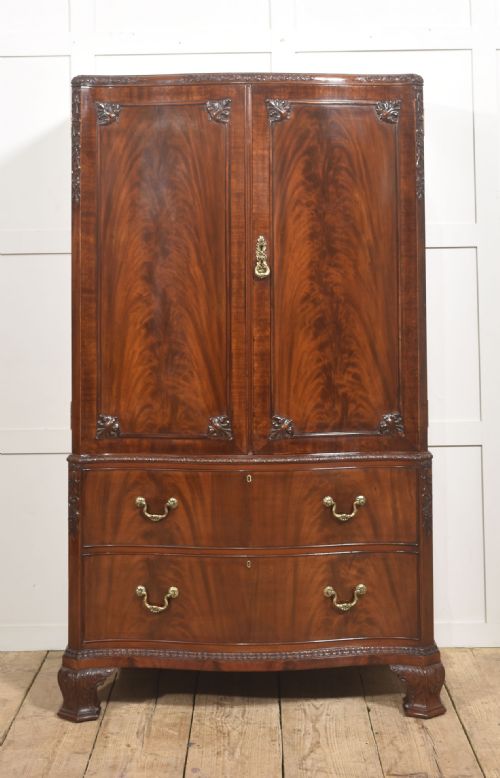
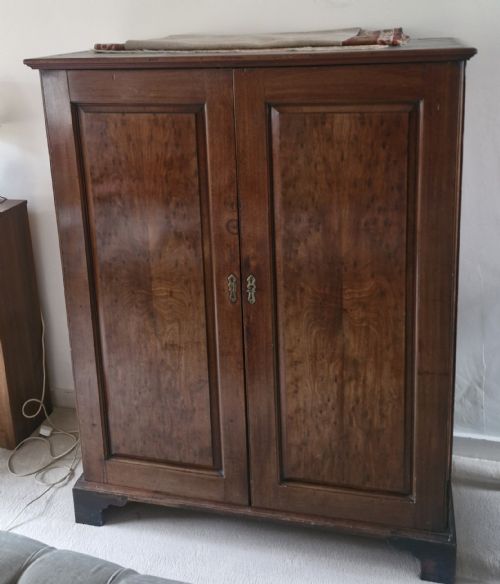
These Chippendale linen press pieces bring substantial Georgian presence into a room, offering generous storage disguised as architectural furniture.
Chippendale Linen Press
A Chippendale linen press combines a tall upper cupboard for textiles with a lower chest of drawers, creating a commanding presence in a room. Buyers searching for a chippendale linen press will encounter genuine 18th-century period examples alongside later 19th-century revivals and 20th-century interpretations.
The form appears in various configurations across the listings, from two-door cupboards and low presses to complex compactum wardrobes, bookcases, and cabinet-on-chest constructions. Most pieces belong to the Georgian era or the later Chippendale Revival movements of the 19th and 20th centuries.
Origins trace back to the mid-18th century, with George III and 18th-century period works establishing the classic proportions. Later revivals from the Victorian, Edwardian, and mid-20th-century periods continue this tradition using the same foundational forms.
Materials and construction methods
Cabinetmakers built these pieces primarily from solid mahogany and flame mahogany veneer, sometimes supported by sturdy oak carcasses for internal structure. Brass hardware, including handles and escutcheons, provides functional and decorative accents across the drawer fronts and doors.
Surface ornamentation relies on carved detail, open fret-work swan-neck pediment cornices, and figured timber grains rather than applied colour. The integration of flame mahogany veneer adds dramatic pattern to the primary surfaces while structural elements utilise dense hardwoods.
Chippendale Linen Press Retail Price Guide 2026
Typical asking prices for chippendale linen press among the pieces listed under this phrase on Sellingantiques today, from the lower quarter to the upper quarter. They describe what is for sale here now, not the wider market.
Some cabinetmakers hid secret writing drawers behind seemingly structural mouldings, waiting for a future owner to discover them.
Factors of distinction
The caliber of a piece rests in the crispness of its carved detail and the depth of the mahogany grain. Pieces featuring figured timber and intricate pediments demonstrate superior design ambition compared to plainer domestic versions.
Patina and surface age distinguish the 18th-century originals from later revivals, where a faded, time-softened finish elevates the visual weight of the cabinet. The integration of architectural cornices and balanced proportions marks the difference between standard cabinet-making and master execution.
Thomas Chippendale·Thomas Bradshaw
The Chippendale Linen Press Glossary
- Linen press
- A tall piece of furniture featuring upper doors enclosing sliding trays or shelves, sitting above a chest of base drawers. Originally designed for storing household linens flat before the modern wardrobe became common.
- Swan-neck pediment
- A broken arch cornice curving upward and inward from the corners, often terminating in a scroll or patera. This architectural top piece frequently houses carved fretwork or decorative centre finials.
- Flame mahogany
- A decorative wood veneer sliced from timber where the branch meets the trunk, producing a rippling, flame-like pattern. Cabinetmakers reserved this timber for the most prominent exterior drawer fronts and door panels.
- Compactum wardrobe
- A multi-compartment clothes closet combining hanging space, drawers, and shelving within a single unified case. This form expanded the traditional linen press concept to accommodate modern hanging garments.
- Secretaire linen press
- A specialised variant incorporating a pull-down writing drawer with an internal fitted desk compartment. It merges the storage capacity of a press with the utility of a bureau.
Chippendale Linen Press: Frequently Asked Questions
What is inside a linen press?
Inside the upper doors, these cabinets typically house sliding wooden trays or shelves originally intended for stacked linens and textiles. The lower section contains graduating drawers for smaller garments.
Over time, owners often removed internal sliding trays to convert the upper cavity into hanging space for modern clothing.
How do I tell an 18th-century press from a revival?
Examination of the secondary timbers, construction joints, and hand-cut dovetails reveals the age of the carcass. Eighteenth-century pieces exhibit specific tool marks and timber ageing that differ from Edwardian or 20th-century revival manufacturing methods.
Additionally, the character of the mahogany and the wear patterns around the brass handles offer clear indicators of period authenticity.
Did Thomas Chippendale make all these?
While the style is named after Thomas Chippendale, most pieces influenced by his design vocabulary were produced by contemporary workshops or later revival cabinetmakers. Only a small fraction of surviving examples carry documented attributions to his London firm.
The broader category encompasses Georgian production generally, alongside 19th and 20th-century reinterpretations of his pattern books.