
Flame Mahogany Linen Press
Flame mahogany linen press pieces are grand storage furniture offering deep drawers and sliding trays, prized for striking wood figures.
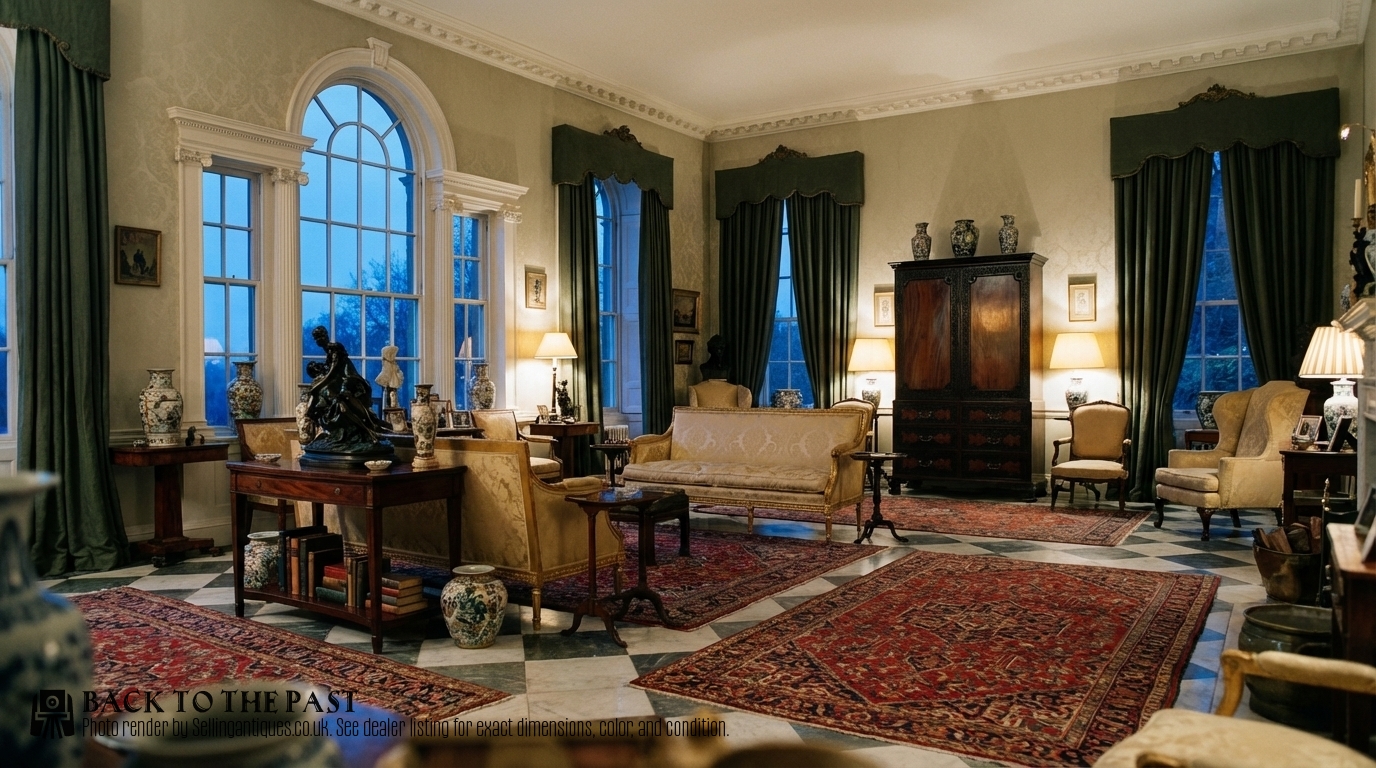
What a flame mahogany linen press is
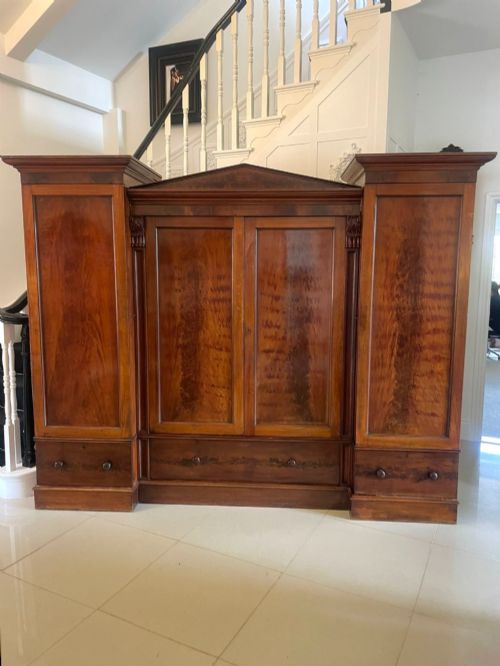
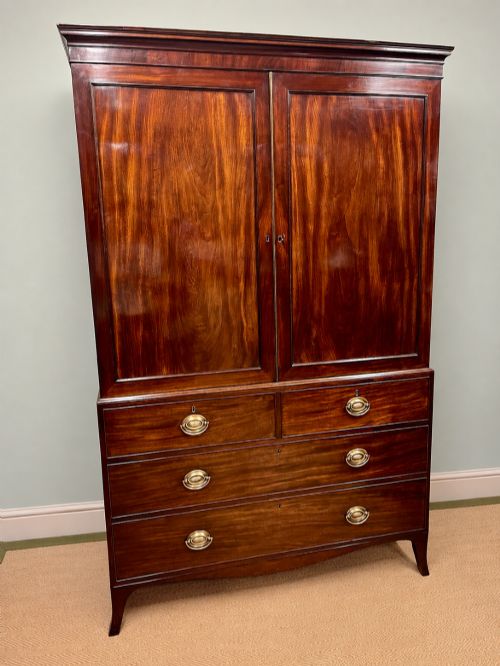
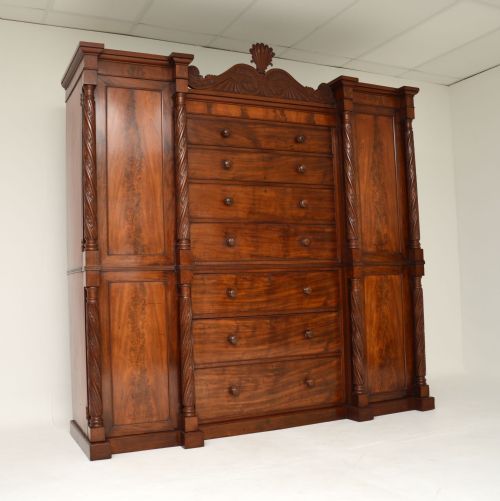
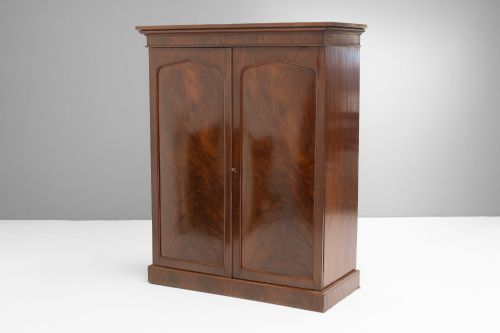
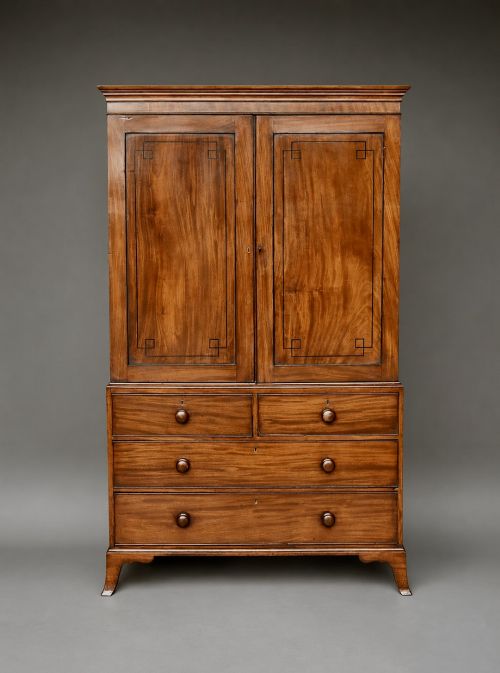
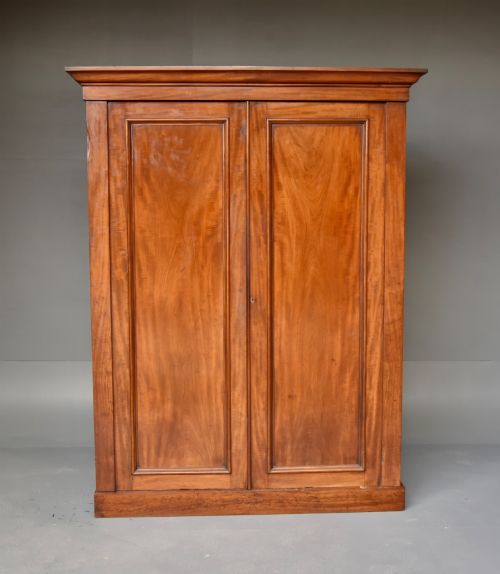
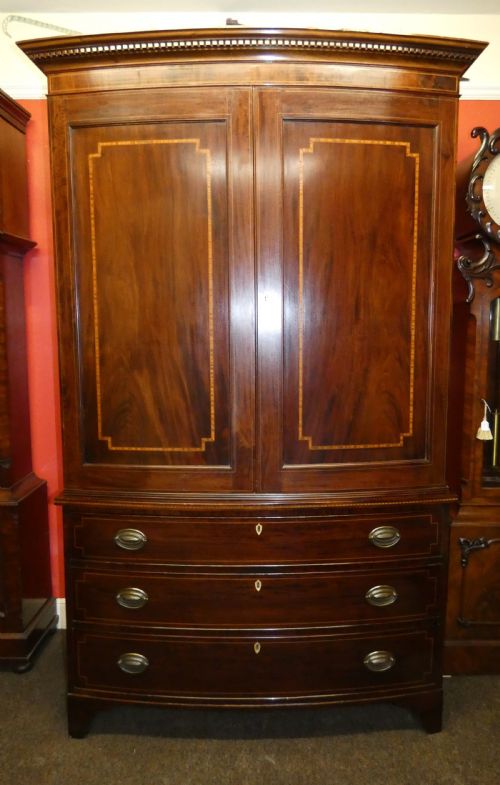
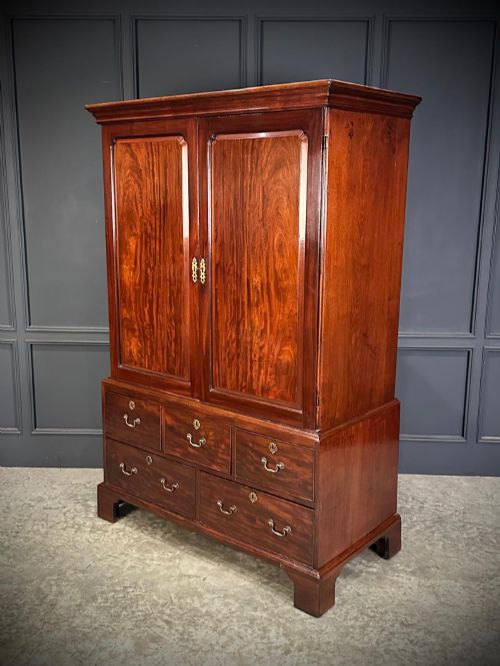
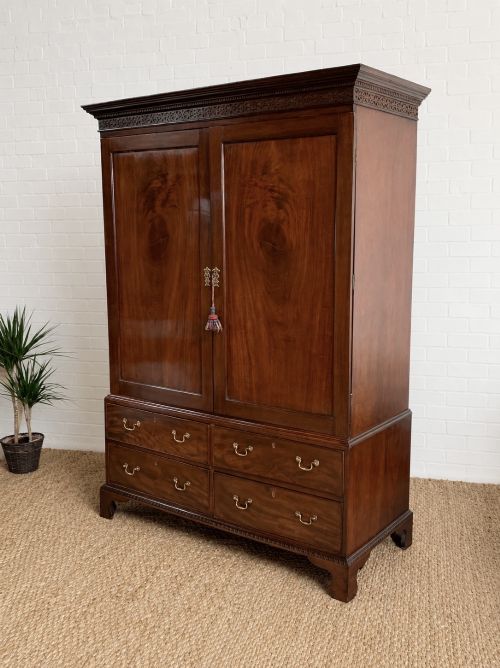
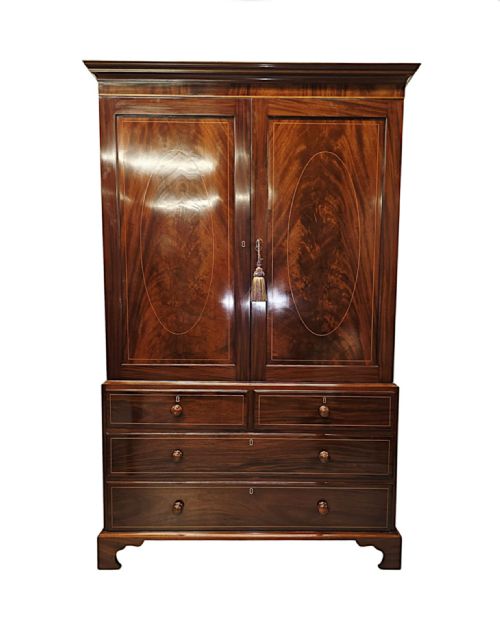
A flame mahogany linen press is a substantial piece of case furniture combining a linen press, cupboard on chest, or wardrobe configuration. Buyers search for these pieces to gain deep upper sliding tray storage combined with lower drawer capacity, all unified by impressive timber frontages.
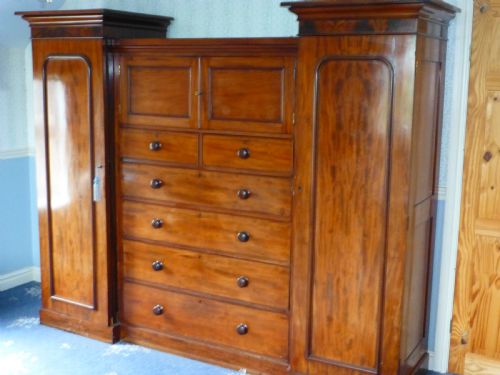
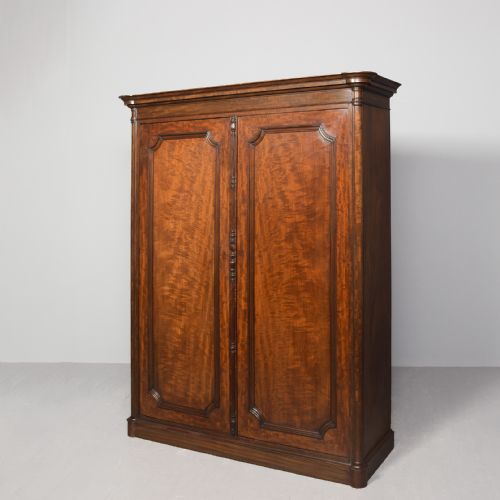
The examples seen on this page span Georgian, Regency, George III, George IV, and Victorian periods, including low forms and breakfront designs. Most pieces emerge from the Georgian and Victorian eras, often displaying country house proportions or smaller dimensions.
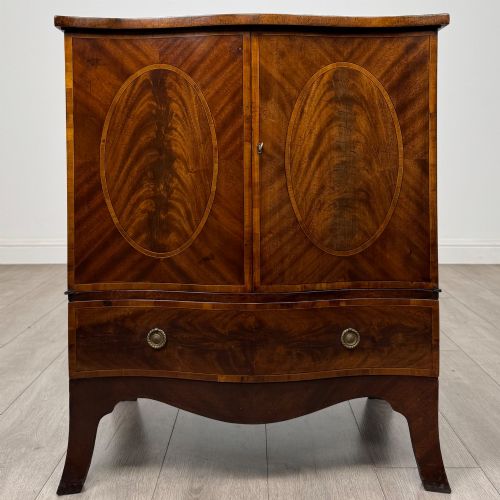
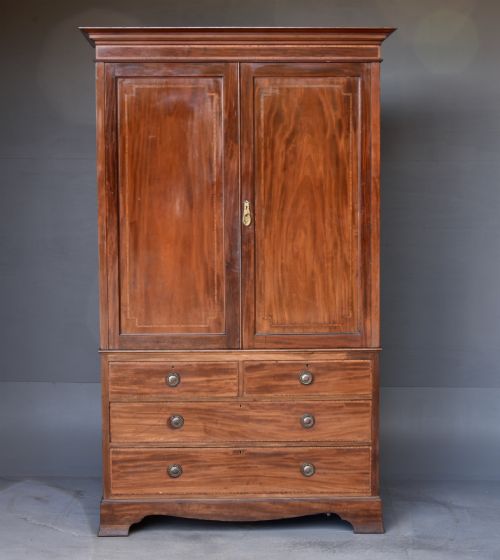
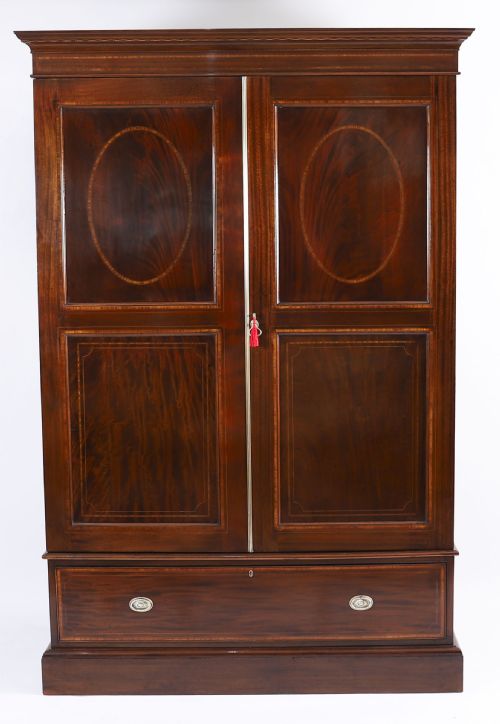
Makers utilised mahogany, brass hardware, satinwood, and marquetry alongside flame mahogany veneer to construct these large cabinets. Styles range from plain classical lines to George III craftsmanship and Victorian Gothic Revival influences.

How they were made
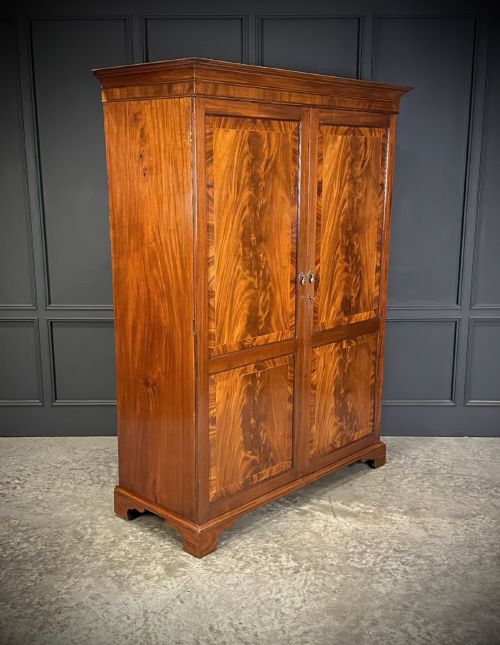
Cabinet makers constructed the main carcasses of these presses using solid mahogany for structural integrity and stability. They then applied highly figured flame mahogany veneers across the prominent door and drawer surfaces to create dramatic rippling visual patterns.
Detailing often included brass handles, escutcheons, and occasional mounts, alongside contrasting inlay such as satinwood and marquetry. Interior sliding shelves or trays, frequently called slides, were fitted behind upper doors to store folded textiles.
Retail Price Guide 2026
Typical UK retail prices for flame mahogany linen press, calculated from the Sellingantiques database of over a million retail prices indexed since 2003. This retail price guide relies exclusively on Sellingantiques data; no external sources or auction records are used, so the figures do not describe the wider market.
Listings feature pieces spanning the Georgian, Regency, George III, George IV, and Victorian periods, constructed in mahogany with brass and marquetry detail.
What varies in quality
Quality rests significantly in the selection and matching of the flame mahogany veneer across large cabinet doors. Finer pieces demonstrate symmetrical grain patterns that mirror one another across the panels, while lesser examples show disjointed timber figures.
The depth of the patina and the crispness of secondary woods, mouldings, and internal sliding trays separate standard production from superior cabinet work. Well-proportioned cornices and original brass hardware elevate a press from a utilitarian storage item to a refined focal point.
Maple and Co Of London
The Flame Mahogany Linen Press Glossary
- Flame mahogany veneer
- A thin slice of timber cut from the fork of a mahogany tree where branches join the trunk. This produces a distinctive fire-like ripple effect used across the principal doors.
- Linen press
- A tall cupboard traditionally designed with sliding trays inside the upper section for storing folded household linen. Lower drawers provide supplementary garment storage.
- Cupboard on chest
- A form comprising an upper enclosed cabinet resting upon a chest of base drawers. It serves the same function as a standard press.
- Breakfront
- A cabinet front where the central section projects forward from the flanking outer wings. This architectural arrangement adds depth and presence to large wardrobes.
- Patina
- The surface sheen and mellow colour developed by aged wood over generations of polishing and exposure to light. Faded finishes are particularly prized.
Frequently Asked Questions
How do I tell a Georgian press from a Victorian one?
Georgian and George III pieces generally exhibit more restrained classical proportions, delicate bracket feet, and subtle cornice mouldings. Timber selection often emphasises natural figuring and hand-cut dovetails.
Victorian examples tend towards heavier proportions, encompassing styles like Gothic Revival or breakfront wardrobe formats. They frequently incorporate broader plinths and darker, highly polished finishes.
What are the sliding trays inside used for?
Original interiors feature pull-out shelves, historically termed slides or trays, designed for stacking folded bed linen and table cloths. These prevented textiles from developing heavy creases.
Today, many owners retain these trays for knitwear, shirts, and folded garments. Some pieces have undergone conversion to hanging space by removing a selection of these internal shelves.
How should I care for flame mahogany wood?
Keep the wood away from direct sunlight and heat sources to prevent the veneer from drying or splitting. Regular dusting with a soft, dry cloth preserves the polished surface.
Apply a traditional beeswax polish sparingly when the timber appears dry. Avoid silicone sprays and excess moisture to protect the historic finish.