
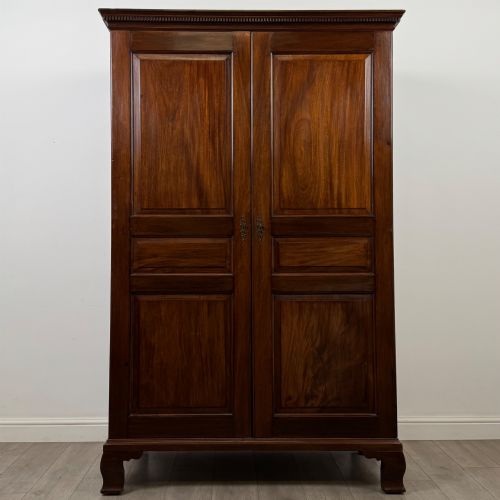
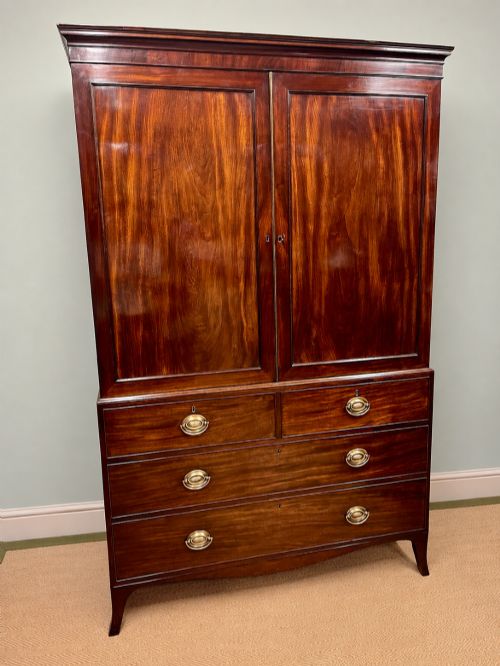
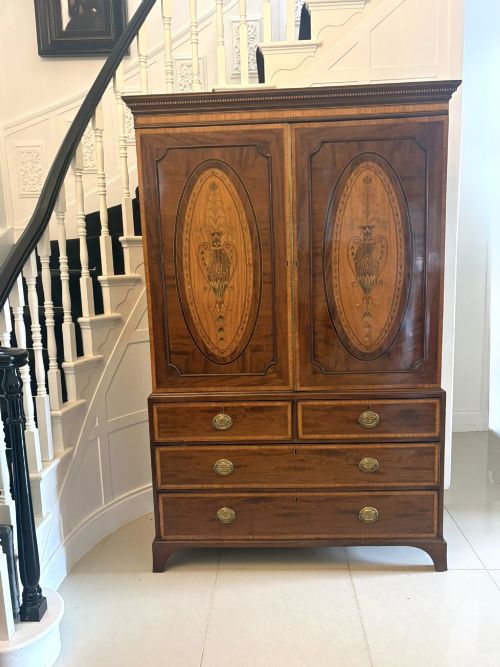
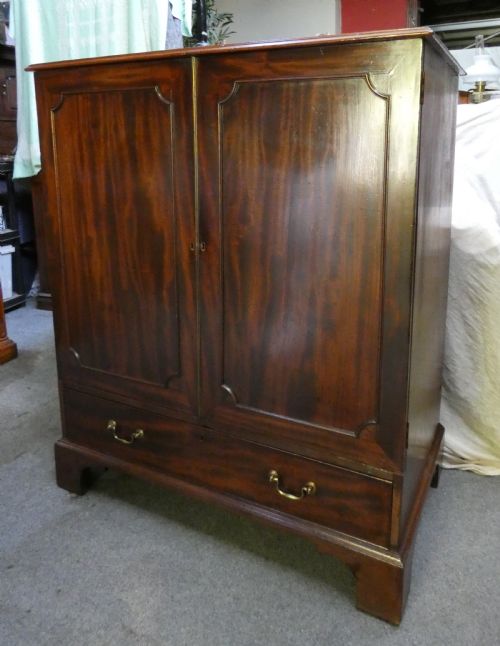
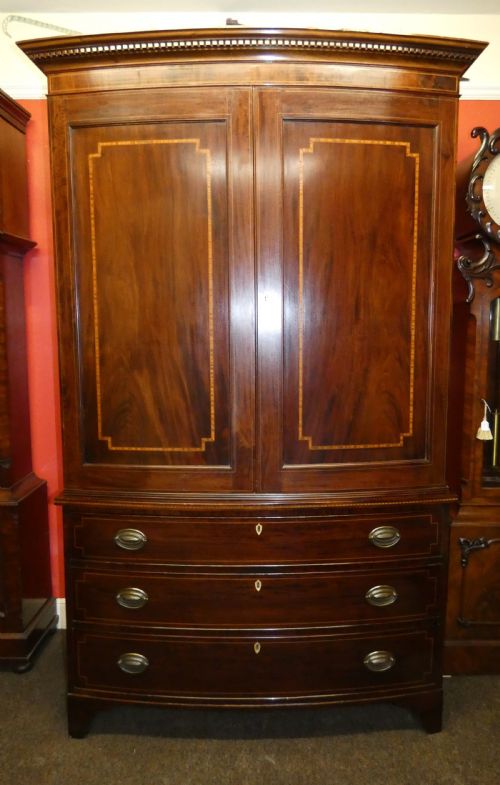
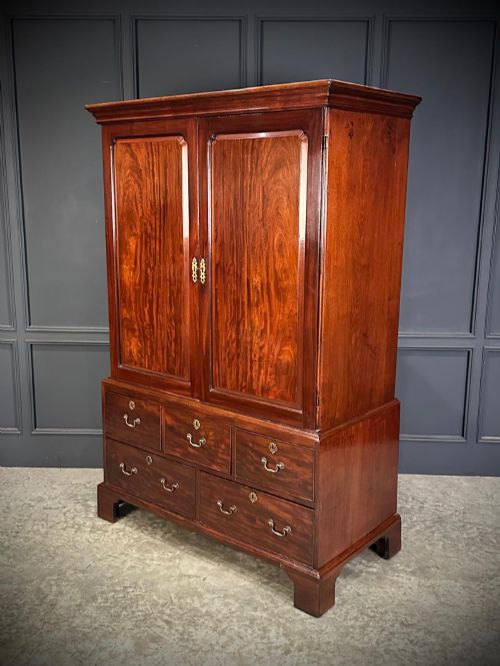
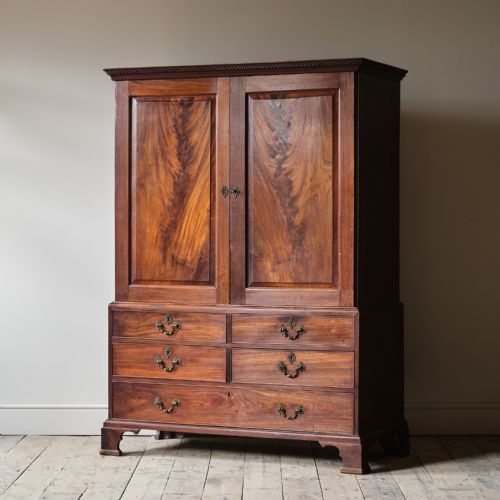
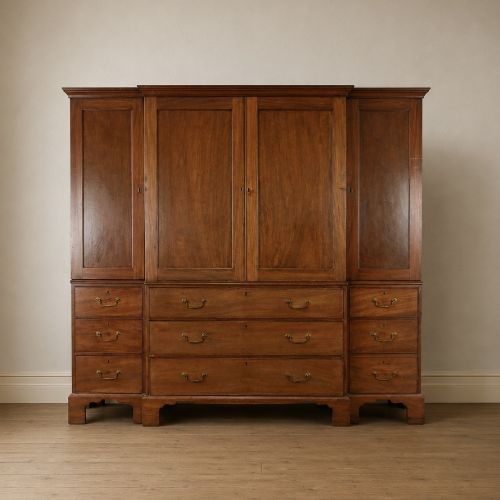
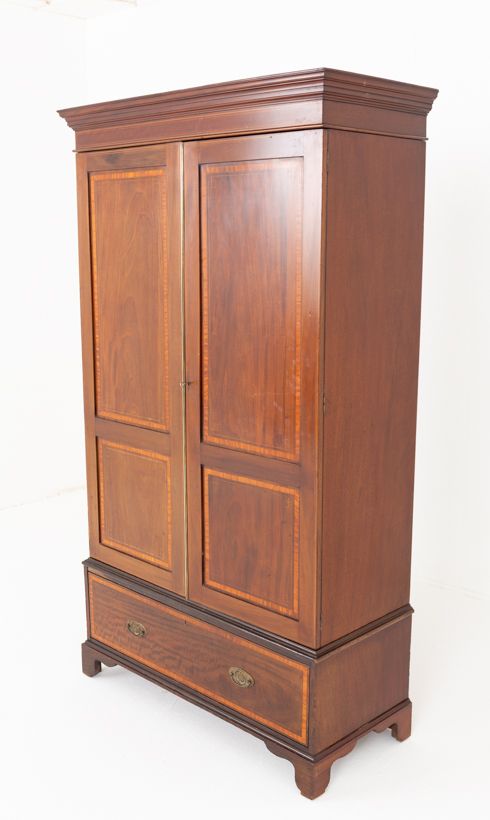
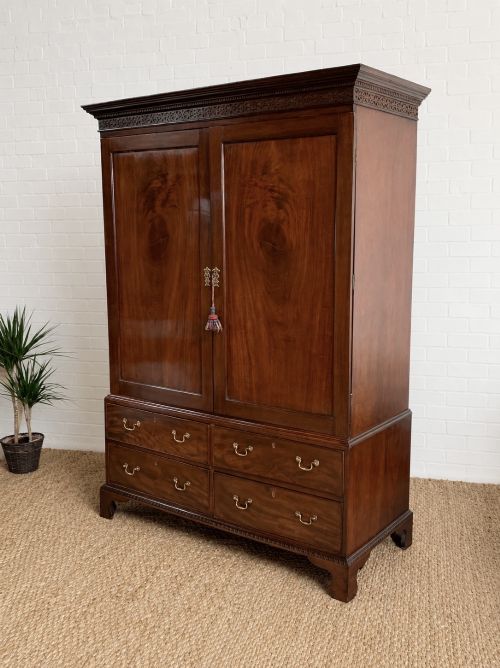
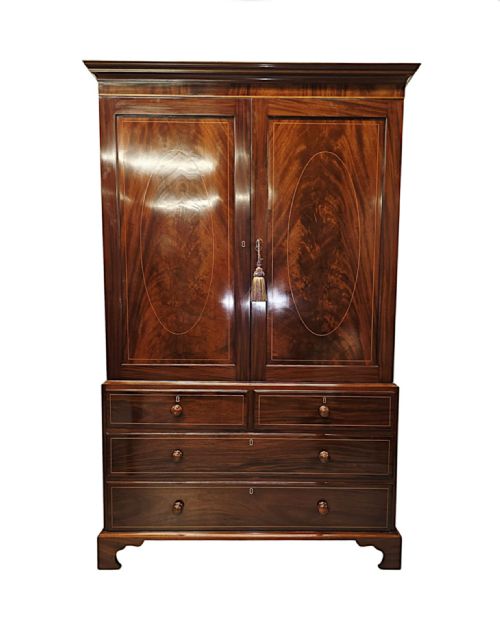
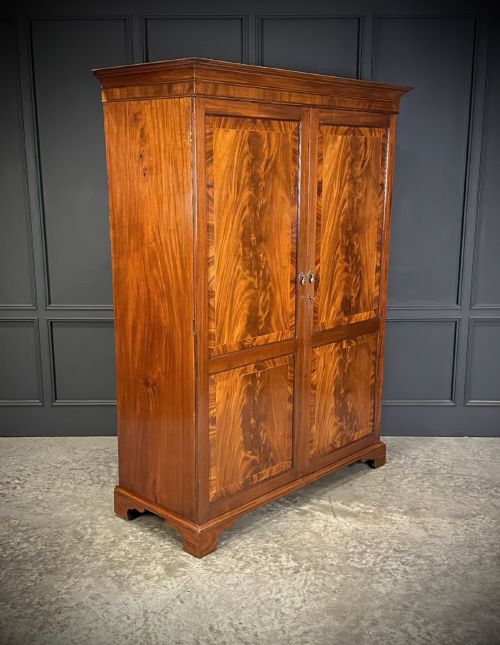
Georgian Mahogany Clothes Press
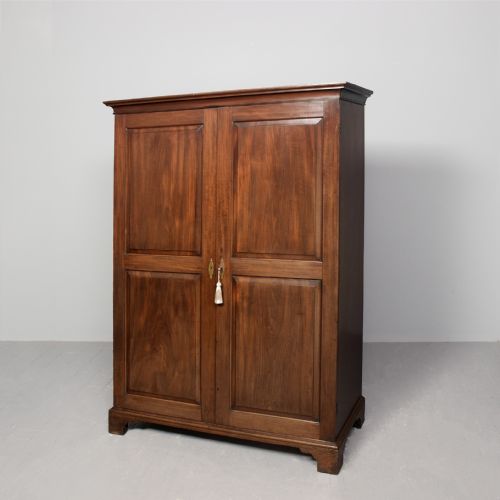
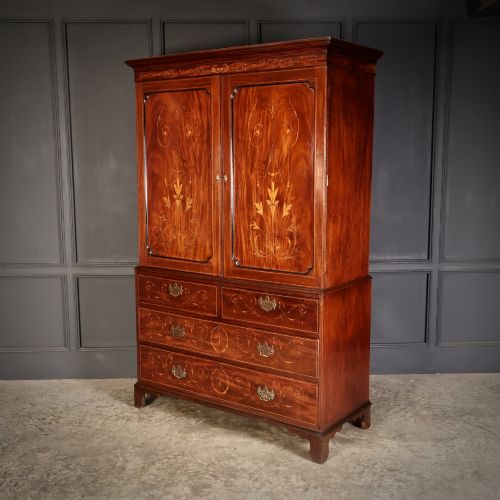
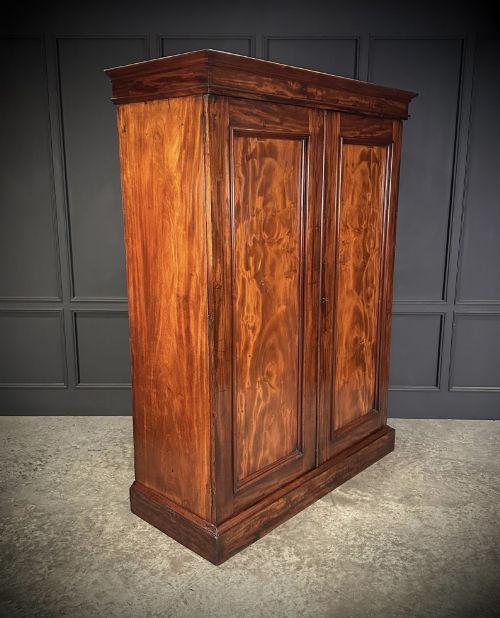
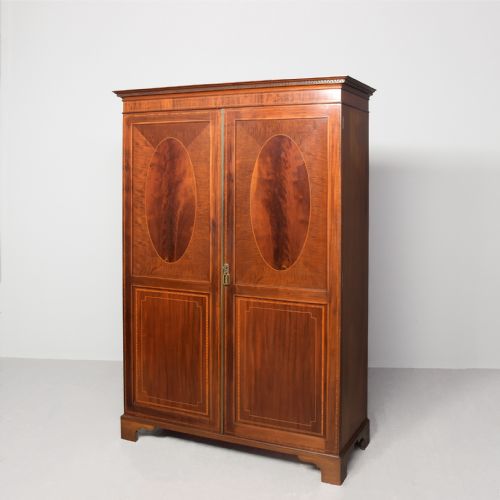
A georgian mahogany clothes press offers timeless architectural presence, concealing deep storage behind panelled doors and fitted drawers.
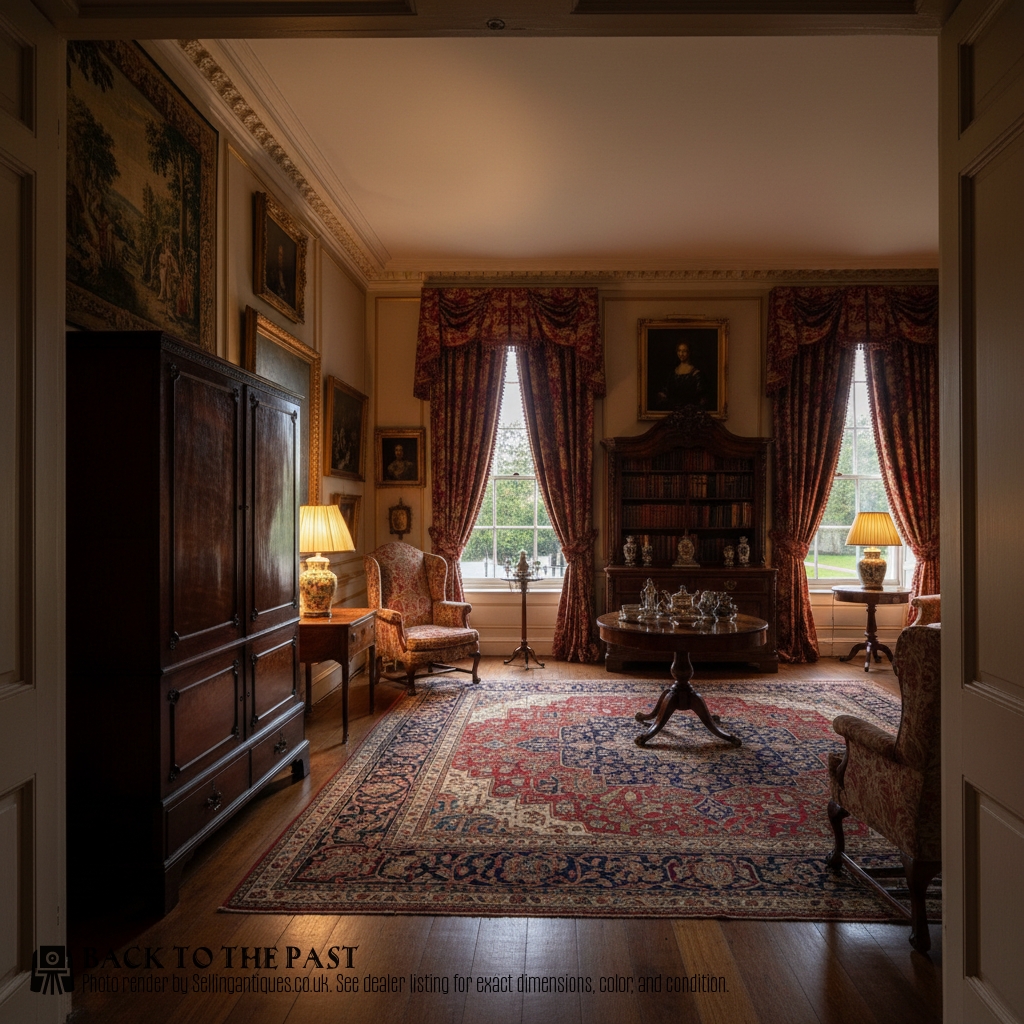
Georgian Mahogany Clothes Press
A georgian mahogany clothes press combines a substantial upper cupboard with a chest of drawers below, designed to store folded linens and garments in domestic quarters. These pieces emerge predominantly from the eighteenth and early nineteenth centuries, spanning George III, Regency, and George IV periods.
The format frequently appears as a linen press, wardrobe, or press cupboard, sometimes constructed with a bowfront or as a compactum. Examples span standard upright proportions down to dwarf cabinets and channel island variants, reflecting varied regional demands.
Materials and Construction
Makers construct these cabinets primarily from solid mahogany and flame mahogany veneer, often supported by secondary timbers like oak. Surfaces receive decorative enrichment through satinwood, boxwood, and marquetry inlay, alongside rosewood crossbanding.
Hardware incorporates brass fittings, while structural details include blind fretwork cornices and carved accents. Cabinetmakers pair these dense hardwoods with dovetailed drawer construction and panelled doors to ensure enduring stability.
Georgian Mahogany Clothes Press Retail Price Guide 2026
Typical asking prices for georgian mahogany clothes press among the pieces listed under this phrase on Sellingantiques today, from the lower quarter to the upper quarter. They describe what is for sale here now, not the wider market.
Listings feature periods spanning from 1750 through the Georgian, Regency, and William IV eras into the late nineteenth century.
Judging the Workmanship
The visual hierarchy of these presses rests upon timber selection, where highly figured flame mahogany veneer and crisp marquetry inlay distinguish superior examples from plain variants. Grain alignment across drawer fronts and door panels demonstrates the cabinetmaker's intent.
Proportion and detail dictate refinement, separating standard production from exceptional pieces. Finely carved cornices, well-executed crossbanding in satinwood or rosewood, and integrated brass work elevate the architectural character of the piece.
Gillows
The Georgian Mahogany Clothes Press Glossary
- Clothes press
- A tall piece of furniture featuring upper cupboard doors enclosing trays or hanging space, set above a base of lower drawers. It originated for storing folded linen before full-length wardrobes became common.
- Flame mahogany
- A highly decorative veneer harvested from the fork of the mahogany tree, creating a distinctive rippled pattern resembling flickering flames. Cabinetmakers reserved this timber for principal visual surfaces.
- Crossbanding
- A border technique where thin strips of veneer are laid across the grain of the primary wood, framing panels or drawer fronts. It adds contrast using timbers such as rosewood or satinwood.
- Blind fretwork
- Carved geometric or interlaced decoration applied to a solid background so that it appears pierced rather than fully open. It adorns cornices and friezes on mid-to-late eighteenth-century pieces.
- Compactum
- A multi-functional wardrobe or press designed with internal divisions for diverse types of clothing, combining hanging space, shelves, and sliding trays within one footprint.
Georgian Mahogany Clothes Press: Frequently Asked Questions
What is inside a clothes press?
These cabinets typically conceal sliding trays or linen slides behind the upper doors, positioned above a chest of base drawers. Some examples incorporate hanging space or specialised partitioning for garments.
Historical usage prioritized the flat storage of woven linens and folded wear rather than modern vertical hanging.
How do I date a Georgian press?
Dating relies on stylistic shifts in timber choice, cornice carving, and foot design, moving from mid-eighteenth-century proportions towards Regency reeded columns and brass mounts. Cabinet construction methods, such as dovetailing techniques within the drawers, offer further chronological clues.
Secondary woods like oak and the application of satinwood inlay help narrow down the decade of manufacture.
Where should I place a press?
The substantial scale and architectural cornices of these pieces suit large bedrooms, dressing rooms, or wide hallways with adequate ceiling clearance. Their deep footprints require careful measurement of floor space.
Avoid positioning mahogany furniture in direct sunlight or near heat sources to protect the polished veneers from drying out.
Are these pieces suitable for modern clothes?
Many interiors retain their original sliding trays, which suit sweaters and folded garments, while other models feature converted hanging rails. Assessing the internal depth ensures standard coat hangers fit comfortably behind the doors.
Adaptability depends entirely on the internal configuration chosen by the original maker.