




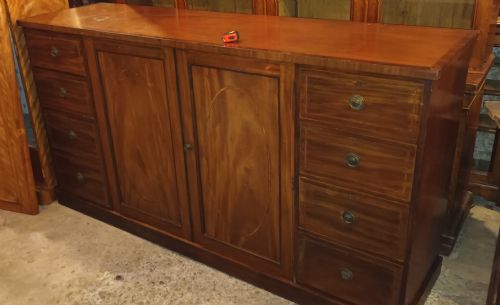

George III Cupboard Chest
A george iii cupboard chest marries the practical storage of a lower chest of drawers with an upper cupboard section.
George III Cupboard Chest
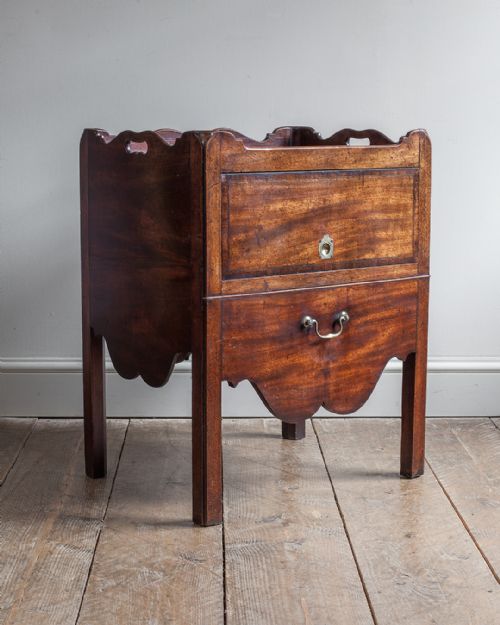
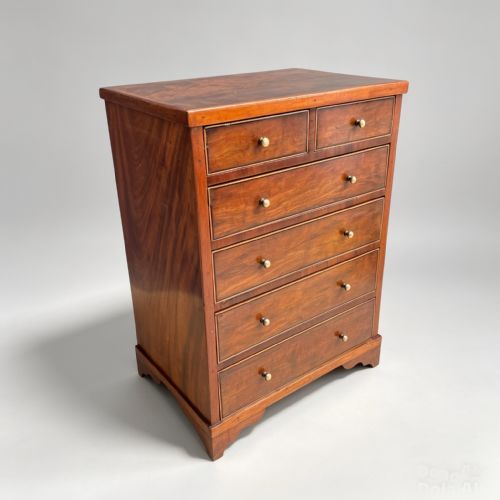
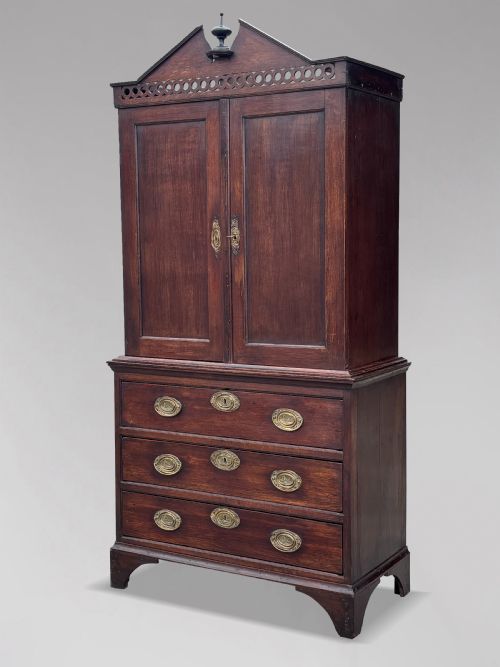
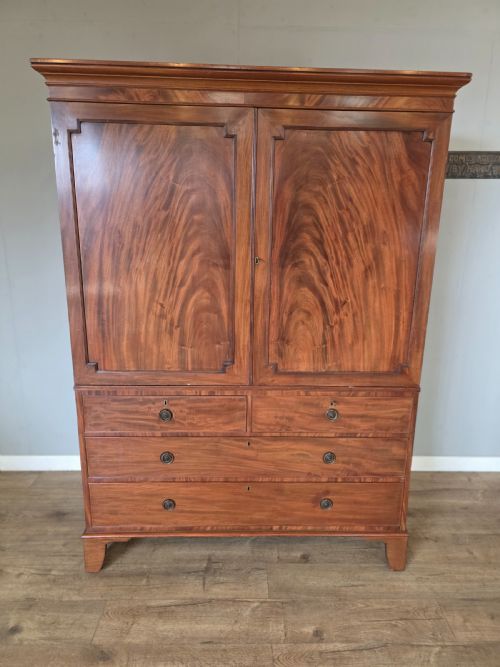
A george iii cupboard chest brings together two distinct functional forms, pairing a chest of drawers at the base with enclosed cupboard storage above. Buyers seeking a george iii cupboard chest encounter various domestic iterations, from tall linen presses fitted with internal sliding trays to compact bedside cabinets and low press cupboards.
The pieces originating from this period utilise robust architectural proportions, often combining timber carcases with fitted internal compartments for linens, books, or estate documents. Surviving examples demonstrate the versatility of Georgian case furniture, moving effortlessly from grand formal houses to smaller provincial rooms.
Materials and Construction
Cabinetmakers of the period relied heavily on solid mahogany and oak, frequently employing figured flame mahogany veneers to create striking visual movement across principal doors and drawer fronts. Decorative details were introduced through satinwood inlay, contrasting banding, and subtle marquetry work rather than excessive carving.
Structural integrity was achieved through traditional joinery, incorporating solid timber drawer linings, hand-cut dovetails, and original brass hardware such as drop handles and escutcheons. Internal elements like sliding trays and secret compartments reveal precise carpentry designed to maximise utility within a contained footprint.
George III Cupboard Chest Retail Price Guide 2026
Typical asking prices for george iii cupboard chest among the pieces listed under this phrase on Sellingantiques today, from the lower quarter to the upper quarter. They describe what is for sale here now, not the wider market.
One estate cabinet retains its original gilded lettering, offering a charming glimpse into an eighteenth-century filing system.
Judging Quality
Distinctions in quality rest upon the selection of timber and the restraint applied to decorative enrichment. Superior examples display continuous grain patterns across facades, crisp inlay work, and uncompromised internal fittings such as original linen slides or fitted writing drawers.
Proportion and execution define the hierarchy of these pieces, separating standard utilitarian furniture from items commissioned with finer woods like satinwood or exhibiting sophisticated architectural detailing.
Gillows·Thomas Bradshaw
The George III Cupboard Chest Glossary
- Linen Press
- A large cabinet designed specifically for storing folded linens and garments, typically featuring upper double doors enclosing sliding trays above a chest base.
- Sliding Trays
- Shallow internal pull-out shelves housed within the upper cupboard section, used for organising textiles before the widespread adoption of hanging wardrobes.
- Flame Mahogany
- A veneer cut from timber taken where branches join the main trunk, producing a distinctive flickering flame pattern highly prized by Georgian cabinetmakers.
- Secretaire
- A desk form incorporating a fitted drop-front writing drawer complete with small pigeonholes and subsidiary drawers.
- Commode
- A low decorative cabinet or chest of drawers, often taking curved demi-lune or bow front forms during the late eighteenth century.
George III Cupboard Chest: Frequently Asked Questions
What is a george iii cupboard chest used for?
These pieces served multiple domestic purposes, acting primarily as linen repositories, estate offices, or gentleman's wardrobes depending on their internal configuration.
Today, they function effectively as standalone storage units in bedrooms or hallways, offering concealed hanging or folding space alongside functional drawer storage.
How do you identify a genuine george iii piece?
Authentication relies on examining construction methods, timber ageing, and secondary woods used for drawer linings and carcase backs. Hand-cut dovetailing and period-appropriate brass hardware provide reliable indicators of eighteenth-century origin.
Differences in proportion and timber selection separate genuine Georgian pieces from later nineteenth-century revivals.
Are sliding trays original to linen presses?
Sliding trays represent the standard internal arrangement for eighteenth-century linen presses, predating modern clothes rails designed for coat hangers.
Many pieces retain these original shallow shelves, though some have undergone conversion to hanging space over time.
How should I care for antique mahogany furniture?
Preserving these surfaces requires maintaining stable indoor humidity levels away from direct heat sources and strong sunlight that can fade veneers. Regular dusting with a dry cloth and occasional application of appropriate natural wax keeps the timber nourished.