






Chippendale Wardrobe
When you search for a chippendale wardrobe, you are looking for substantial mahogany furniture spanning the Georgian period and later revival eras.
Chippendale Wardrobe
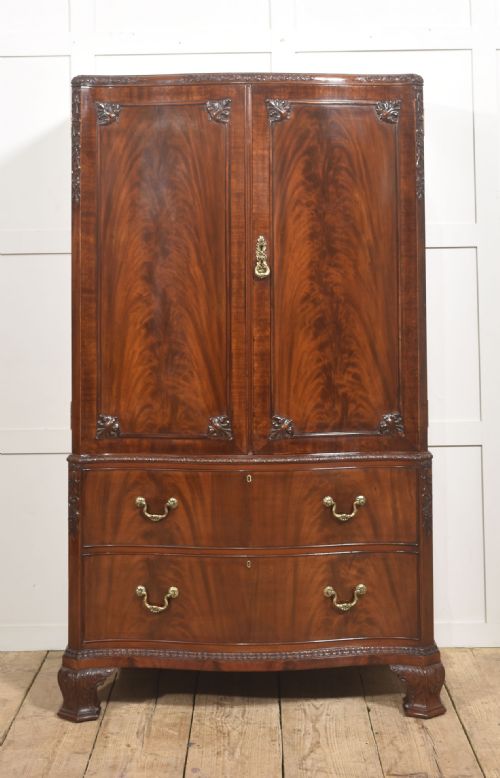
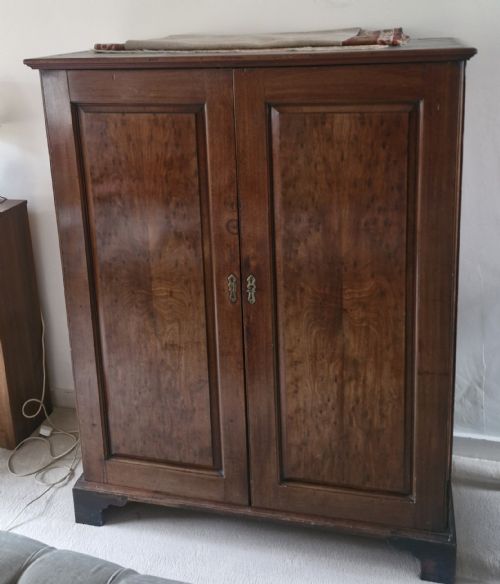
A chippendale wardrobe encompasses large storage pieces including linen presses, compactums, and tallboys originating from the 18th century as well as later revival periods.
The versions most commonly met on this page include Edwardian revival triple wardrobes and Georgian mahogany presses combining hanging space with internal drawers.
Makers and workshops of the revival era produced substantial breakfront and bow front variations alongside original 18th-century pieces.
How They Were Made
Construction relies heavily on solid mahogany and oak timbers, frequently enhanced with flame mahogany veneer to create striking door panels.
Cabinet makers utilised brass hardware for handles and escutcheons, alongside intricate carved details reflecting classic design influences.
Chippendale Wardrobe Retail Price Guide 2026
Typical asking prices for chippendale wardrobe among the pieces listed under this phrase on Sellingantiques today, from the lower quarter to the upper quarter. They describe what is for sale here now, not the wider market.
Many Edwardian wardrobes include hidden compartments designed originally for stashing valuables away from curious house guests.
What Varies in Quality
The depth of colour and the presence of a natural faded patina distinguish superior mahogany surfaces from plainer timbers.
The intricacy of carved ornamentation, from fretwork cornices to detailed bracket feet, separates standard production from finer cabinet work.
Thomas Chippendale·Waring & Gillows·Heals & Son·Maples & Co
The Chippendale Wardrobe Glossary
- Linen Press
- A dual-purpose storage piece featuring upper sliding trays or shelves above a lower chest of drawers. This form was widely used for household linens before deep hanging wardrobes became standard.
- Compactum
- A multi-compartment wardrobe designed to offer hanging space, drawers, and linen slides within a single unified piece. These layouts maximise storage capacity efficiently.
- Tallboy
- A stacked furniture form consisting of a chest of drawers placed upon another chest or base cabinet. They provide considerable vertical storage while occupying a modest floor footprint.
- Padouk
- An exotic timber resembling mahogany, noted for its rich reddish-brown tone and density, occasionally utilised in high-status 18th-century cabinet making.
Chippendale Wardrobe: Frequently Asked Questions
How do I date a Chippendale wardrobe?
Dating relies on examining the internal construction methods, timber choice, and secondary woods like oak or pine used in the drawer linings. 18th-century examples display hand-cut dovetails and authentic Georgian proportions.
Revival pieces from the late 19th and early 20th centuries often feature machine-planed timbers and standardised interior fittings while closely copying earlier stylistic motifs.
What is the difference between a press and a wardrobe?
A traditional press incorporates internal sliding shelves or trays behind its upper doors, originally intended for flat linens and folded garments. Wardrobes focus primarily on vertical hanging space for coats and dresses.
Many large pieces combine both functions, offering hanging sections alongside internal linen slides and drawers.
How do I care for mahogany veneer?
Mahogany surfaces benefit from regular dusting with a soft, dry cloth and protection from direct sunlight to prevent the timber from fading unevenly. Maintaining stable room humidity stops the veneer from lifting.
Applying occasional appropriate wax preserves the polished finish and nourishes the wood grain.
Where should I place a large wardrobe?
Large wardrobes require a dry interior wall with sufficient ceiling height and floor clearance to accommodate deep cornices and projecting doors. Measuring access routes through hallways and doorways is essential before positioning.
Keeping them away from direct heat sources prevents the timber from warping over time.