
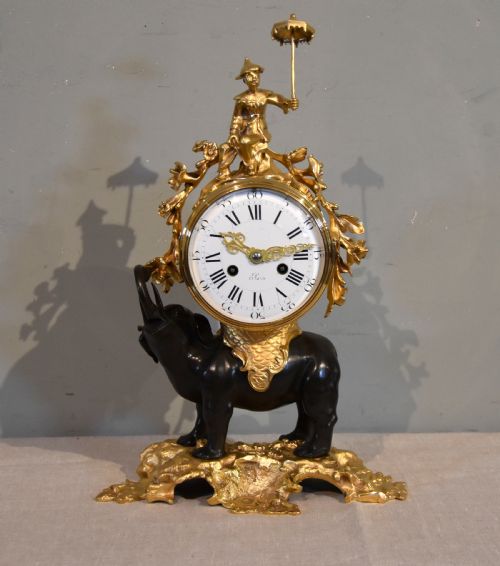


Chinoiserie Mantel Clock
A chinoiserie mantel clock brings painted lacquer and decorative brass work to a shelf, offering functional timekeeping wrapped in historic stylistic detail.
Chinoiserie Mantel Clock
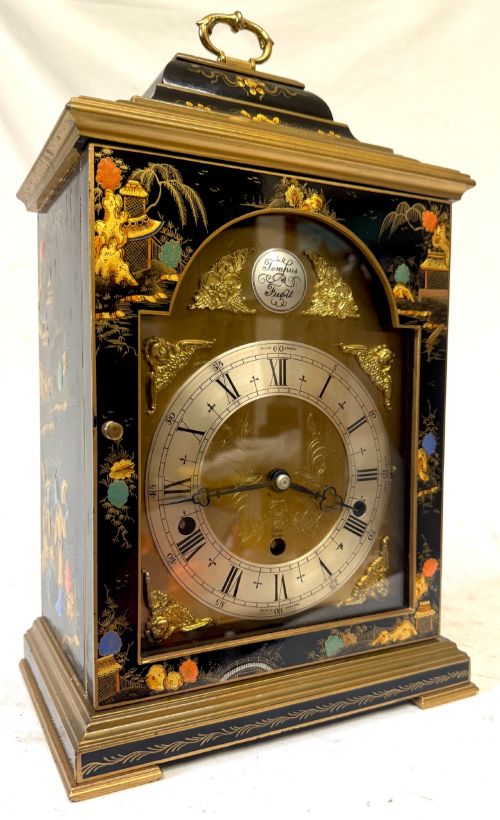
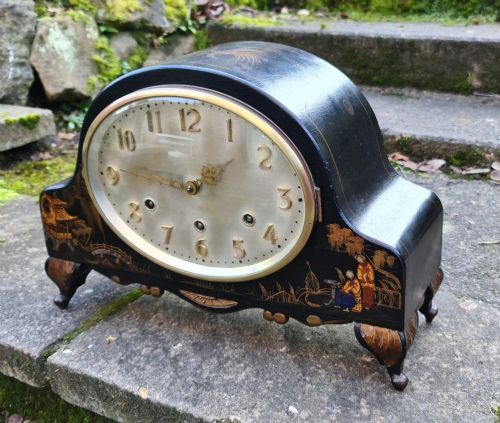
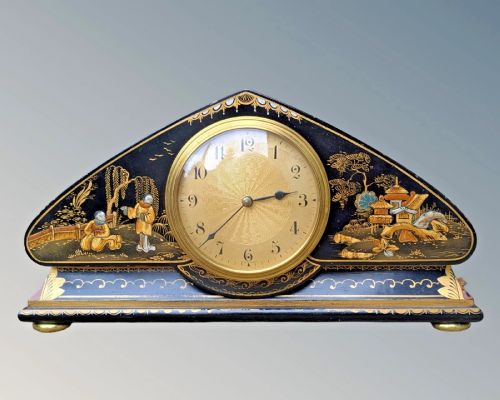
A chinoiserie mantel clock combines timekeeping mechanics with decorative lacquer cases, often finished in black, red, green, blue, or cream hues. These pieces appear frequently in Edwardian formats alongside earlier Georgian and later mid-century iterations.
Makers housed these movements in bracket clock bodies, upright mantel designs, or Napoleon hat shapes. The visual vocabulary relies on painted Oriental motifs set against contrasting coloured backgrounds.
The selection ranges from small bedside timepieces to larger striking bracket clocks with multiple trains. Buyers encounter both English movements and French mechanisms housed in these decorative cases.
Materials and Construction
Wood carcasses receive layers of lacquer, forming a smooth base for hand-painted decorative scenes in gilt and colour. Brass and ormolu mounts provide structural framing, dialbezels, and carrying handles.
Movements utilise brass gear trains, enamel dials, and glass viewing panels to protect the internal mechanisms. Finer examples incorporate materials such as burr walnut, tortoiseshell, or white marble within the structural design.
Chinoiserie Mantel Clock Retail Price Guide 2026
Typical asking prices for chinoiserie mantel clock among the pieces listed under this phrase on Sellingantiques today, from the lower quarter to the upper quarter. They describe what is for sale here now, not the wider market.
Quality and Execution
The depth of the lacquer finish and the intricacy of the hand-painted decoration dictate the visual standard of the case. Skilled application of gilt work creates sharp relief against the coloured background.
The sophistication of the internal movement, from simple timepieces to multi-train musical or chiming systems by established makers, separates standard examples from high-tier pieces.
Elliott London·James Smith London·Chater And Son London·Asprey of London·Jaeger Le Coultre·Moser
The Chinoiserie Mantel Clock Glossary
- Chinoiserie
- European decorative style reflecting Chinese artistic influences. It manifests in lacquered furniture and clock cases featuring painted figures and landscapes.
- Bracket Clock
- A portable clock designed to sit on a bracket or table. These spring-driven pieces frequently include carrying handles on top.
- Ormolu
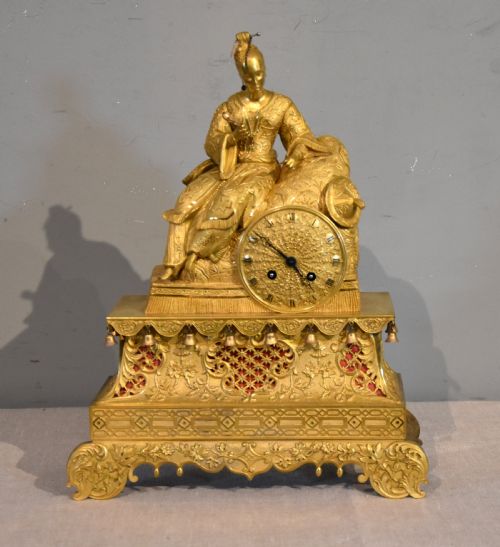
- Gilt bronze mounted on decorative objects. This technique involves applying a finely ground gold-mercury amalgam to bronze.
- Movement
- The internal mechanism of a clock that measures time and drives the strikes. French and English workshops produced these mechanical assemblies.
- Train
- A sequence of gears within a clock movement transmitting power from the spring to the escapement. Three train configurations support chiming or musical functions.
Chinoiserie Mantel Clock: Frequently Asked Questions
How do I wind an eight day clock?
Insert the winding key into the dial holes and turn gently until resistance is felt. Care must be taken not to overwind the mainspring.
Most mechanical bracket clocks require attention once a week to maintain accurate timekeeping. Keeping a consistent schedule preserves the tension within the brass train.
What is a three train movement?
A three train movement controls the going train for time, the striking train for the hours, and a third train for chimes or musical segments. This setup allows the clock to play tunes on the quarter hour.
Clocks with this complexity require more mechanical components visible behind the dial or through glass side panels.
Where should I place a lacquer clock?
Position the piece away from direct sunlight and heat sources to protect the painted lacquer finish from fading or cracking. Stable room temperatures keep the wood movement housing secure.
Level surfaces ensure the pendulum or escapement operates without interference, allowing the tick to maintain an even rhythm.
How do I identify an Edwardian piece?
Edwardian versions often feature walnut or brightly coloured lacquer cases with refined brass dials. The decorative proportions lean toward compact mantel formats.
Comparing the painted motifs and case silhouettes against dated archival examples helps distinguish this era from later mid-century or earlier Georgian periods.