

Gold Gilt Table Clock
A gold gilt table clock brings sculptural presence and mechanical precision to a room, drawing the eye with its gleaming metalwork and enamel dials.
Gold Gilt Table Clock
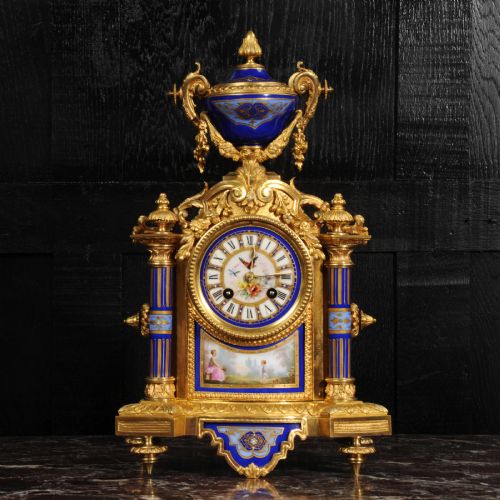
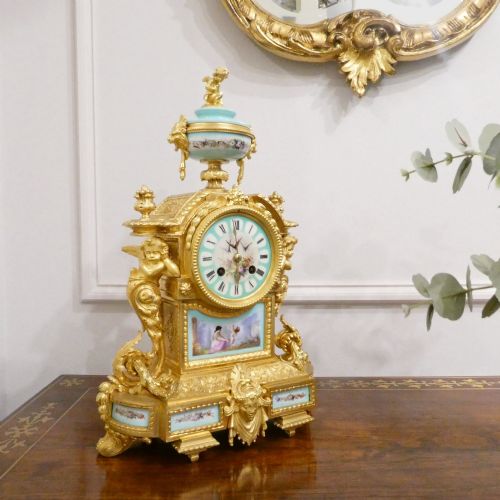
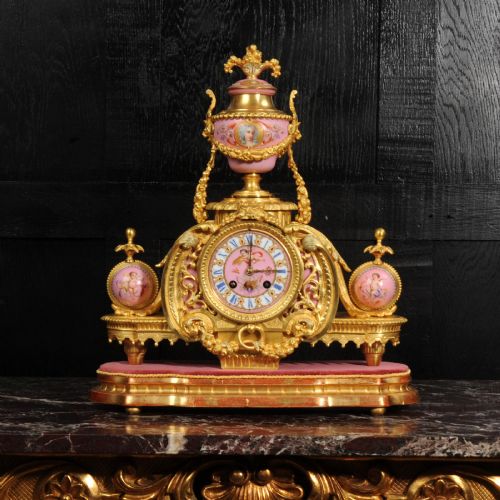
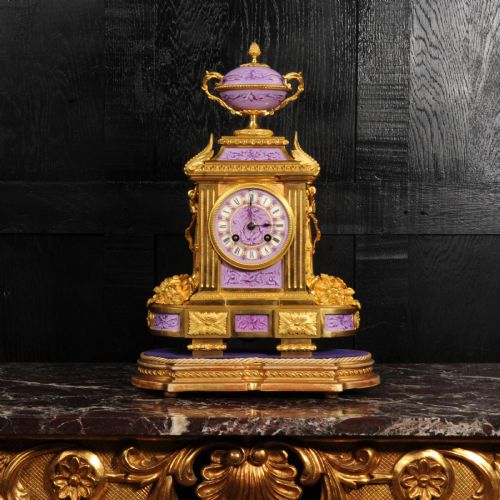
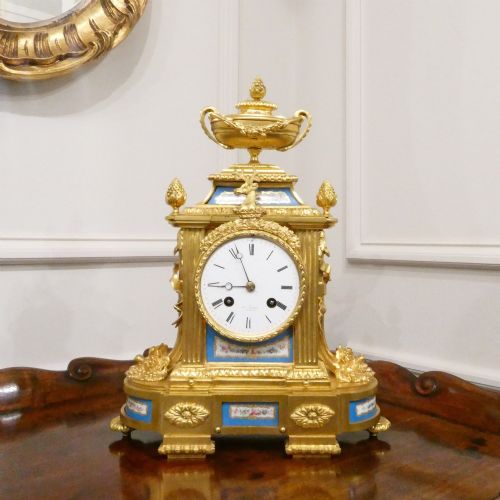
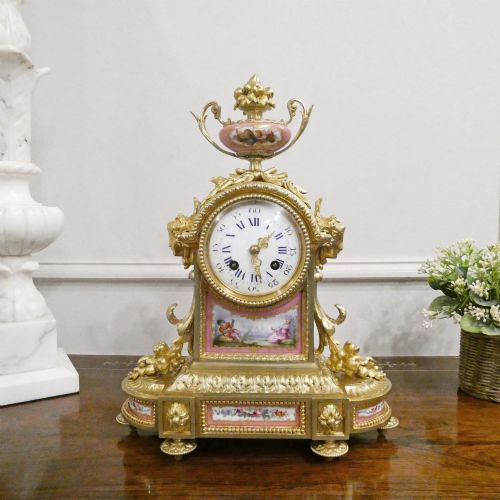
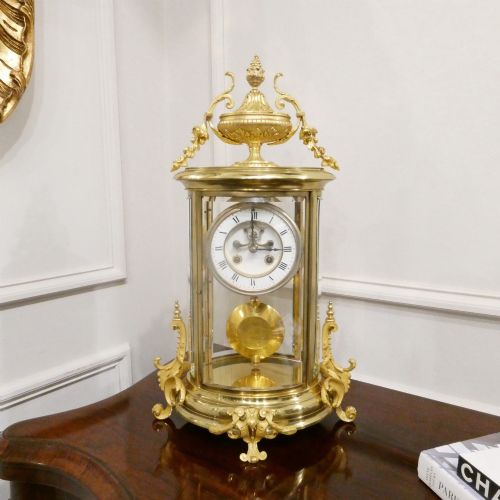
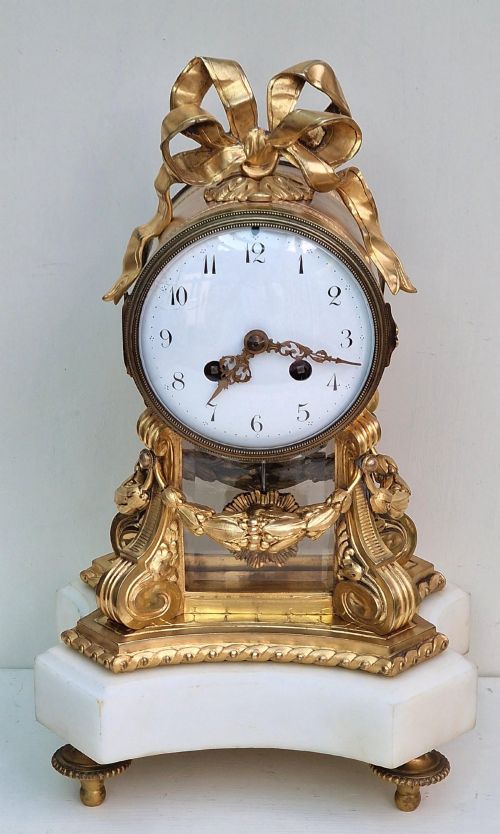
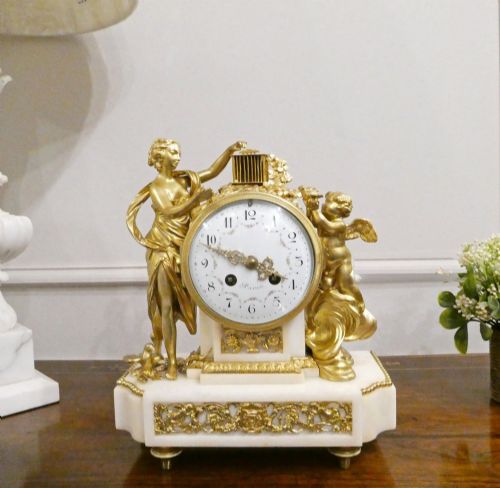
When you search for a gold gilt table clock, you encounter a variety of nineteenth-century decorative timepieces, most frequently French mantel clocks, carriage clocks, and desk clocks. These pieces combine timekeeping with sculptural forms, ranging from architectural Louis XVI style cases to ornate Rococo revivals.
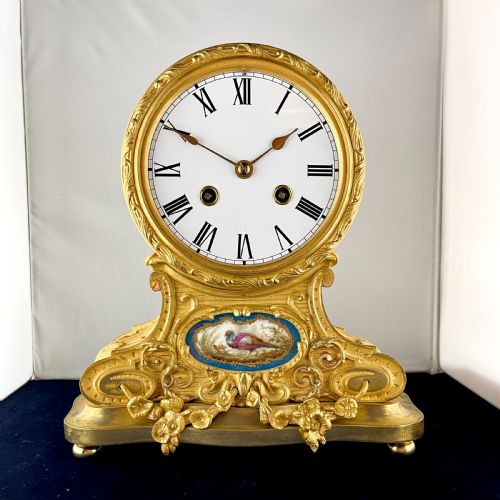
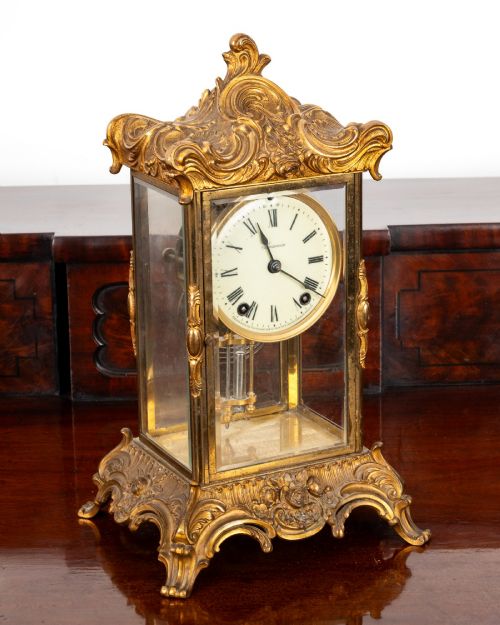
The selection on this page centres heavily on Victorian-era pieces and late nineteenth-century French manufacture, spanning periods from the 1850s through to 1900. Alongside mantel clocks set with porcelain panels, you find four-glass designs, crystal regulators, and compact carriage clocks intended for travel or bedside use.
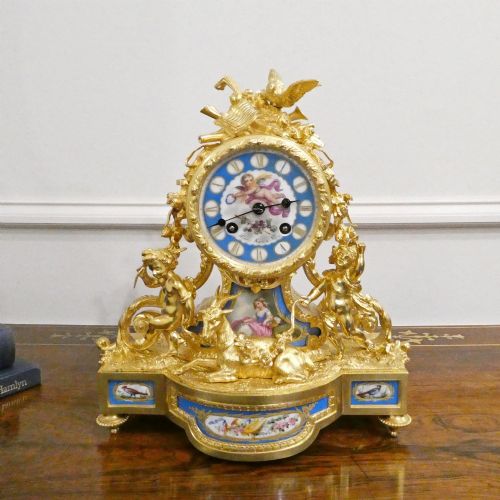
Many of these clocks adopt figurative or narrative themes, depicting mythological or historical subjects in cast metal. They function simultaneously as decorative sculpture and practical instruments, reflecting the tastes of nineteenth-century salons and drawing rooms.
Materials and Construction
Makers constructed these clocks using cast bronze, brass, or gilt metal as a foundation, applying mercury gilding or electroplating to achieve a bright, reflective golden surface. Ormolu, or gilt bronze, provides a warm, deep lustre that contrasts with patinated bronze details or white enamel chapter rings.
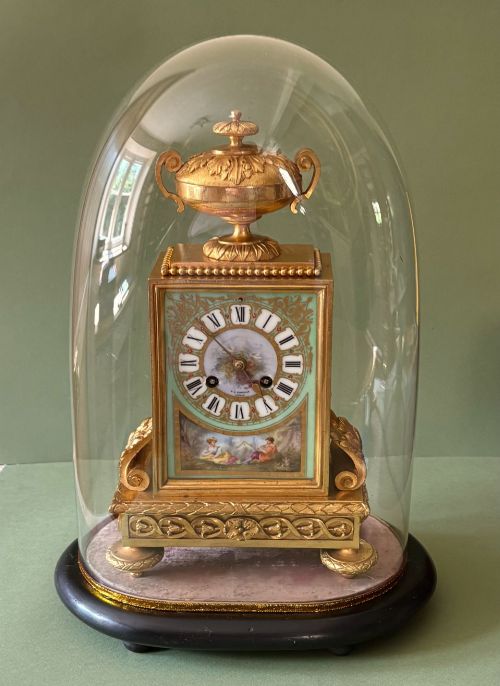
Many cases incorporate decorative panels of Sèvres-style porcelain painted with floral motifs or figures, alongside white marble bases and bevelled glass panels. Movements were produced by specialist horologists, often featuring spring-driven mechanisms with escapements and striking trains housed within the metal framework.
Listings feature eighteenth-century pieces alongside nineteenth-century Victorian designs, utilising materials such as marble, ormolu, enamel, and gilt brass.
Markers of Quality
The standard of a gold gilt table clock depends largely on the crispness of the bronze casting and the depth of the subsequent gilding. Superior examples display sharply chiselled chased details in the metalwork rather than soft, rounded edges from worn moulds.
The reputation of the maker and the complexity of the movement also define the piece. Clocks bearing signatures from established horologists or Paris workshops demonstrate finer mechanical engineering and superior integration of porcelain, marble, and gilt metal components.
Achille Brocot·Henry Marc·Japy Freres·Samuel Marti·Henry Dasson·Etienne Lenoir·Delettrez
The Gold Gilt Table Clock Glossary
- Ormolu
- Gilded bronze produced by applying an amalgam of gold and mercury to a bronze base and heating it. This technique creates a durable, rich golden finish seen on many nineteenth-century French cases.
- Carriage clock
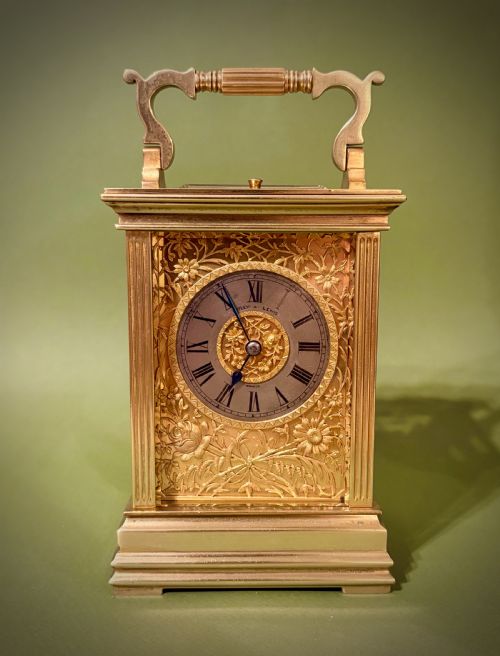
- A portable spring-driven timepiece designed for travel, typically fitted with a carrying handle and glazed panels. They often feature repeating mechanisms that strike the hours and quarters on demand.
- Champlevé
- An enamelling technique where troughs are dug into the metal surface and filled with vitreous enamel before firing. It appears frequently on the brass and gilt frames of late Victorian timepieces.
- Pendule d'Officier
- A traditional style of French military or officer's timepiece housed in a substantial gilt metal case. These clocks are typically equipped with robust movements suitable for transport.
- Crystal regulator
- A mantel clock featuring bevelled glass panes on four sides, allowing an unobstructed view of the mechanical movement and suspended pendulum. They gained popularity during the late nineteenth century.
- Sèvres
- A type of porcelain panel or dial decorated with hand-painted scenes and rich colours, originating from the French royal porcelain works. Makers integrated these plaques into gilt bronze mantel clock cases.
Gold Gilt Table Clock: Frequently Asked Questions
How do I wind an antique clock?
Wind the clock using the correct fitted key on the winding arbors found on the dial face or movement backplate. Turn gently until you feel resistance, taking care not to overwind the mainspring.
Ensure you stop immediately when the spring holds tension to prevent damage to the internal mechanism and teeth of the wheels.
What is a repeating carriage clock?
A repeating carriage clock includes an extra mechanism that sounds the last elapsed hour and quarter-hour when a button or lever on the case is pressed. This allowed owners to check the time in the dark without turning on a lamp.
The complication relies on additional racks and snails within the movement, making these pieces more intricate than standard time-only models.
Why does my clock run fast or slow?
Mechanical clocks are influenced by temperature, age, and placement, which can alter the effective length of the pendulum or the tension of the hairspring. Regulation is typically adjusted by turning a small nut on the pendulum rod or using a regulating square on the dial.
Small adjustments made over several days will help the clock keep more accurate time without disrupting the escapement.