


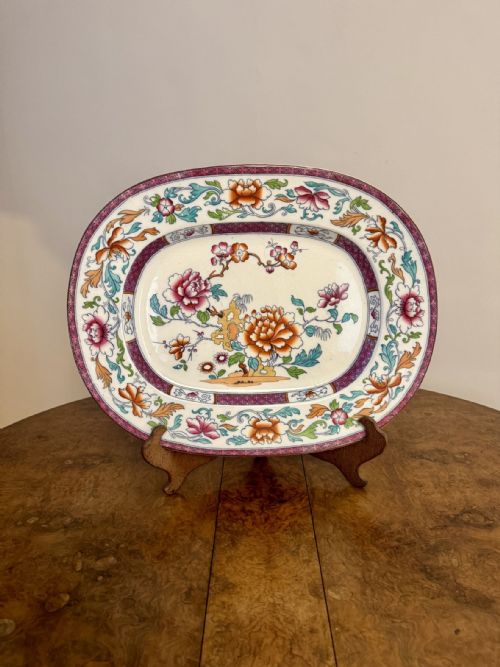
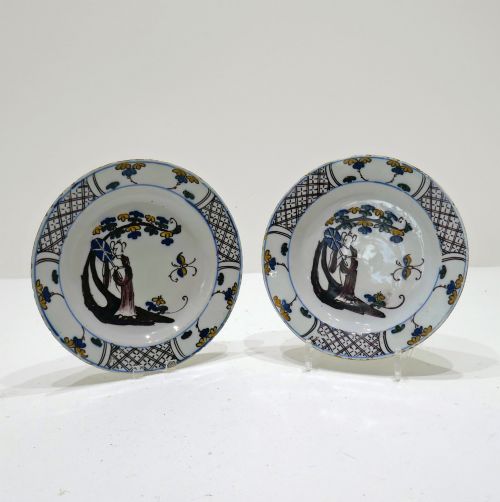
Chinoiserie Ceramic Dish
A chinoiserie ceramic dish brings the imagined landscapes of the East into European rooms through painted porcelain, earthenware and tin glaze.
Chinoiserie Ceramic Dish
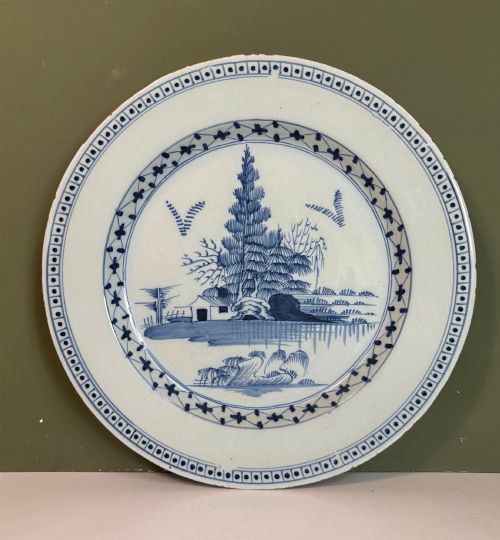
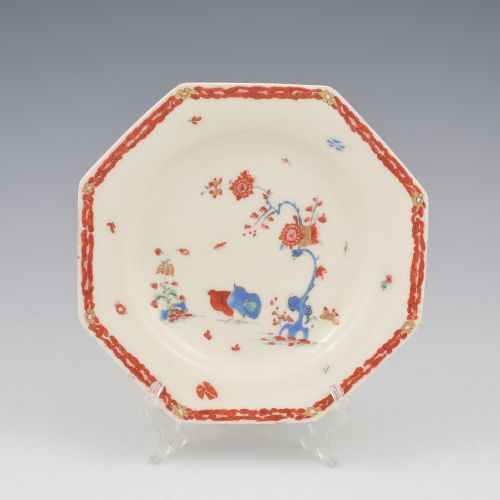
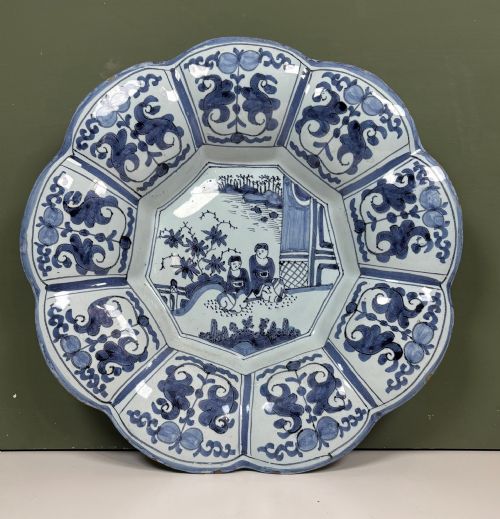
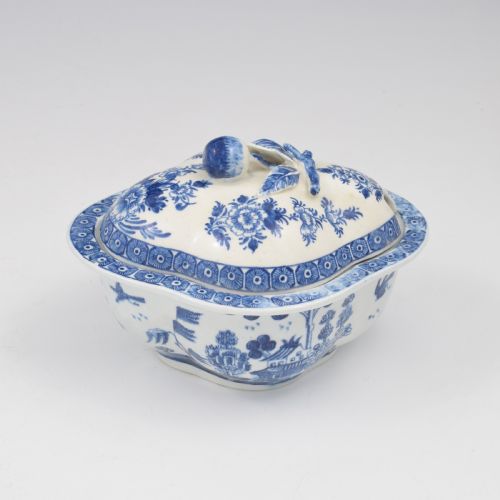
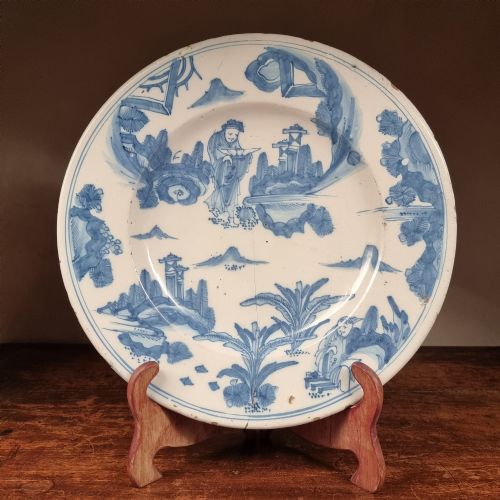
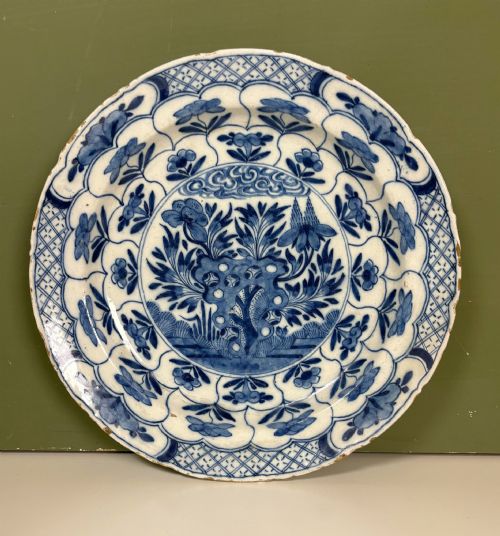
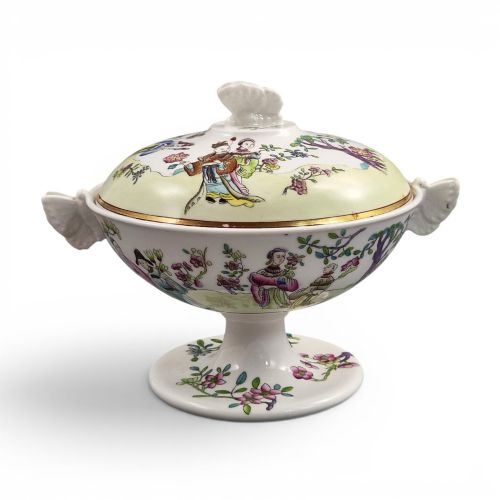
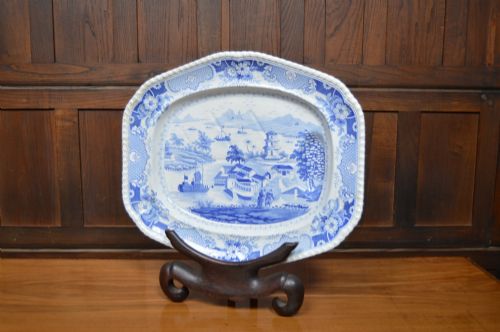
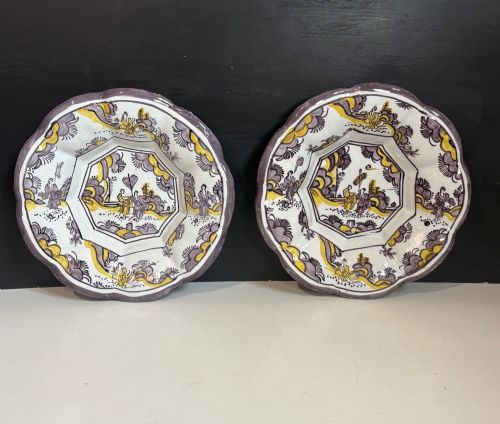
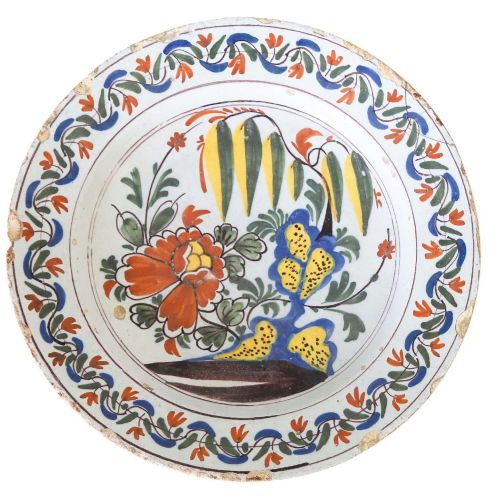
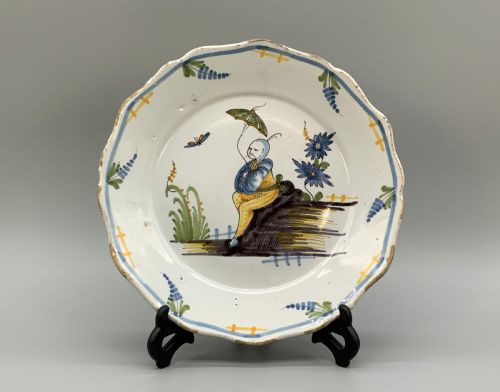
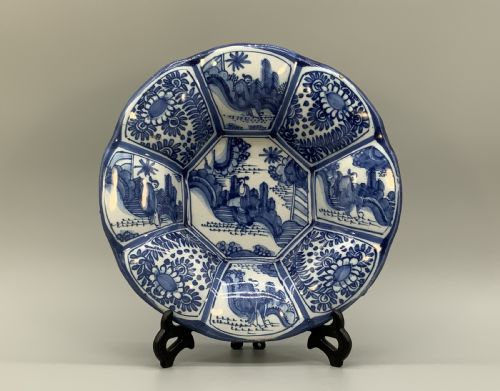
When you search for a chinoiserie ceramic dish, you encounter plates, chargers, platters and tureens decorated with fantastical oriental pavilions, figures and exotic foliage. These pieces span from the seventeenth century through the Victorian era, crossing English, French, Dutch and Chinese production.
The most common examples on this page are eighteenth-century English and Dutch delftware chargers alongside soft-paste porcelain plates from factories such as Worcester and Bow. You also find nineteenth-century ironstone and transferware bearing pagoda and temple motifs.
Forms range from large wall-hanging chargers and deep serving dishes down to small pickle leaves and scalloped shell dishes. Each piece reflects European fascination with eastern design interpreted through local ceramic traditions.
How they were made
Potters shaped earthenware, soft-paste porcelain, ironstone and stoneware on the wheel or pressed them into moulds to create plates, platters and tureens. Earthenware bodies received an opaque tin glaze that provided a smooth white ground for brushwork.
Painters applied cobalt pigment, enamel colours and occasionally gold leaf by hand or via transfer printing. High-temperature firing fixed the pigments into the glaze, creating durable surfaces designed for display or service.
Early painters occasionally squeezed tiny hidden insects into the foliage of their imaginary oriental landscapes to amuse themselves.
What varies in quality
Quality rests in the crispness of the brushwork and the clarity of the glaze across the surface of a chinoiserie ceramic dish. Finer pieces display deliberate hand-painted detail in the rendering of figures, rocks and foliage rather than hasty execution.
The stability of the ceramic body and the depth of the colour pigments distinguish exceptional factory output from standard utilitarian wares. Earlier tin-glazed examples show variation in the pooling of the glaze, whilst porcelain bodies reveal finer potting and more translucent walls.
Bow Porcelain·Worcester Porcelain·Spode·Mason·John Ridgway
The Chinoiserie Ceramic Dish Glossary
- Charger
- A large decorative plate intended for display on a wall or sideboard rather than daily dining. These substantial dishes often measure twelve inches or more across.
- Tin Glaze
- An opaque white glaze containing tin oxide applied to earthenware bodies. It creates a smooth surface that mimics porcelain and accepts painted decoration.
- Transferware
- Pottery decorated by applying a printed design from a copper plate onto the ceramic surface using tissue paper. This technique allowed intricate blue and white patterns to be produced consistently.
- Soft-paste Porcelain
- A ceramic composition made from white clay mixed with glass frit and other materials, fired at lower temperatures than hard-paste porcelain. It possesses a warm creamy tone and a distinctive texture.
- Ironstone
- A heavy durable type of earthenware patented in the nineteenth century. It resists chipping and provided a sturdy base for brightly coloured enamel decoration.
Chinoiserie Ceramic Dish: Frequently Asked Questions
Were these dishes meant for food?
Many larger platters and tureens served meat and vegetables at grand dining tables during the Georgian and Victorian periods. Chargers and smaller plates were frequently hung on walls or displayed on dressers purely for decorative effect.
Examining the glaze wear and foot rim can often indicate whether a piece saw active service or spent its life on display.
How do I date a delftware charger?
Early pieces from the seventeenth and eighteenth centuries typically feature heavy earthenware bodies with tin glazes that show minor fritting at the edges. The style of the brushwork, the palette of colours used and the thickness of the pottery rim provide key clues to the decade of manufacture.
Comparative study of recorded factory patterns helps narrow down the production period.
What is the difference between porcelain and ironstone?
Porcelain is a vitrified ceramic material that is hard, fine-grained and often translucent when held to the light. Ironstone is a dense, heavy earthenware developed to withstand heavier daily use without chipping.
While both materials carry chinoiserie patterns, ironstone possesses a thicker body and an opaque white finish.