


Chinese Watercolour Painting
A Chinese watercolour painting brings delicate botanical and figural studies from East Asia directly to Western interiors.
Chinese Watercolour Painting
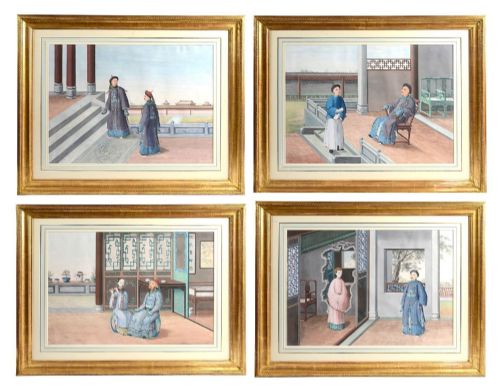
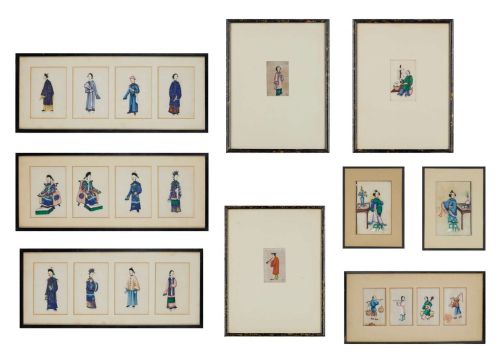
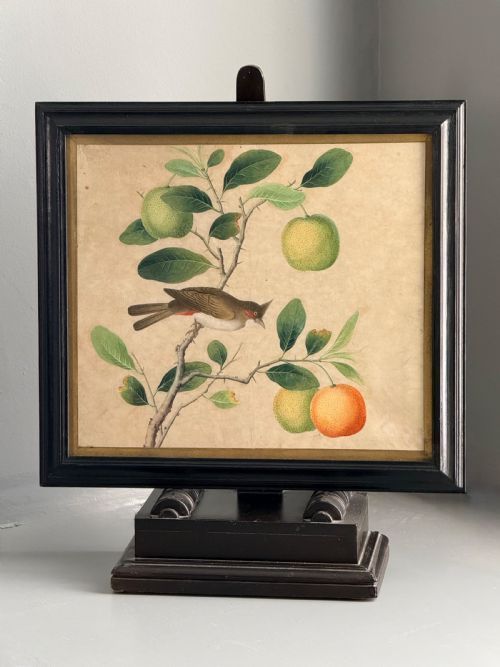
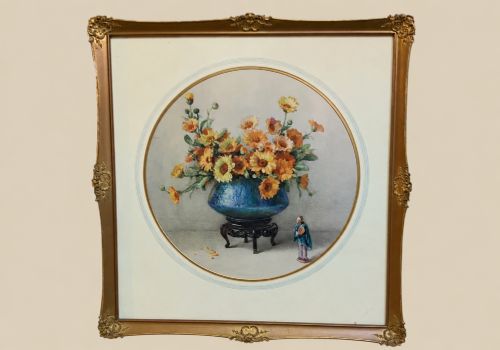
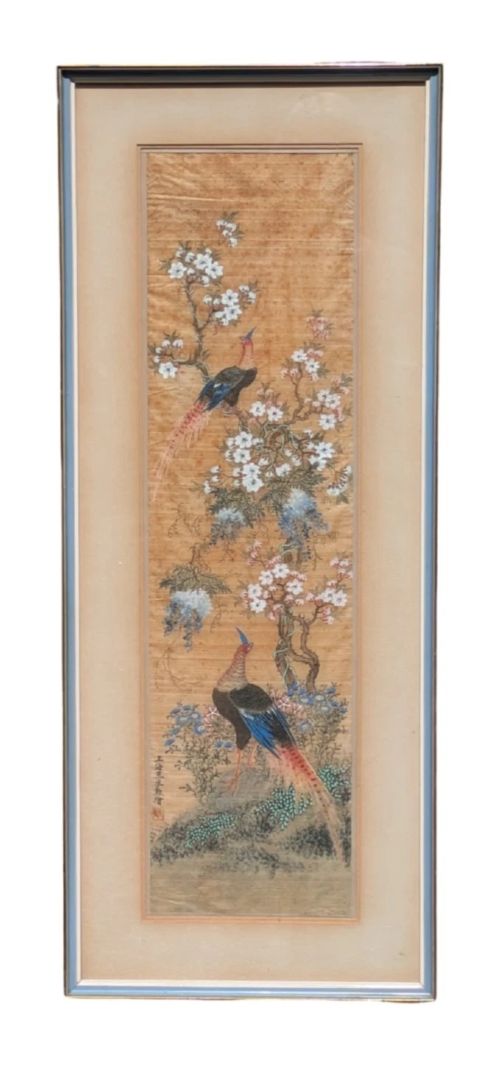
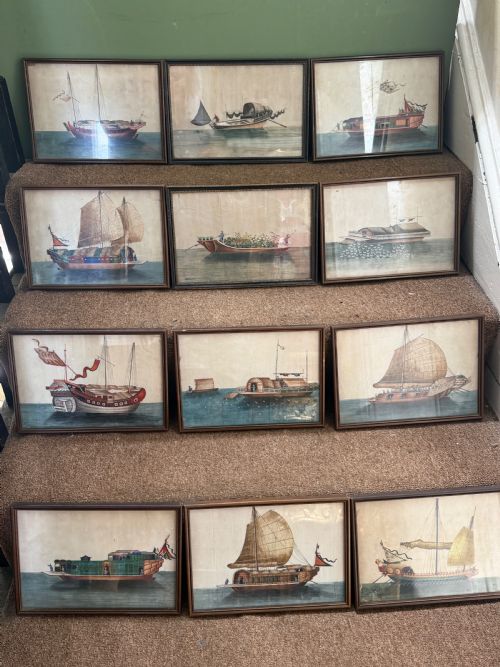
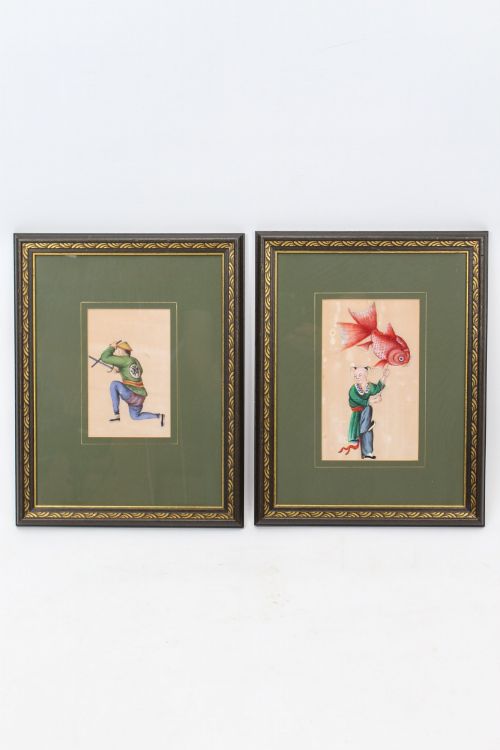
A chinese watercolour painting captures traditional subjects such as birds, butterflies, flowers, ships, and figural scenes across paper, silk, and pith paper. The pieces appearing most frequently stem from the nineteenth century, often grouped in sets depicting figures, junks, or botanical studies.
Makers produced these works within Chinese export art traditions, catering both to domestic collectors and international markets during the Qing dynasty and later periods. Collectors encounter everything from single framed works to complete albums containing multiple leaves of ink and colour.
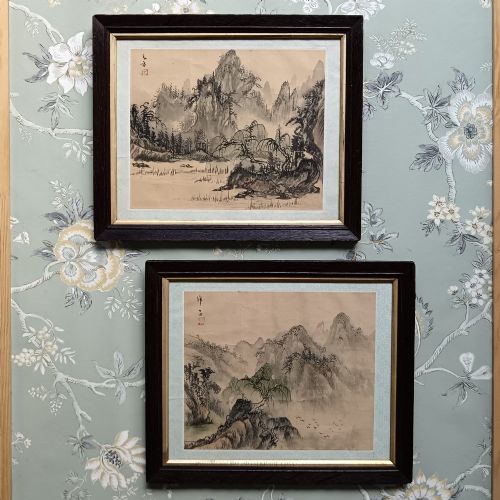
The visual vocabulary ranges from meticulous Shan Shui landscapes to vibrant portraits and botanical studies involving insects and blossom trees. These artworks bridge traditional Chinese painting techniques with the demands of nineteenth-century export trade.
How they were made
Artists laid watercolours and gouache inks onto delicate supports including woven silk, traditional paper, and pith paper, commonly misidentified as rice paper. Pith paper, harvested from the Tetrapanax papyrifer plant, yields a unique velvety surface that absorbs pigment with exceptional depth.
Master painters applied ink and pigment using fine animal-hair brushes, frequently sealing the finished composition with a personal artist stamp or seal. Many surviving pieces retain their original wooden frames or contemporary mountings reflecting period framing practices.
The listings on this site record Chinese watercolour painting across the eighteenth, nineteenth, and twentieth centuries, utilising materials such as pith paper, silk, and gouache.
What varies in quality
The refinement of brushwork and the precision of botanical or figural detail distinguish superior compositions from standard export souvenirs. Superior examples display subtle tonal gradations in ink and watercolour, particularly in the rendering of bird plumage and insect wings.
The integrity of the delicate support material heavily influences the overall standard of a piece. Works executed on pith paper that remain free from severe staining or fragmentation demonstrate careful preservation through centuries.
The Chinese Watercolour Painting Glossary
- Pith paper
- A delicate material cut from the pith of the Tetrapanax papyrifer plant, widely used in nineteenth-century Chinese export painting for its velvet-like texture. It requires careful handling due to its fragile nature.
- Gouache
- An opaque water-based pigment used alongside transparent watercolour to build vibrant surface colour. It provides the dense highlights seen on many export paintings.
- Shan Shui
- A traditional style of Chinese painting featuring natural scenery such as mountains and rivers. These works rely on brush and ink rather than strict observational realism.
- Chinese Export
- Art created in China specifically for foreign markets, combining traditional domestic techniques with Western aesthetic preferences. This category includes the majority of nineteenth-century watercolour sets.
- Album
- A book format containing a series of sequential paintings or sketches, often preserved between protective covers with artist seals. These collections frequently depict figural occupations or botanical studies.
Chinese Watercolour Painting: Frequently Asked Questions
What is pith paper?
Pith paper is a porous, fragile material derived from the cellular interior of a specific Asian shrub rather than pressed rice grains. Artists valued it for its unique ability to hold brilliant, opaque watercolours.
Paintings executed on this medium often display a characteristic velvety depth that standard paper cannot replicate. Collectors handle these pieces with extreme care to prevent cracking.
How were export paintings used?
Nineteenth-century workshops produced these watercolours primarily for Western travellers, merchants, and traders visiting Chinese ports. Buyers assembled the sheets into decorative albums or framed them for domestic display.
Series depicting junks, local figures, and botanical studies served as visual records of Eastern culture for European homes. Today, these works survive both as individual mounted pictures and intact bound collections.
How do I date a Chinese watercolour?
Dating relies heavily on stylistic markers, framing methods, and the specific material support used by the artist. Nineteenth-century pieces frequently feature pith paper substrates and Canton export subjects, whereas mid-century examples often incorporate artist signatures and silk mounts.
Examining the backing materials, framing construction, and pigment types helps differentiate Qing dynasty output from later twentieth-century productions.
How should I care for these watercolours?
Paper and silk paintings require strict protection from direct sunlight and high humidity to prevent pigment fading and material degradation. Professional framing using acid-free mount boards and UV-filtering glass ensures long-term preservation.
Owners must avoid hanging these delicate artworks in damp environments or areas prone to sudden temperature fluctuations.