


Pith Paper Artwork
Pith paper artwork brings delicate botanical and figural scenes into your home on a rare, fragile botanical medium.
Pith Paper Artwork
When you search for pith paper artwork, you encounter delicate paintings created on a fragile organic substance harvested from the pith of the Tetrapanax papyrifer plant. These pieces frequently emerge in groups or sets, recording scenes from the Qing dynasty and Chinese export markets.
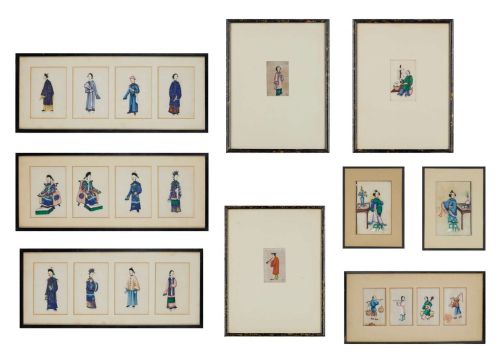
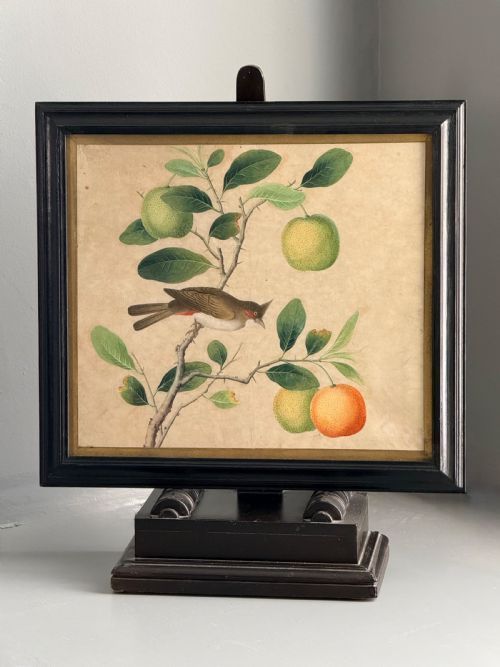
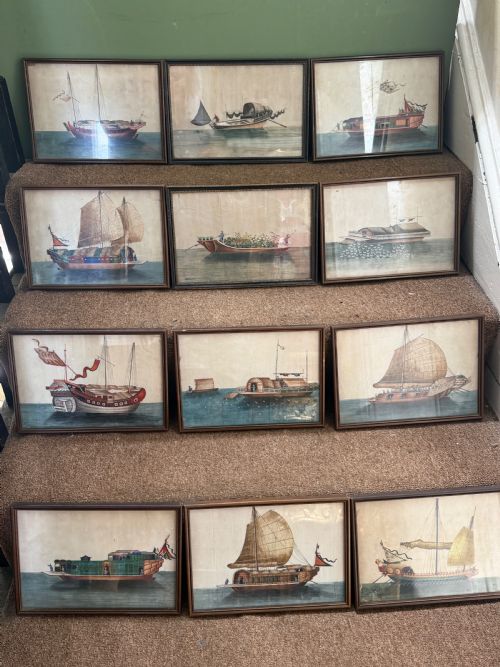
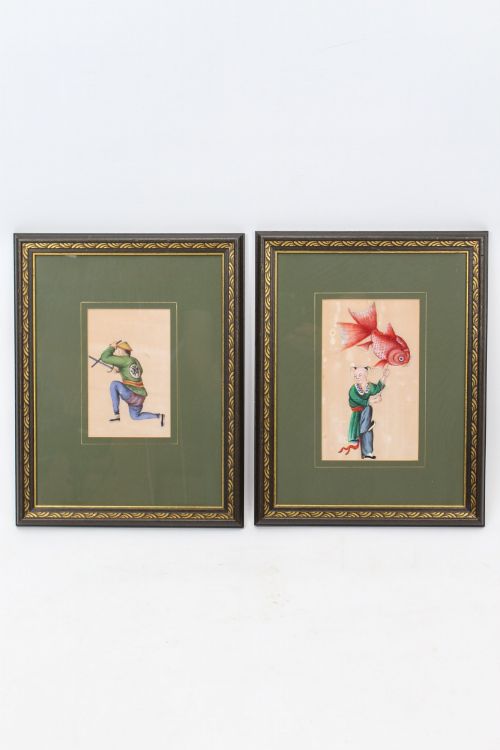
The objects on this page include framed paintings, wall art, and original watercolours or gouache works. You will most commonly meet 19th-century examples, often featuring figures, junks, ships, butterflies, insects, and floral studies.
Originating largely from the 18th century through to the Edwardian era and 1900, these works reflect traditional Chinese export art styles. They arrive framed in materials like ebonised wood and glass, preserving their fragile surfaces.
How pith paper artwork was made
Artists painted these works using gouache and watercolour directly onto sheets of pith paper, sometimes referred to as rice paper. This spongy, cellular plant material absorbs pigments with remarkable velvety depth and luminous brilliance.
Makers mounted these delicate paintings onto backing paper or cards, often framing them behind glass in wood or ebonised wood frames to protect the fragile medium from physical damage and moisture.
Early Western buyers often kept these delicate paintings hidden inside silk-bound albums, which protected their vibrant colours from the harsh light of Victorian parlours.
What varies in quality
The finesse of the brushwork and the vibrancy of the gouache pigments define the upper tier of these pieces. Master painters achieved extraordinary detail in figures, insects, and floral subjects, whereas simpler export items display a more formulaic execution.
Condition and completeness significantly alter the standing of a set. Intact groupings of twelve or twenty-one paintings retain greater visual narrative power than isolated fragments, and the preservation of the original framing elements plays a decisive role.
The Pith Paper Artwork Glossary
- Pith paper
- A delicate, spongy material cut from the pith of the Tetrapanax papyrifer plant. It possesses a velvety texture that accepts watercolours and gouache with intense colour saturation.
- Gouache
- An opaque watercolour medium composed of ground pigments and a binder. It provides the dense, flat areas of rich colour seen in Chinese export paintings.
- Chinese Export
- Art produced in China specifically for Western markets during the Qing dynasty and later periods. These works blended traditional Eastern subjects with Western framing and compositional preferences.
- Qing Dynasty
- The final imperial dynasty of China, spanning from the seventeenth to the early twentieth century. Most export paintings on pith paper date from the later decades of this era.
- Junk
- A traditional Chinese sailing ship with battened sails. These vessels frequently appear as subjects in maritime export paintings from the nineteenth century.
Pith Paper Artwork: Frequently Asked Questions
What is pith paper made from?
Pith paper is cut from the spongy central cellular tissue of the Tetrapanax papyrifer shrub, native to Taiwan and southern China. The pith is sliced into thin sheets that yield a unique, velvety painting surface.
Despite its common historical misnomer as rice paper, it contains no rice. The fragile material absorbs watercolour and gouache pigments in a way that gives the colours a distinct luminescence.
How should I hang pith paper artwork?
Hang these delicate works away from direct sunlight and areas of high humidity to protect the organic paper and water-soluble pigments. Consistent indoor climates prevent the fragile pith from drying out or degrading.
Ensure they are framed securely behind glass with adequate spacing between the artwork and the glazing. This prevents the painting surface from adhering to the glass over time.
How do I date pith paper paintings?
Dating relies heavily on the clothing styles, maritime vessels, and framing materials associated with the piece. Nineteenth-century examples often display Qing dynasty costume and specific export framing techniques.
Archival clues like old paper backing, handwritten notes, and the style of ebonised wood frames help narrow the period down to specific decades or the Edwardian era.
Why are these paintings often found in sets?
Export artists in trading ports like Canton produced these works in organised series for Western travellers and merchants. Sets commonly numbered twelve or twenty-one, illustrating local trades, flora, fauna, or maritime scenes.
Keeping a set together preserves the original narrative scope intended by the workshop. Individual pieces were frequently dispersed, but complete sets survive as remarkable historical records.