
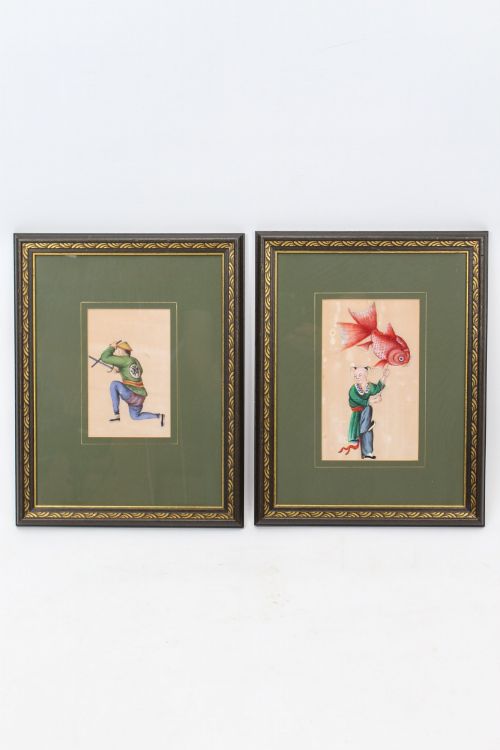


Framed Chinese Pith Art
Framed chinese pith art brings delicate botanical and figural scenes into rooms, created on pith paper for Western export markets.
Framed Chinese Pith Art
Framed chinese pith art consists of paintings executed on fragile plant-derived pith paper, commonly known as rice paper, and preserved behind glass in wooden frames. These works primarily date from the 18th century, the Regency period, the 19th century, and the Edwardian era, reflecting historical trade channels.
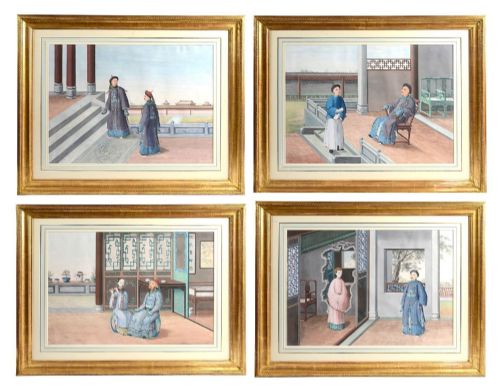
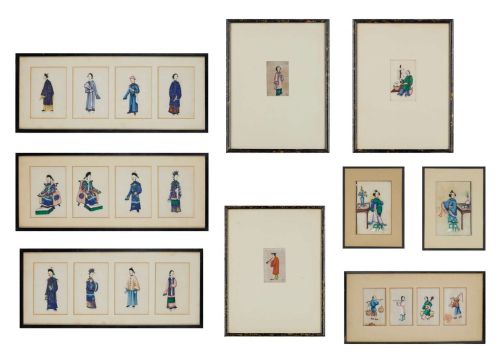
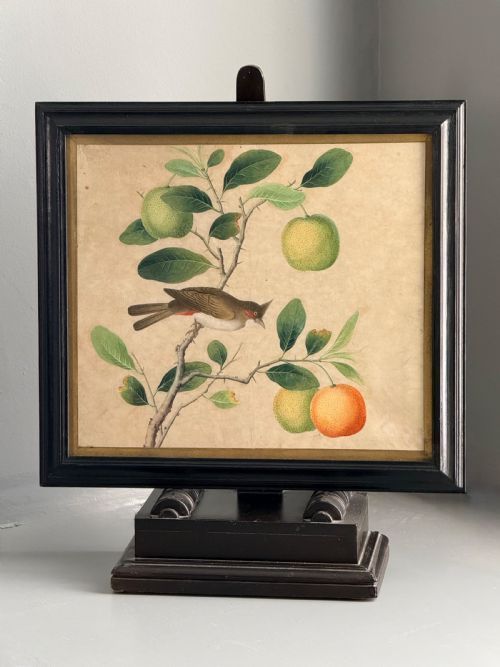
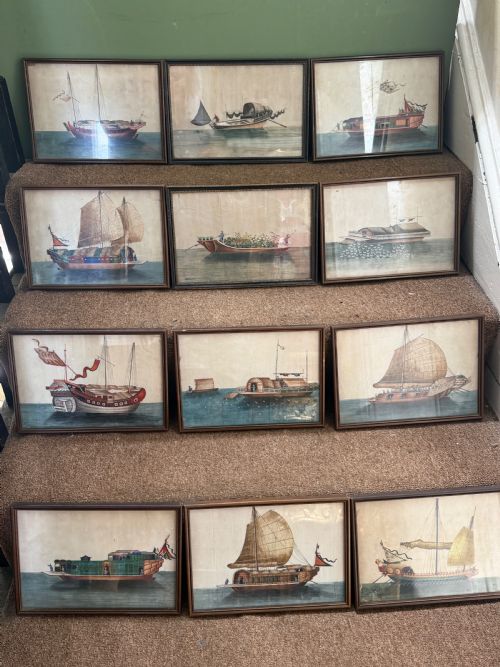
Buyers encounter subjects ranging from individual figural studies and botanical specimens like butterflies to detailed depictions of junks and ships. Sets frequently appear alongside single works, with groups of twelve or twenty-one paintings representing common configurations from the Qing dynasty export trade.
The aesthetic bridges traditional Chinese painting techniques with the demands of European buyers during the 19th century and earlier periods. Most pieces on this page originate from the Canton export workshops catering to Western travellers and merchants.
How they were made
Artists painted these works using gouache and watercolour directly onto pith paper, a spongy material sliced from the pith of the Tetrapanax papyrifer plant. This cellular medium absorbs pigments deeply, producing a velvety texture and luminous surface quality unique to the material.
The finished paintings were then mounted and framed using wood, occasionally with gilt details or protective glass to shield the delicate paper from humidity and handling.
Butterflies and insects share gallery space with entire fleets of painted junks.
What varies in quality
The refinement of the brushwork and the vibrancy of the gouache pigments distinguish superior examples from standard export production. Master painters achieved exceptional detail in botanical subjects and human figures, whereas lesser works display stiffer execution.
Condition plays a central role in valuation, as pith paper is inherently fragile and susceptible to cracking or fading. Intact sets with original framing preserve the historical integrity of the piece more effectively than scattered fragments.
The Framed Chinese Pith Art Glossary
- Pith paper
- A delicate, spongy material sliced from the pith of a shrub, mistakenly called rice paper in historical trade accounts. It absorbs water-based pigments with a distinct velvety depth.
- Gouache
- An opaque water-based paint composed of pigment, water, and a binding agent such as gum arabic. It provides the dense, saturated colour found in Chinese export paintings.
- Qing dynasty
- The final imperial dynasty of China, spanning from the seventeenth to the early twentieth century. Export art from this era aligns with active European trade.
- Canton
- A major southern Chinese port city where local artists produced vast quantities of art specifically for Western export markets during the 19th century.
- Junk
- A traditional Chinese sailing ship with battened sails, frequently depicted as a subject in maritime export paintings of the 19th century.
Framed Chinese Pith Art: Frequently Asked Questions
What is pith paper made from?
Pith paper is sliced from the spongy interior of the Tetrapanax papyrifer plant rather than manufactured from pressed rice.
This cellular structure gives the surface its characteristic velvety appearance when painted with watercolour.
Why are these paintings framed?
Framing protects the fragile pith paper from air movement, physical pressure, and moisture that can easily tear the surface.
Glass fronts further shield the delicate gouache pigments from dust and accidental contact.
How do I date these paintings?
Dating relies on stylistic markers within the Qing dynasty alongside the construction methods of the wooden frames.
Earlier pieces from the 18th century or Regency period often feature distinct figural proportions compared to Edwardian examples.
Are these works hand-painted?
Every piece recorded in these materials is an original hand-painted work created with gouache or watercolour.
Artists in export workshops produced these scenes individually rather than using mechanical reproduction methods.