
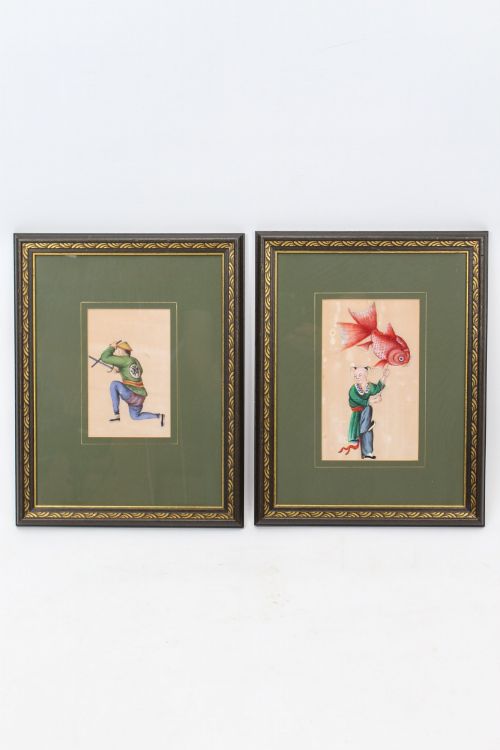


Pith Paper Watercolours
Pith paper watercolours are delicate historical paintings created on a fragile plant-derived surface, prized by collectors for their brilliant colour and intricate detail.
Pith Paper Watercolours
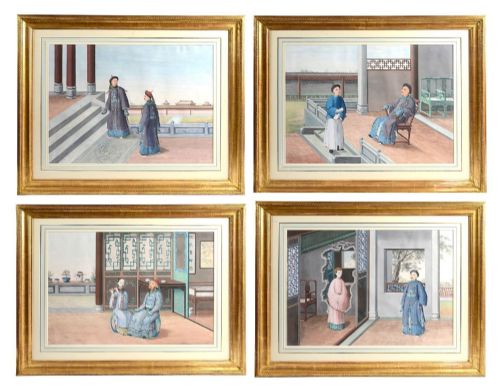
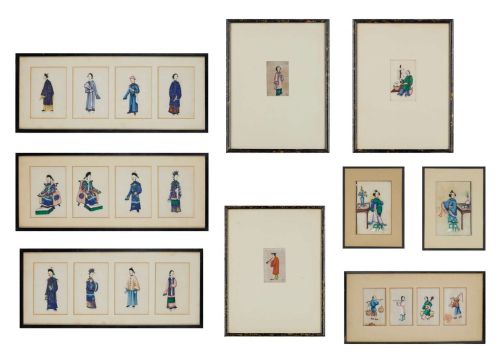
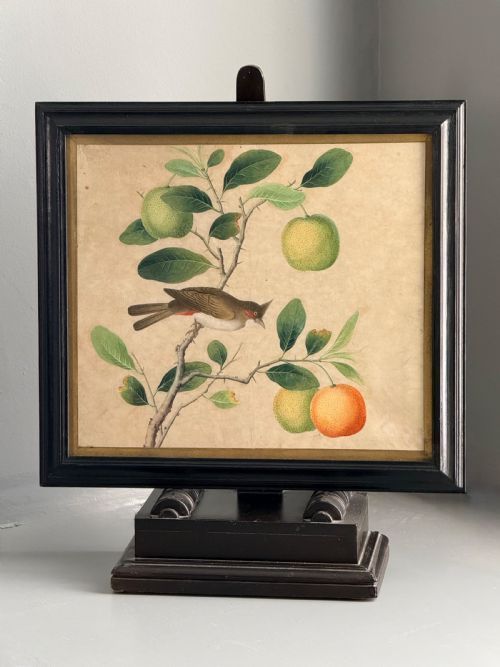
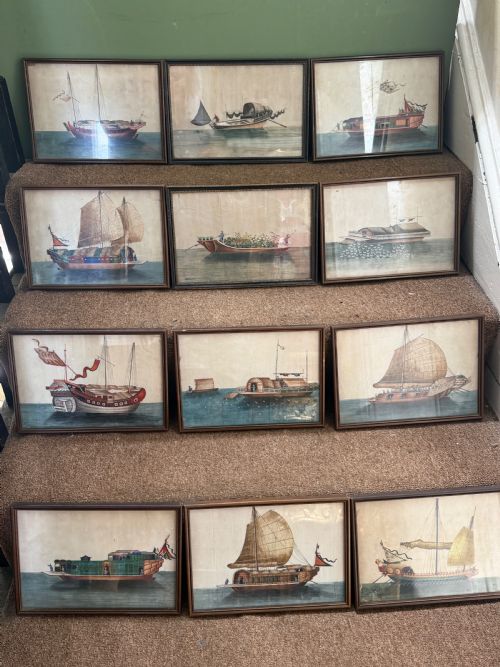
When you search for pith paper watercolours, you encounter delicate historical paintings originating from China during the Qing Dynasty and Chinese Export periods. These artworks primarily depict figures, ships, junks, butterflies, insects, and floral subjects in sets or individual framed formats.
The versions most frequently found on this page date from the nineteenth century, including sets of Canton watercolours and larger groupings of figural paintings. They survive in various configurations, ranging from small pairs to extensive decorative sets mounted for display as wall art.
How they were made
Artists painted these works using gouache and watercolour pigments applied directly onto sheets of pith paper, sometimes historically referred to as rice paper. This cellular pith material accepts water-based paints with exceptional luminosity, giving the colours a characteristic velvety depth.
Many surviving examples retain their historical framing, utilising wood and glass to protect the delicate plant-based medium from atmospheric damage. Some pieces are further enhanced by gilt wood frames that complement the vibrant pigments of the Chinese Export art.
Materials recorded across the inventory include pith paper, gouache, watercolour, wood, glass, and gilt wood.
What varies in quality
The visual appeal of pith paper watercolours depends heavily on the fineness of the brushwork and the preservation of the pigments. Superior examples display meticulous detail in figures, flora, or fauna, whereas lesser works may show simpler execution and fading.
Completeness also distinguishes different holdings, as intact sets of twelve or twenty-one paintings command greater interest than scattered single sheets. Furthermore, the structural stability of the fragile pith support and the quality of the surrounding mount influence the overall desirability.
The Pith Paper Watercolours Glossary
- Pith paper
- A delicate, spongy material sliced from the pith of the Tetrapanax papyrifer plant, commonly used in nineteenth-century Chinese export painting. It possesses a velvety texture that absorbs watercolour and gouache with striking vibrancy.
- Chinese Export
- Artworks created in China specifically for Western markets during the Qing Dynasty and earlier periods. These pieces frequently blend traditional Eastern techniques with subjects that appealed to European and American buyers.
- Gouache
- An opaque water-based medium composed of ground pigments suspended in water with a binding agent. It provides dense, saturated colour on delicate supports like pith paper.
- Qing Dynasty
- The final imperial dynasty of China, spanning from the seventeenth to the early twentieth century. Much of the export art traded internationally originates from the later decades of this era.
- Junk
- A traditional Chinese sailing vessel featuring battened sails, frequently depicted in nineteenth-century export watercolours. These maritime subjects were popular souvenirs for foreign traders.
Pith Paper Watercolours: Frequently Asked Questions
What is pith paper made from?
Pith paper is sliced from the spongy interior of stems from the Tetrapanax papyrifer plant, native to southern China and Taiwan. This botanical material differs entirely from traditional pulped paper.
The unique cellular structure gives the surface a cushion-like quality that absorbs water-based pigments differently than standard paper, yielding distinct luminous results.
Are these paintings fragile?
The pith support is inherently delicate and prone to cracking or bruising if subjected to pressure or fluctuating humidity. Historical examples require careful handling and conservation mounting.
Most surviving pieces are preserved behind glass within wooden frames to shield the sensitive plant-derived medium from environmental wear.
Why are they called rice paper?
Early European traders mistakenly believed the porous, spongy material was manufactured from pressed rice plant pulp. The term became a persistent historical misnomer among collectors and dealers.
Botanical analysis later confirmed the medium's true origins from the pith plant, though the old terminology remains common in historical descriptions.
How should I display them?
These watercolours demand stable indoor environments away from direct sunlight, which can fade the brilliant gouache pigments over time. Professional conservation framing with UV-protective glass ensures long-term preservation.
Displaying them flat against a secure backing prevents the brittle pith from flexing or sustaining impact damage within the frame.