
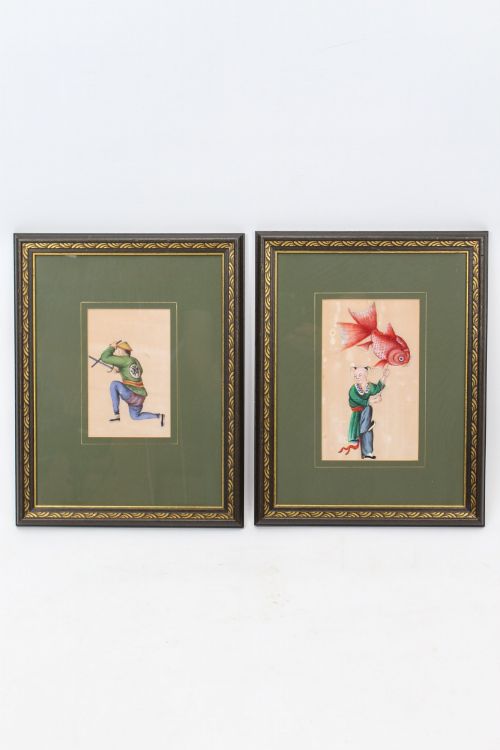


Qing Dynasty Pith Watercolour
These delicate qing dynasty pith watercolour paintings capture the vibrant social life, flora and fauna of historical China for Western export markets.
Qing Dynasty Pith Watercolour
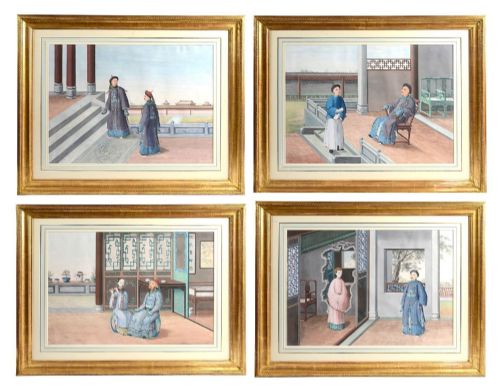
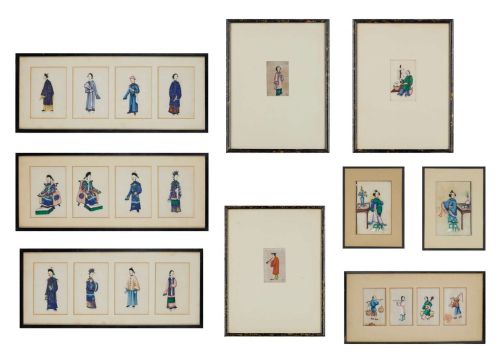
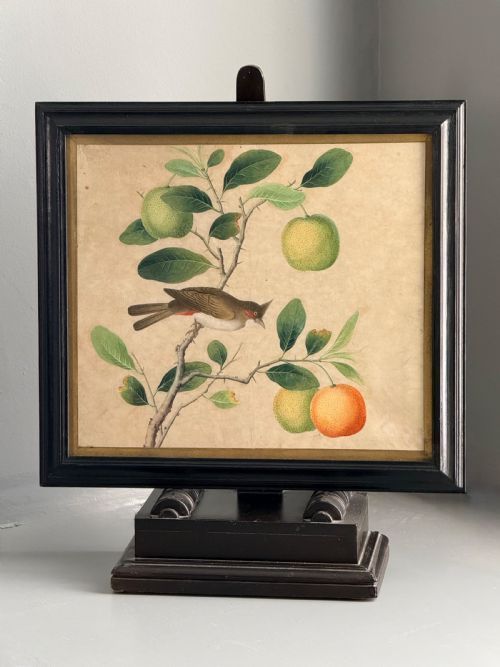
When you search for qing dynasty pith watercolour, you are looking at intricate works created primarily during the nineteenth century for export to Europe and Britain. These paintings document botanical subjects, insects, junks, musicians and court figures in meticulous detail.
You are most likely to meet single sheets, pairs or larger sets framed in wood, glass and gilt wood. The physical form ranges from small individual studies to groups of twelve or twenty-one framed paintings.
The aesthetic falls firmly under Chinese export art, produced to satisfy Western appetite for exotic eastern imagery during the Regency, Victorian and Edwardian periods.
Materials and technique
Artists painted these works directly onto pith paper, a spongy material traditionally sliced from the pith of the Tetrapanax papyrifer plant. This cellular surface absorbs water-based media in a distinctive manner, lending a velvet texture to the finished image.
Gouache and watercolour pigments were applied to build up opaque and translucent layers of colour. The interaction between the mineral-heavy paints and the delicate pith ground creates the luminous quality characteristic of Qing dynasty export art.
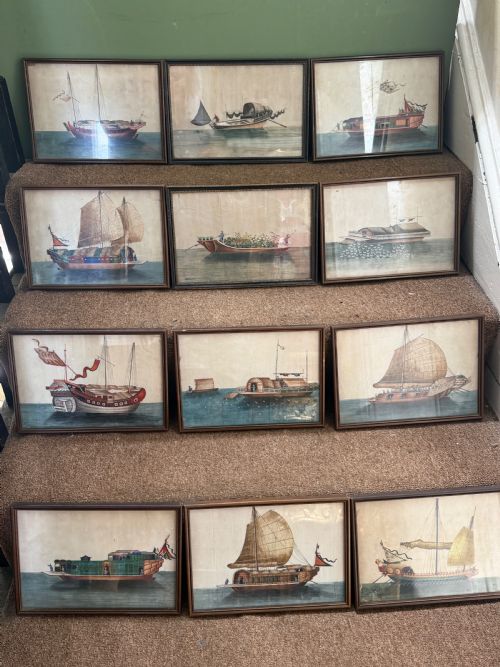
Artists sometimes captured bustling maritime traffic by painting entire fleets of junks on fragile pith leaves meant for European albums.
Evaluating quality and execution
The distinction between ordinary and superior pieces rests on the precision of the brushwork and the complexity of the composition. Botanical and figural subjects with fine lines and careful shading command greater attention than hurried decorative studies.
Preservation of the fragile pith paper heavily influences the standing of any piece. Examples that retain their original framing materials and vibrant pigment saturation without excessive cracking demonstrate superior survival.
The Qing Dynasty Pith Watercolour Glossary
- Pith paper
- A delicate, spongy material made from the pith of the Tetrapanax papyrifer shrub. It was frequently misnamed rice paper by early European traders due to its appearance.
- Gouache
- An opaque water-based paint that provides solid colour blocks and dense highlights. It is combined with watercolour in many export paintings to create depth.
- Chinese export art
- Items manufactured in China specifically for Western markets from the eighteenth century onwards. These goods combined Eastern techniques with European tastes.
- Junk
- A traditional Chinese sailing vessel featuring battened sails. These ships appear frequently in maritime export paintings from the late nineteenth century.
Qing Dynasty Pith Watercolour: Frequently Asked Questions
What is pith paper made from?
Pith paper is sliced from the spongy central pith of the Tetrapanax papyrifer plant native to southern China. The cellular structure gives the surface a characteristic velvety texture.
This fragile medium requires careful handling and protection behind glass to prevent crumbling or tearing over time.
How were these paintings used originally?
These works were produced in treaty ports like Canton to be sold to Western travellers, merchants and diplomats as souvenirs. They were often compiled into bound albums or framed for display in European homes.
The subject matter catered directly to Western curiosity about Chinese costume, flora, fauna and daily life.
How do I care for pith watercolours?
Keep the paintings away from direct sunlight to prevent the gouache pigments from fading. Stable indoor humidity levels protect the delicate pith paper from drying out or warping.
Professional framing with conservation glass ensures the artwork remains sealed and protected from airborne dust and moisture.
How can I date these paintings?
Dating relies on stylistic clues, framing materials and costume details depicted in the artwork. Regency and early nineteenth-century pieces often feature different palette choices compared to late Qing or Edwardian examples.
Archival records and accompanying provenance help narrow down the production period of larger sets.