


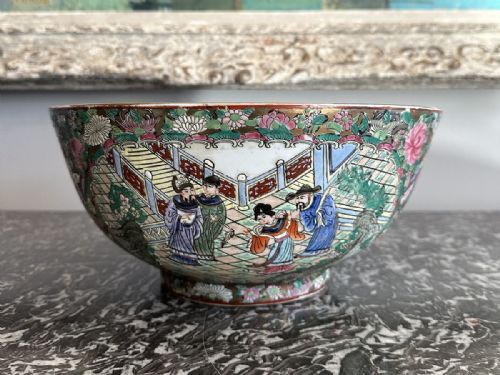


Chinese Porcelain Fruit Bowl
A chinese porcelain fruit bowl brings centuries of hand-painted artistry and vibrant enamel colour directly to the centre of the dining table.
Chinese Porcelain Fruit Bowl
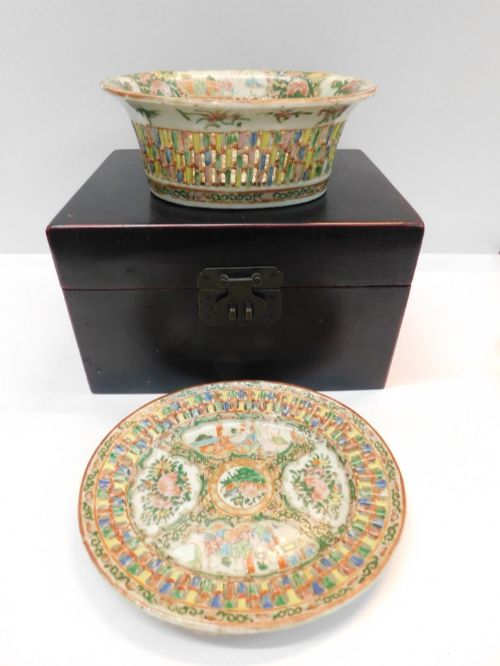
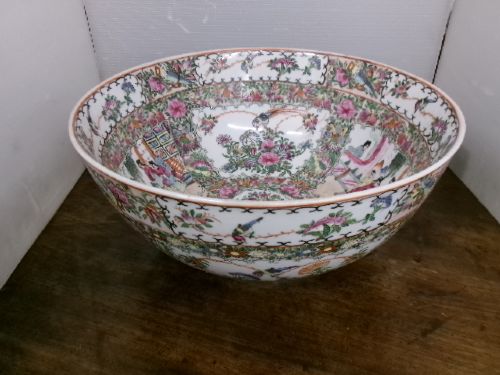
A chinese porcelain fruit bowl covers a range of large serving vessels, punch bowls, pedestal dishes, and reticulated baskets with stands. These pieces originate primarily from the 18th and 19th centuries, alongside examples spanning from the Ming dynasty to the early 20th century.
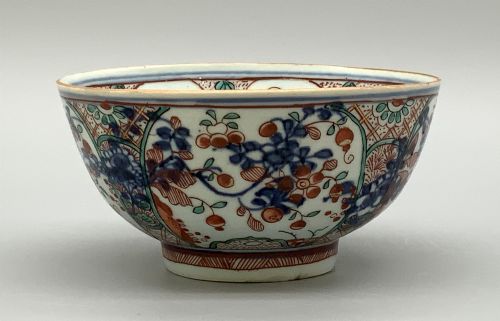
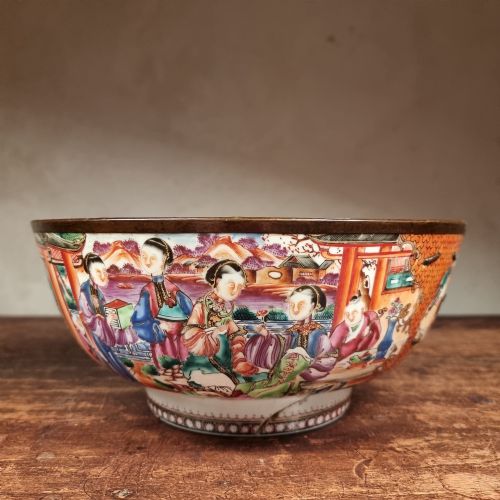
Buyers will encounter heavily decorated Canton and Famille Rose pieces alongside Imari palettes and armorial designs. Many items incorporate fitted stands or pierced work designed for serving fruit or punch in formal settings.
The selection includes Chinese export wares made for Western markets alongside European interpretations by makers such as Samson of Paris and Wedgwood.
How they were made
Potters shaped fine porcelain clay before applying cobalt underglaze for blue and white motifs or firing the body ahead of overglaze enamel painting. Artisans built up complex pictorial scenes using polychrome enamels, sometimes adding gold leaf, gilt, or gilding to rims and highlights.
Specialised techniques also included piercing wet clay to create reticulated basket walls and casting or shaping brass mounts where stands and pedestals required structural support.
Listings span the Ming dynasty, Qing dynasty, and 18th to early 20th centuries, utilising materials such as porcelain, enamel, gold leaf, and brass.
What varies in quality
Quality rests in the crispness of the hand-painted brushwork and the complexity of the enamel palette. Pieces featuring finely articulated figures, detailed floral motifs, and rich gilding represent the upper tier of production.
The precision of the porcelain body and the depth of the glaze determine the baseline of execution. Finer bowls display meticulous control during high-temperature firing, resulting in unblemished surfaces and balanced forms.
Samson Of Paris·Wedgwood
The Chinese Porcelain Fruit Bowl Glossary
- Famille Rose
- A major palette of Chinese ceramic enamels introduced in the Qing dynasty, distinguished by opaque pink and rose colours mixed from gold chloride.
- Imari
- A style of Japanese and Chinese porcelain decorated in underglaze blue, iron red, and gilt, taking its name from the port of export.
- Reticulated
- Describes ceramics featuring an openwork lattice or pierced basketry pattern formed by cutting away sections of clay prior to firing.
- Armorial
- Refers to porcelain painted with European coats of arms, commissioned specifically for aristocratic export clients during the 18th century.
- Punch Bowl
- A large, deep vessel traditionally utilised for mixing and serving communal punch drinks at social gatherings.
Chinese Porcelain Fruit Bowl: Frequently Asked Questions
How do I date a chinese porcelain fruit bowl?
Dating relies on stylistic markers, enamel colours, and potting characteristics associated with specific dynasties or revival periods. Examination of the foot ring and glaze pooling can further clarify the era of manufacture.
Comparison with documented export wares helps confirm whether a piece belongs to the 18th century, the 19th century, or later revival movements.
Were these bowls used for actual fruit?
Many large vessels and pierced baskets served specific dining functions such as holding fruit or serving punch at formal tables. Other forms were primarily decorative display pieces created for wealthy households.
Export records confirm that deep bowls and pedestal dishes fulfilled both practical serving roles and interior ornamentation.
What is the difference between export ware and domestic porcelain?
Export porcelain was manufactured in China specifically for Western trade markets, often adapting shapes and armorial designs to European tastes. Domestic wares typically followed traditional forms intended for local use.
European factories also produced revival pieces copying these export styles for Western collectors.