

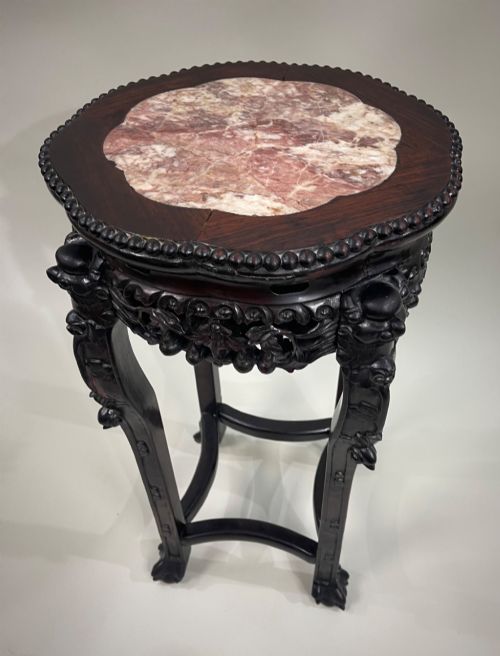
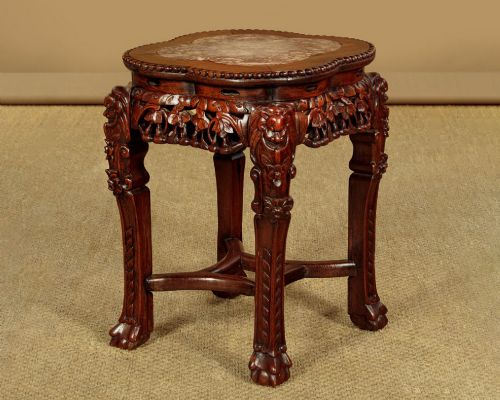






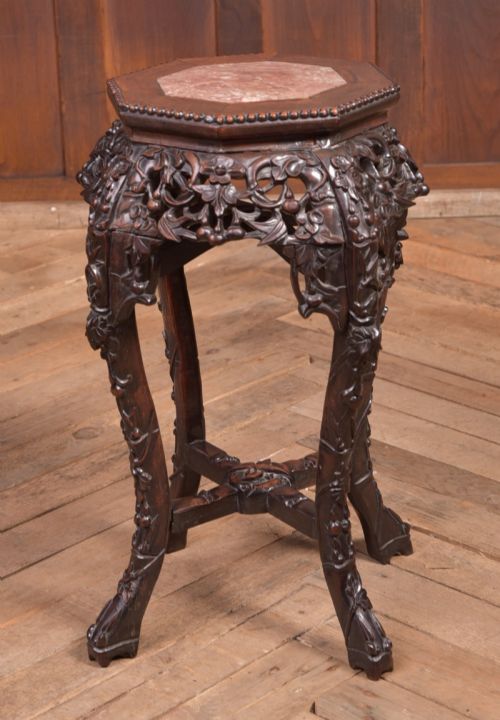

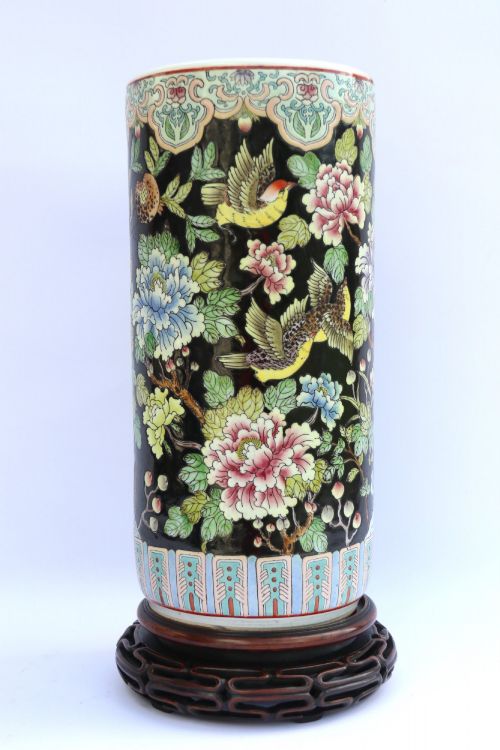
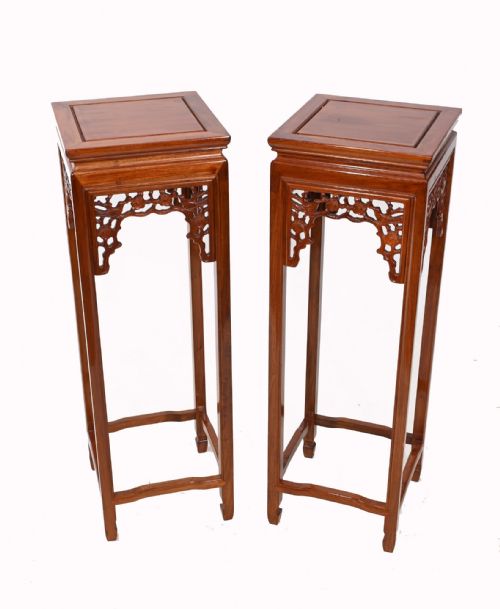

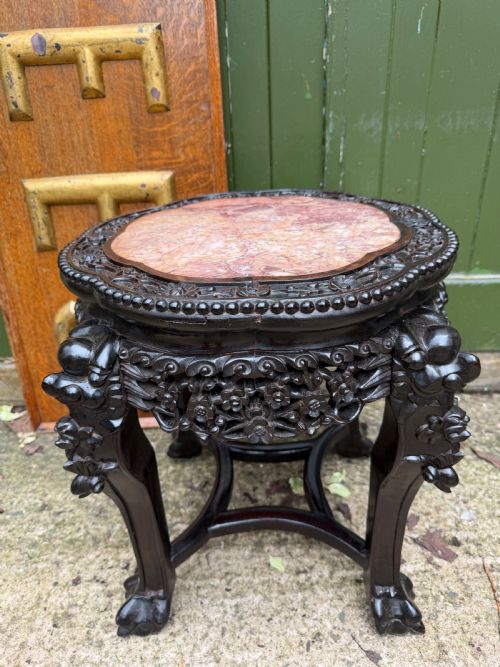

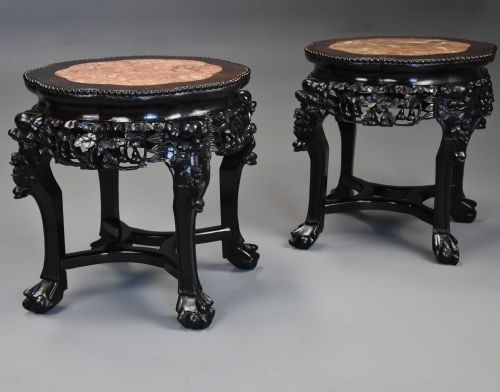
Chinese Hardwood Flower Stand
A Chinese hardwood flower stand lifts a ceramic pot or vase to eye level, bringing natural grain and carved detail into a room.
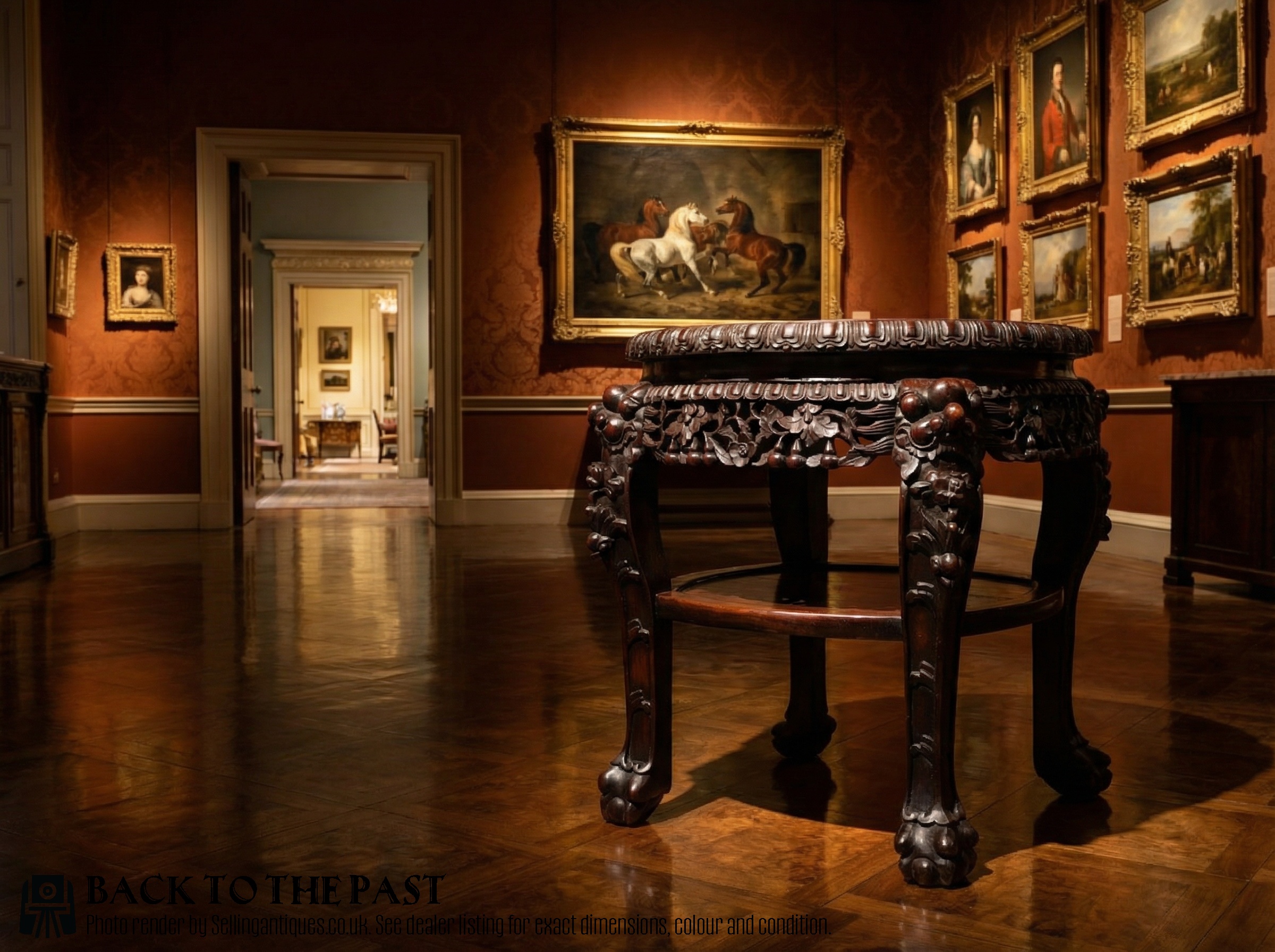
Chinese Hardwood Flower Stand
When you search for a Chinese hardwood flower stand, you encounter low tables, tall pedestals, and jardiniere supports designed to hold heavy planters or vases. Most examples on this page date from the nineteenth century and the early twentieth century, reflecting Qing Dynasty styles and traditional export craftsmanship.
Forms range from small square pot stands to large round pedestals and two-tier occasional tables. Many incorporate inset marble tops designed to protect the wood from damp soil and water runoff.
Makers produced these pieces in dense timbers such as hongmu, padouk, and rosewood, often enriching the frames with intricate relief carving, pierced aprons, and mother-of-pearl inlay.
Materials and Construction
Carpenters utilised heavy tropical hardwoods such as hongmu, padouk, and rosewood, which provided the structural strength required to support solid marble inserts and heavy ceramic vessels without warping.
Surfaces frequently feature deep hand-carving depicting floral motifs, scrolling foliage, and traditional geometric borders. Inset panels of variegated rouge marble or smooth ceramic provide a durable, cool surface for plant pots.
Joinery relied on precise traditional mortise and tenon frames, allowing the dense timber to accommodate natural seasonal expansion while maintaining rigid stability across legs, aprons, and tiers.
Chinese Hardwood Flower Stand Retail Price Guide 2026
Typical asking prices for chinese hardwood flower stand among the pieces listed under this phrase on Sellingantiques today, from the lower quarter to the upper quarter. They describe what is for sale here now, not the wider market.
Evaluating Quality
The distinction between standard utility stands and finer examples lies primarily in the depth and crispness of the wood carving. Superior pieces display undercut foliage and sharply defined motifs rather than shallow, mechanical tooling.
The selection of the timber and the figure of the grain also determine distinction, alongside the quality and fit of the inset marble top. Heavy, dense woods with rich natural patination outrank simpler utility timbers.
Structural integrity depends on the tightness of the joinery in the aprons and legs, as stands designed to hold heavy jardinieres must bear significant downward weight without loosening.
The Chinese Hardwood Flower Stand Glossary
- Hongmu
- A traditional Chinese term denoting dense, dark hardwoods used for fine furniture and stands. It encompasses durable timbers such as rosewood and padouk.
- Jardiniere stand
- A tall or low table specifically built to support a ceramic plant container or flower bowl. These often feature moisture-resistant stone tops.
- Padouk
- A heavy, durable tropical hardwood with a fine grain and warm reddish-brown colouration. Carpenters prized it for its strength and carving qualities.
- Torchère
- A tall standing pedestal or table intended to support a lamp or decorative vase. They elevate display items to prominent heights in a room.
- Variegated marble
- Natural stone showing varied veining and colour variation, commonly cut into thin slabs for table inserts. It provided a cool, water-resistant surface.
Chinese Hardwood Flower Stand: Frequently Asked Questions
What were Chinese flower stands used for?
These stands served a practical and decorative purpose in traditional interiors, holding heavy ceramic planters, jardiniere bowls, and decorative vases off the floor. Elevating plants protected delicate flooring from moisture and displayed botanical specimens at an advantageous height.
Over time, owners also utilised smaller versions as lamp tables, occasional tables, or bedside stands in diverse interior schemes.
How do I clean a marble top?
Wipe the marble surface regularly with a soft, damp cloth and dry it immediately with a lint-free towel. Avoid acidic cleaners, vinegar, or harsh detergents, which can etch or dull the polished stone.
Apply a neutral stone soap if deeper cleaning is necessary, ensuring no moisture seeps into the surrounding hardwood frame.
How do I date a hardwood stand?
Dating relies on examining the timber selection, tool marks, joinery methods, and the style of the carving. Nineteenth-century examples often display hand-cut joinery and dense, heavy hardwoods with deep patination.
Comparing the decorative motifs to documented Qing Dynasty export periods helps narrow the production era further.