
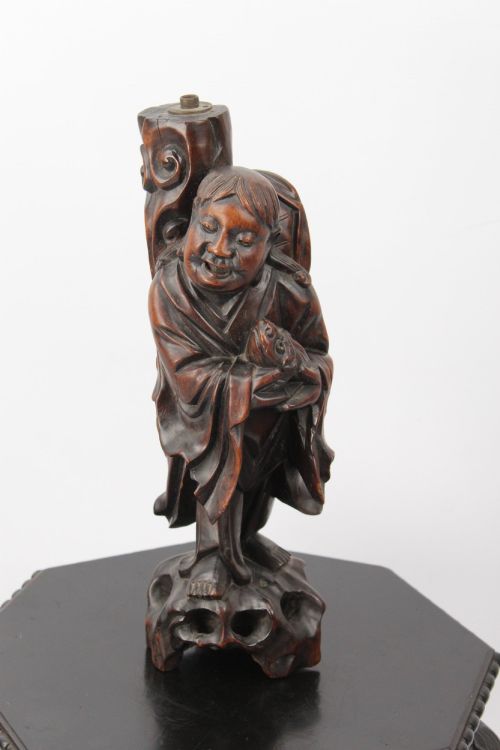
Chinese Dark Hardwood Table
A chinese dark hardwood table brings dense grain and quiet utility to a room, ranging from low opium tables to tall plant stands.
Chinese Dark Hardwood Table
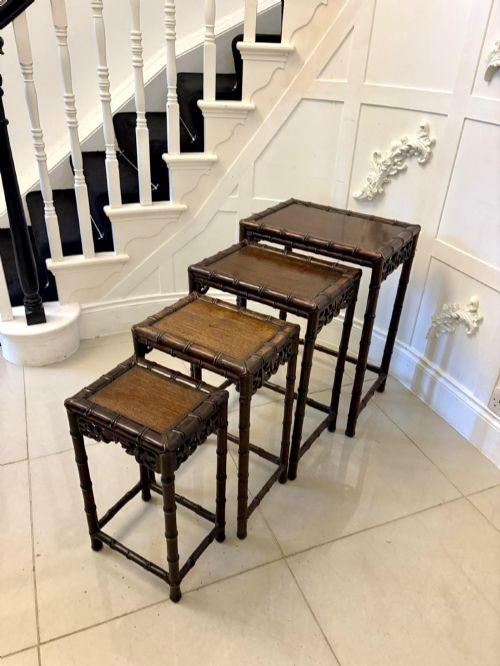
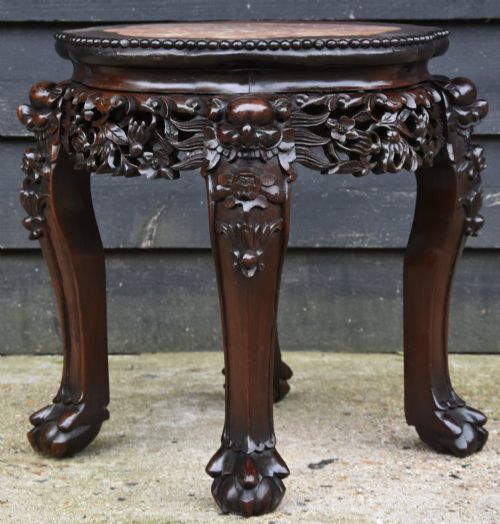
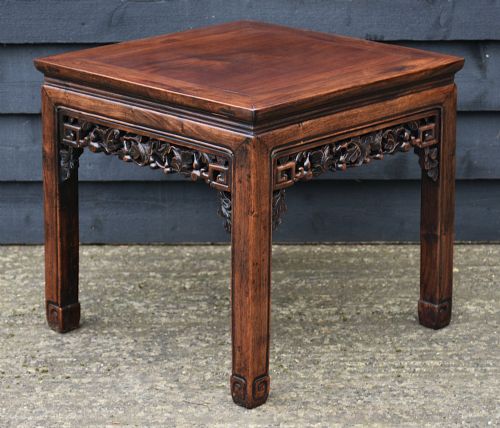
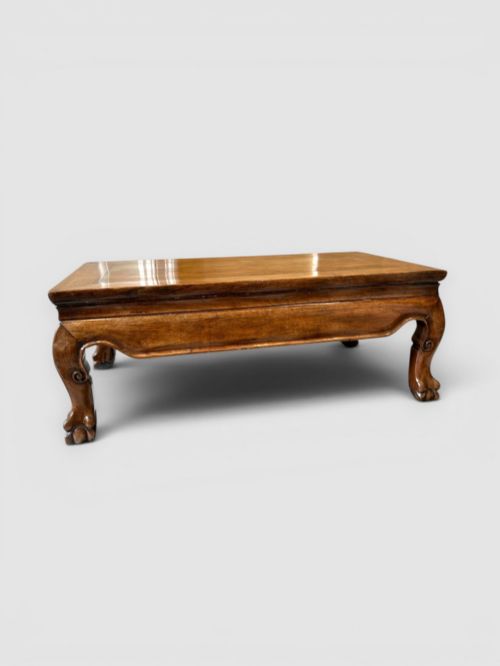
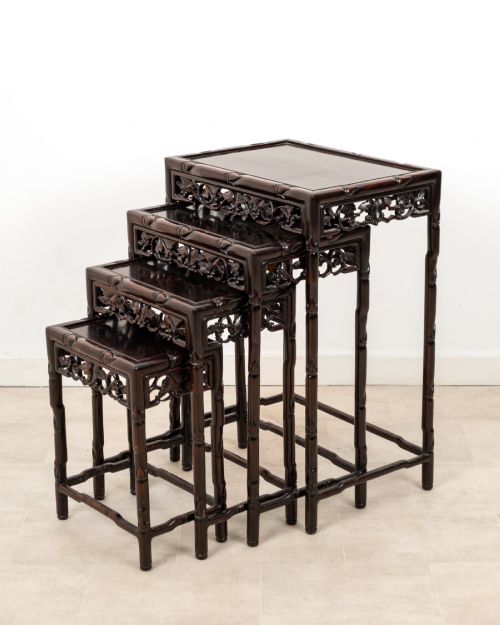
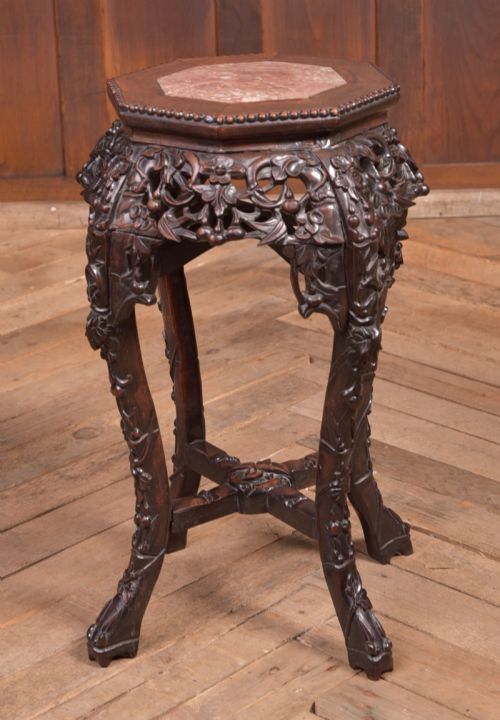
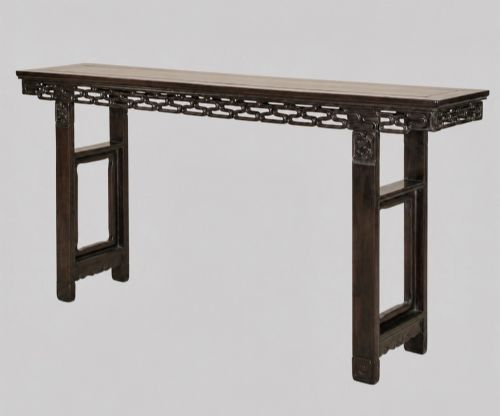
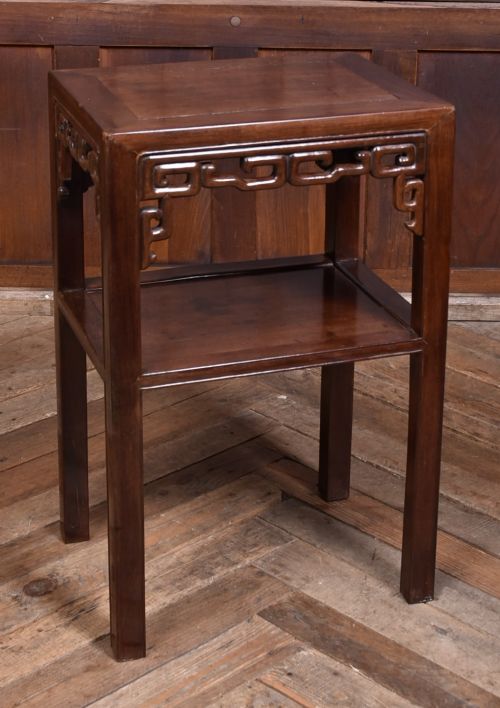
A chinese dark hardwood table encompasses low tables, nests of four tables, coffee tables, altar tables, and tall jardiniere stands rooted in the nineteenth century and the Qing Dynasty. Buyers looking at this selection encounter pieces fashioned for traditional domestic use, often featuring carved motifs or inset surfaces.
Materials and technique
Carpenters utilised dense dark hardwoods, specifically rosewood, hongmu, and padouk, alongside structural elements of elm. These timbers provide natural weight and a fine grain that takes deep carving without splitting.
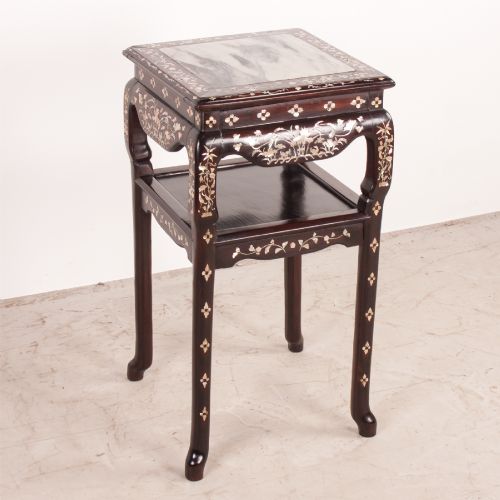
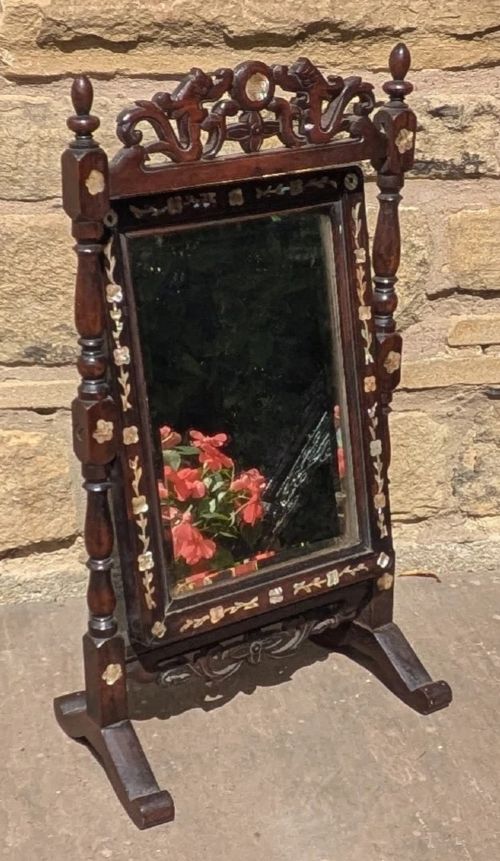
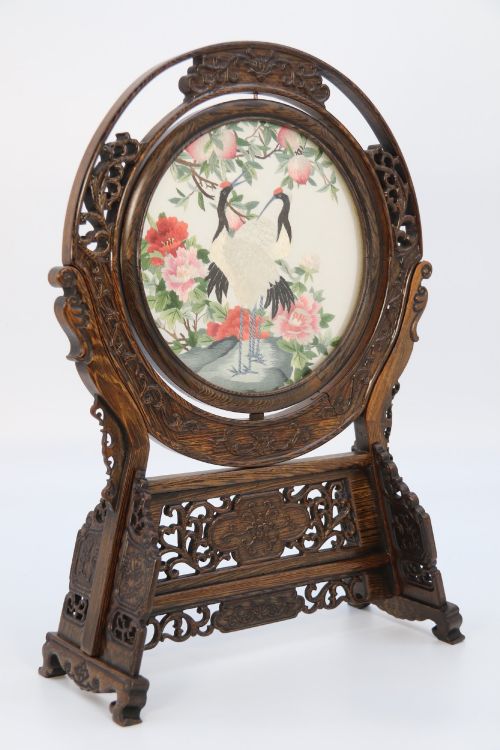
Surfaces often incorporate contrasting materials, pairing the dark timber with smooth inset marble panels, mother of pearl inlay, or brass details. Joinery relies on traditional interlocking methods rather than simple metal fasteners, allowing the dense wood to expand and contract naturally.
Several pot stands arrive with double lives, doubling happily as low coffee tables or pedestals for very important house plants.
Evaluating craftsmanship
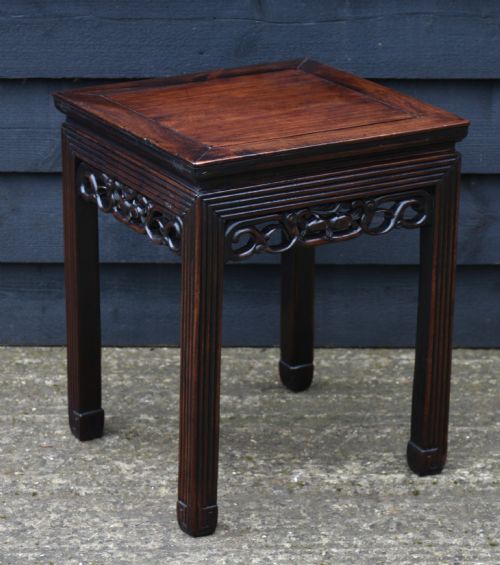
The distinction between standard items and superior examples lies in the crispness of the hand carving and the selection of the timber. Dense hongmu and heavy rosewood display deeper, more deliberate relief work on aprons and legs.
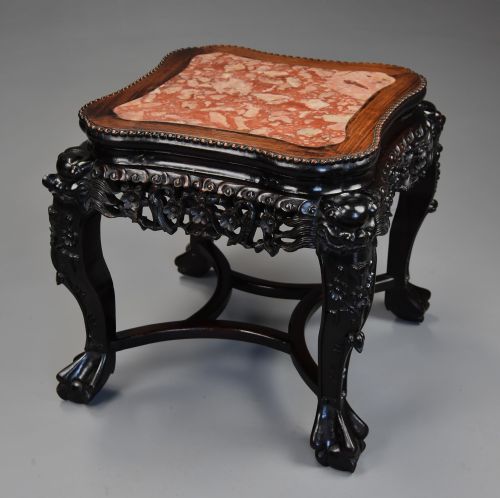
Integration of inset panels, such as rouge marble or mother of pearl, dictates refinement. Tighter joints around stone inserts and precise placement of inlaid shell indicate higher workshop standards.
The Chinese Dark Hardwood Table Glossary
- Hongmu
- A category of dense, heavy Chinese hardwoods prized for dark colour and fine grain. Artisans utilised these timbers for formal furniture and stands.
- Jardiniere stand
- A tall, slender table designed to elevate a ceramic flower pot or plant bowl. These pieces frequently feature shaped tops and carved aprons.
- Opium table
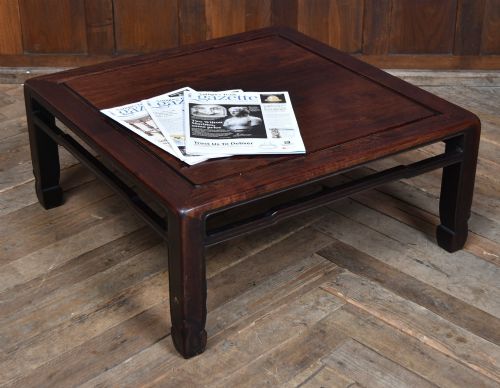
- A low domestic table traditionally used for serving tea or smoking. They sit close to the floor with short, often curved legs.
- Altar table
- A long, rectangular table characterised by upturned flange ends or restrained carved friezes. Originally placed against walls for ceremonial use.
- Nest of tables
- A set of graduated side tables designed to slide beneath one another for compact storage. Each smaller table fits neatly inside the frame of the next size up.
Chinese Dark Hardwood Table: Frequently Asked Questions
What is a chinese dark hardwood table used for?
These tables serve multiple domestic functions depending on their specific height and form. Low tables and opium tables suit casual seating areas, while plant stands and jardiniere tables elevate decorative items.
Larger rectangular centre tables provide a central surface for rooms, and nests of tables offer flexible placement for drinks or books.
How do I identify a Qing Dynasty piece?
Qing Dynasty items typically exhibit dense tropical hardwoods such as hongmu or rosewood combined with traditional joinery. Carved motifs often reflect classical Chinese iconography and structural restraint.
Many examples from this period incorporate inset marble panels or mother of pearl inlay, characteristic of late nineteenth century workshops.
Are marble top tables original?
Marble inserts on nineteenth century tables were set directly into the wooden frame during initial construction. Variegated rouge marble and plain stone panels provide a stable, cool surface suited to holding vases and plants.
These inset panels match the precise dimensions of the surrounding hardwood rebate, showing integrated craftsmanship rather than later alteration.
How do I care for rosewood furniture?
Dense hardwoods require minimal intervention beyond regular dusting with a dry, soft cloth. Avoiding direct sunlight and sudden temperature shifts protects the timber and prevents the wood from drying out.
A light application of traditional wax helps maintain the natural lustre of rosewood and hongmu surfaces over time.