


Dark Wood Opium Table
A dark wood opium table brings low-level surface space into a room, offering compact proportions and rich timber grain.
Dark Wood Opium Table
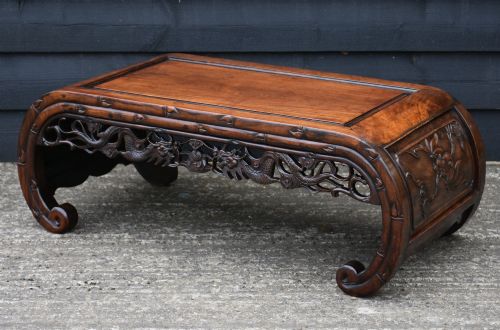
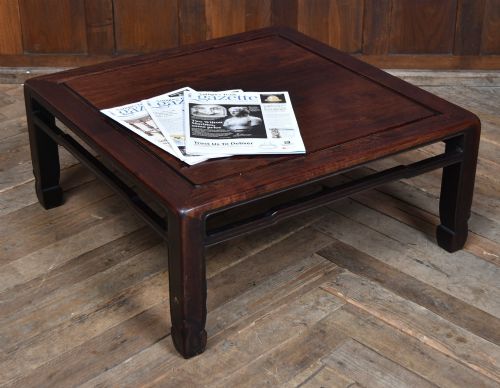
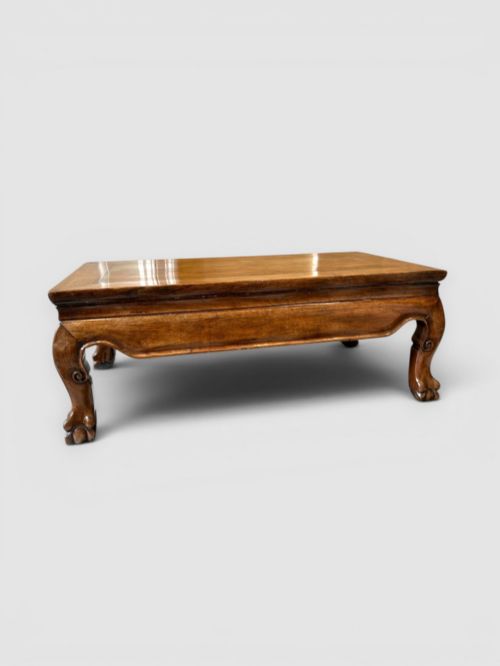
A dark wood opium table typically appears as a low-standing coffee table derived from traditional Chinese form, utilised historically for sitting or resting close to the floor. The examples on this page span the nineteenth century into the early twentieth century, incorporating styles from the Qing Dynasty and Chinese Export traditions.
Buyers encounter formats described variously as low tables, coffee tables, or kang tables. These pieces operate effectively in modern interiors as low centre tables or display surfaces, maintaining the squat proportions inherent to their original design.
Materials and construction
Construction relies heavily on dense Asian hardwoods, specifically rosewood, padouk, elm, and hongmu, selected for their structural stability and deep natural colour. Workshops utilised traditional joinery methods to build sturdy low frames capable of supporting weight despite modest dimensions.
Surface ornamentation on these pieces includes carved dragon details and figured timber grains. Artisans shaped these details directly into the hardwood structure during the nineteenth and early twentieth centuries.
Listings span periods from the nineteenth century through nineteen twenty, featuring traditional Chinese styles and materials including elm and rosewood.
What distinguishes finer examples
Quality separates along the depth of the timber figuring and the crispness of any carved elements, such as dragon motifs. Dense rosewood or hongmu surfaces display richer natural patterns than simpler elm variants.
The integrity of the low frame and the retention of original timber patination dictate the desirability of a piece. Finer examples maintain balanced proportions and uncompromised joinery across the legs and surface apron.
The Dark Wood Opium Table Glossary
- Kang table
- A low platform table designed to sit on a heated brick bed in traditional Chinese architecture. These low surfaces transitioned into general domestic use as coffee tables.
- Hongmu
- A category of dense, heavy Asian hardwoods translated literally as red wood. This material appears frequently in traditional Chinese furniture of the Qing period.
- Padouk
- A durable tropical timber known for its deep reddish-brown colour. Makers utilised this wood for solid furniture frames and tables.
- Qing Dynasty
- The final imperial dynasty of China, lasting from sixteen forty-four to nineteen twelve. Pieces from this era often feature traditional carving styles and dark timber.
Dark Wood Opium Table: Frequently Asked Questions
How were opium tables used originally?
These low tables served households for resting items, dining, or smoking while seated upon cushions or mats on the floor.
Their reduced height placed surfaces within easy reach of individuals sitting directly on low platforms or floor coverings.
Where do these low tables fit in modern rooms?
A dark wood opium table functions effectively as a coffee table placed before low sofas or seating arrangements.
The compact height creates an open feeling in a room while providing a stable surface for books and decorative objects.
How do I identify a nineteenth-century piece?
Nineteenth-century examples display traditional Chinese construction methods paired with dense hardwoods like rosewood or padouk.
Examining the timber patination and hand-carved details helps distinguish these older pieces from later reproductions.
What is the difference between a kang table and an opium table?
Kang tables originated as low surfaces for heated sleeping platforms, whereas the term opium table often describes similar low furniture adapted for general leisure.
Both types share squat proportions and traditional Chinese manufacturing characteristics.