


Carved Leg Opium Table
These carved leg opium table examples bring traditional Chinese low furniture into modern living spaces, offering rich wood grains and intricate carvings for low coffee table use.
Carved Leg Opium Table
When searching for a carved leg opium table, buyers encounter low-profile tables traditionally used in China for sitting, serving, or resting. These pieces frequently double as coffee tables in contemporary interiors due to their versatile proportions and modest height.
The selections available here span from the nineteenth century into the early twentieth century, encompassing periods such as the Qing Dynasty and the Chinese Republic Period. Common forms include low rectangular coffee tables and traditional Kang tables designed for domestic use.
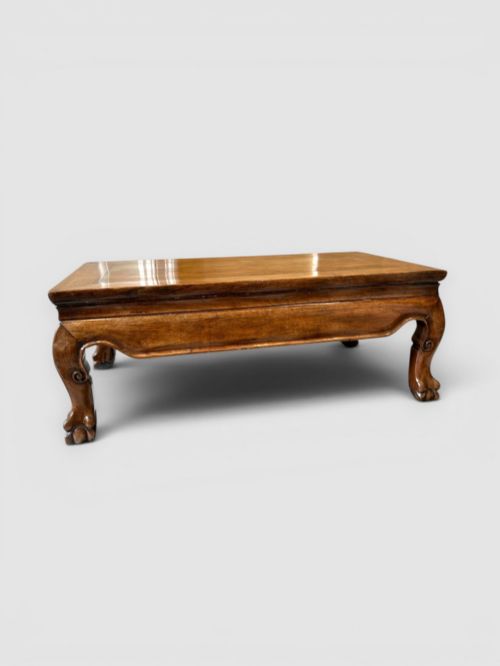
Originating primarily from Chinese workshops, these items showcase regional furniture traditions using dense timbers. The most frequent variants met on this page combine traditional low frames with carved details or scroll ends.
How they were made
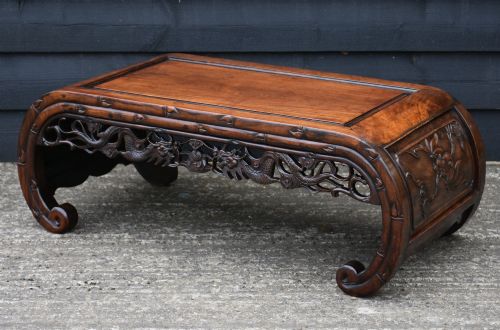
Maker workshops utilised dense and durable timbers including rosewood, padouk, elm, and hongmu to construct these low tables. These heavy hardwoods provided the structural integrity required for intricate carving work along the legs and apron.
Surface treatments range from clear finishes that highlight the natural figure of the wood to traditional red lacquer applications. Certain examples incorporate subtle gilding to accentuate the carved motifs and dragon details.
Materials recorded across the inventory include rosewood, padouk, elm, hongmu, and red lacquer with occasional gilding.
What varies in quality
The standard of carving distinguishes superior examples from simpler pieces, with deeply undercut dragon details and scroll ends representing higher craftsmanship. The crispness of the chisel work along the legs dictates the visual depth of the design.
Timber selection and natural patina govern the desirability of each piece. Tables fashioned from figured rosewood or dense hongmu with rich, undisturbed patination command greater appreciation than plain hardwood alternatives.
The Carved Leg Opium Table Glossary
- Kang table
- A low platform table traditionally placed upon a heated brick bed in northern China for dining or tea. These pieces share identical proportions with standard low tables.
- Hongmu
- A translation meaning red wood, used to describe dense Asian hardwoods of deep colour. It encompasses several heavy timber species favoured by traditional cabinetmakers.
- Patina
- The surface sheen and mellow tone developed by wood through age and use. A good patina reflects decades of gentle handling and natural oxidation.
- Scroll-end
- A decorative terminal feature where the ends of the table top curve outward into a scroll shape. This stylistic flourish appears on various traditional low tables.
Carved Leg Opium Table: Frequently Asked Questions
What is an opium table?
An opium table is a traditional low Chinese table designed to be used close to the floor. Historically, these pieces served multiple domestic functions including serving tea and displaying objects.
Today, buyers repurpose them as low coffee tables in contemporary living rooms. Their compact height makes them suitable for positioning in front of low sofas.
How do I date a carved leg opium table?
Dating relies on examining the timber species, construction methods, and stylistic markers associated with specific periods like the Qing Dynasty. Nineteenth-century examples often exhibit hand-cut joinery and deeper patination.
Later pieces from the early twentieth century may show transitional Republic Period influences. Comparing the carving depth and wood type helps narrow down the production era.
How do I use a low table at home?
These tables function effectively as coffee tables in modern interiors, providing a practical surface for books and decorative items. Their low profile helps maintain an open feel in smaller reception rooms.
Positioning them centrally allows the carved legs and detailed aprons to remain fully visible. They pair well with low seating arrangements and minimalist furniture layouts.
What is the difference between a Kang table and an opium table?
Kang tables and opium tables share very similar low-profile forms and origins in traditional Chinese furniture. The term Kang specifically references platforms originally used on heated brick sleeping platforms.
In modern usage, these terms often describe the same style of low decorative table. Both variants feature characteristic short legs and sturdy hardwood construction.