


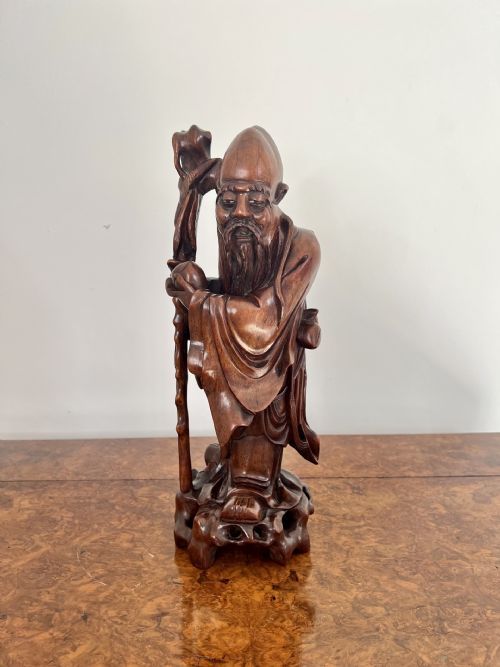
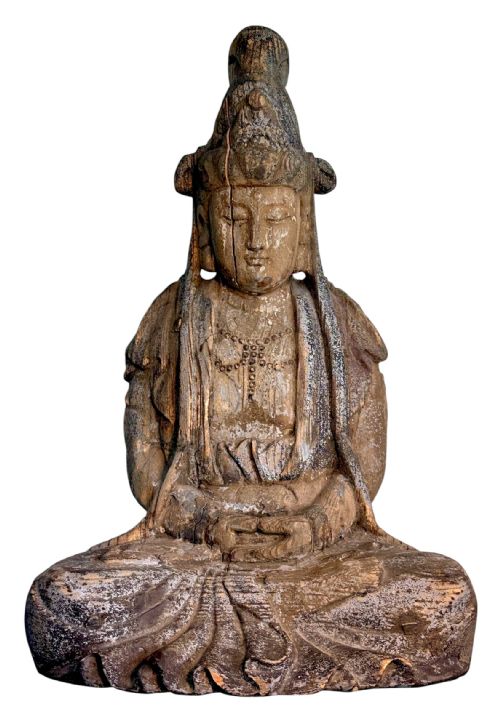
Chinese Carved Wooden Statue
A chinese carved wooden statue brings centuries of ritual, folklore, and master craftsmanship directly into your home.

Chinese Carved Wooden Statue
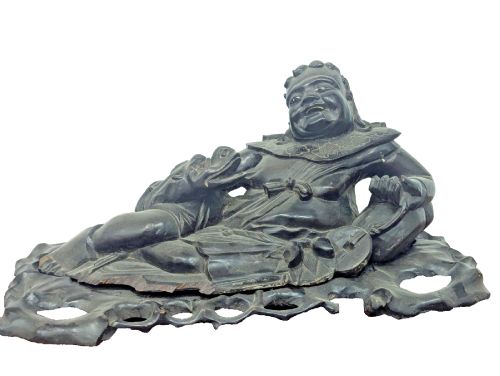
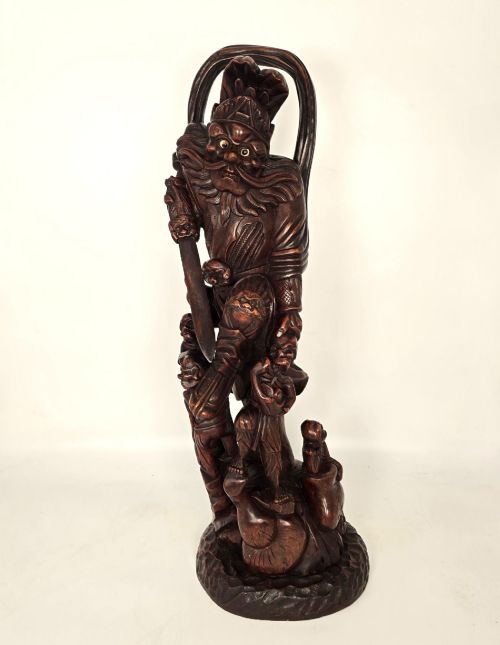
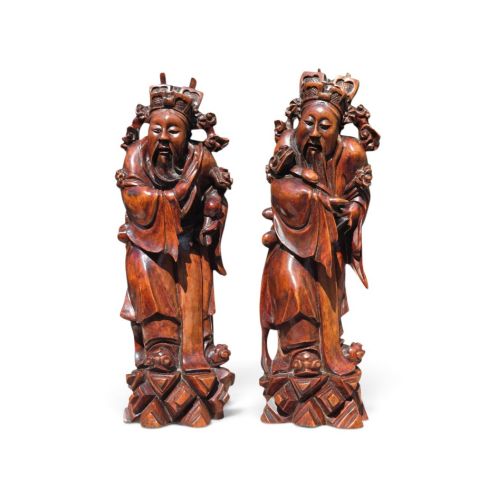
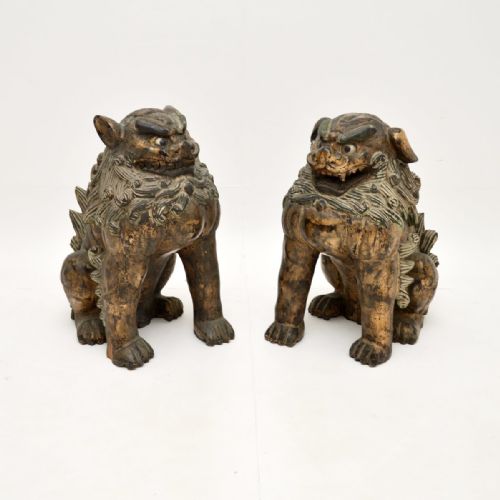
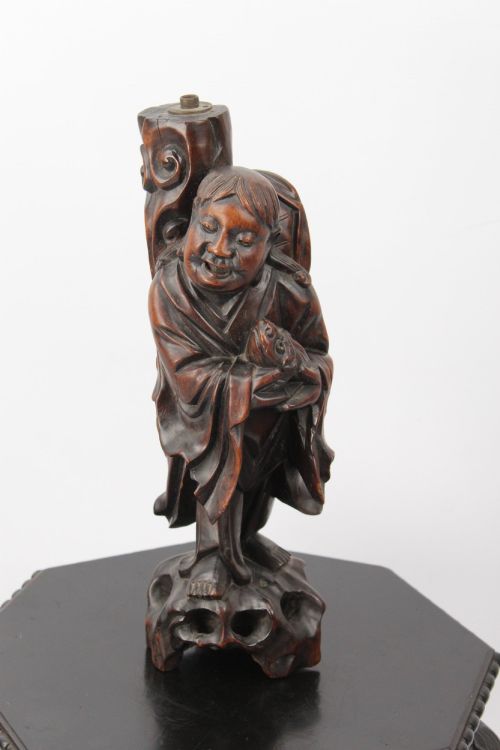
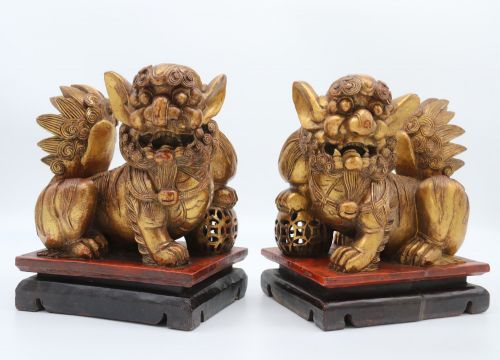
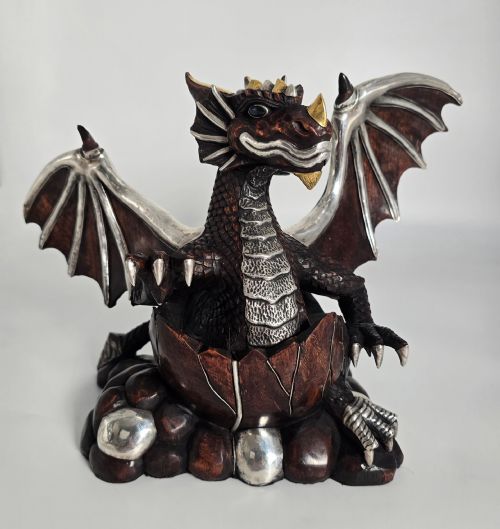
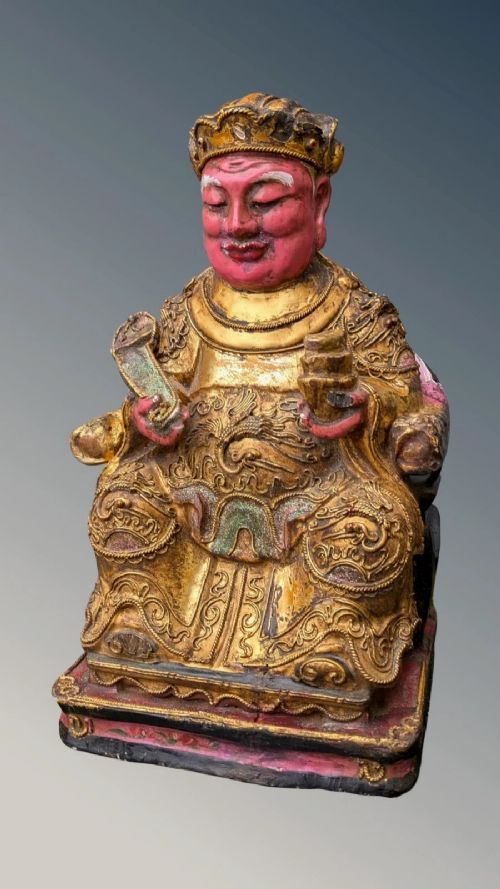
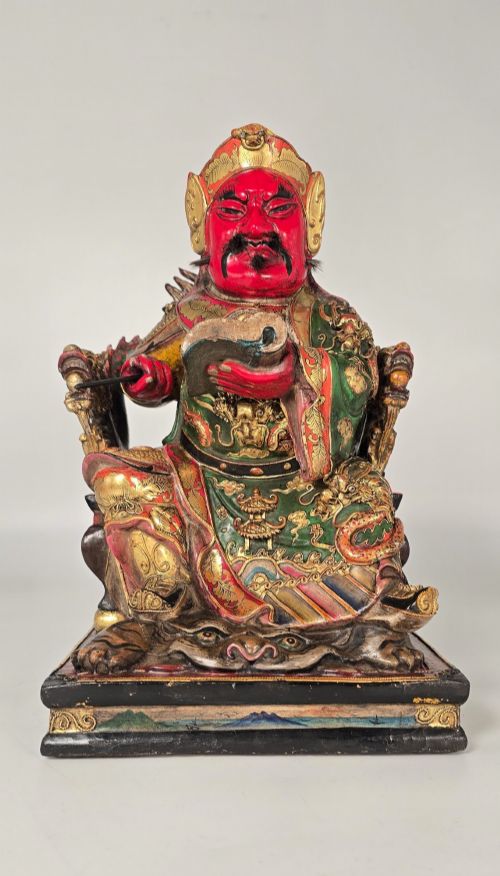
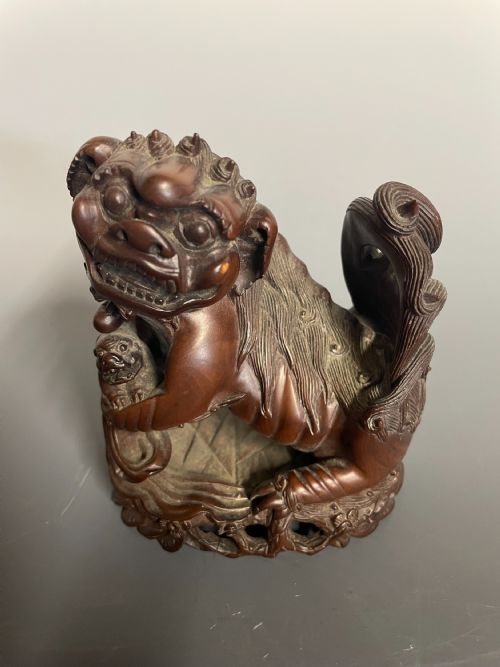
When searching for a chinese carved wooden statue, collectors encounter a diverse array of figures spanning the late Ming dynasty through the Qing dynasty and into the early Republic period. The most common forms met on this page include deities, immortals, scholars, temple guardians, and mythical beasts such as foo dogs and dragons.
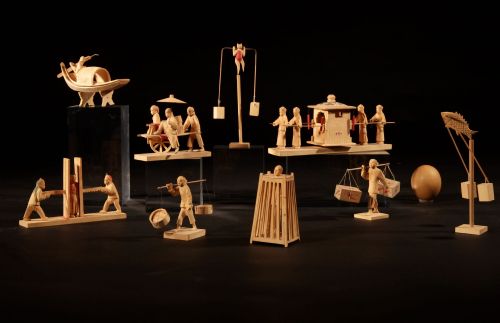
Many of these sculptures served devotional or ritual functions in temples and domestic shrines, while others depicted figures from daily life, folklore, and nature. Materials range from dense domestic hardwoods and boxwood to gnarled root wood, often enhanced with polychrome paint, lacquer, or gold leaf.
The selection reflects both monumental temple figures and smaller, intricate scholar's desk items. Dating typically stretches from the eighteenth century through to the early twentieth century, offering a wide spectrum of traditional Chinese artistry.
How they were made
Surfaces were frequently finished with layers of lacquer, polychrome paint, or gold leaf gilding, and some pieces incorporated mixed metal mounts or silver inlay for added ornamentation.
The inventory spans the eighteenth century, the nineteenth century Qing dynasty, and the early twentieth century.
What varies in quality
The degree of anatomical definition and the fluidity of the carving separate standard works from superior examples, particularly in the rendering of drapery folds, hair, and facial expressions. Master carvers achieved a lifelike presence and dynamic posture that lesser artisans failed to capture in rigid or static forms.
The preservation of original surface treatments, such as gold leaf, polychrome pigments, and lacquer, significantly impacts the desirability and visual impact of a sculpture. Natural patination developed over centuries of handling and exposure adds depth to the wood grain, distinguishing better preserved antiques from heavily restored pieces.
The Chinese Carved Wooden Statue Glossary
- Budai
- A representation of the jovial monk often associated with contentment and abundance, commonly depicted with a large bare belly.
- Foo Dog
- A mythical guardian lion traditionally placed outside temples and palaces to ward off malevolent spirits.
- Guanyin
- The bodhisattva of compassion, frequently rendered in standing or seated meditative poses holding a lotus or vial.
- Lokapala
- A celestial guardian king tasked with protecting a specific cardinal direction in Buddhist cosmology.
- Polychrome
- Painted in several colours, typically applied over a gesso or lacquer ground on wood sculptures.
Chinese Carved Wooden Statue: Frequently Asked Questions
What subjects do these statues represent?
These sculptures typically depict figures from Buddhist, Daoist, and folk traditions, including immortals, scholars, temple guardians, and deities.
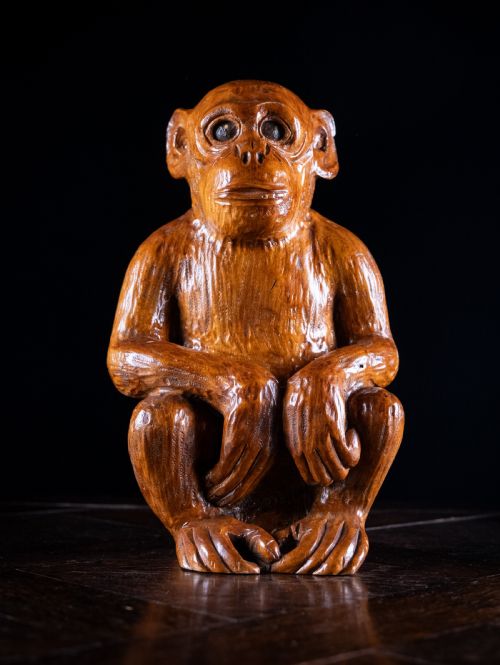
Animals and mythical creatures such as foo dogs, water buffaloes, elephants, and dragons also appear frequently in the selection.
How can I tell the age of a wooden carving?
Dating relies on stylistic markers of the Qing dynasty or Republic period, combined with the natural drying, shrinkage, and patination of the timber.
Surface treatments such as early lacquer, gold leaf, and polychrome paint also provide clues to the period of origin.
Where were these figures originally displayed?
Larger monumental statues stood in temples or ancestral halls as objects of veneration and protection.
Smaller figures and root wood carvings were created for scholar's studios, domestic shrines, or as decorative objects in traditional homes.
How should I care for an antique wooden statue?
Keep wooden sculptures away from direct sunlight, heating vents, and rapid fluctuations in humidity to prevent timber splitting.
Dust gently with a dry, soft brush and avoid applying modern polishes or cleaning agents to historic surfaces.