
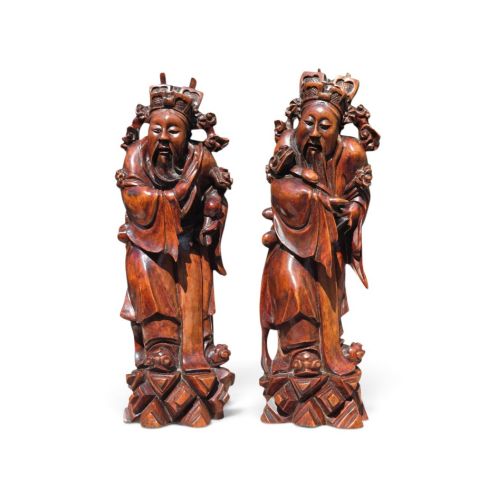
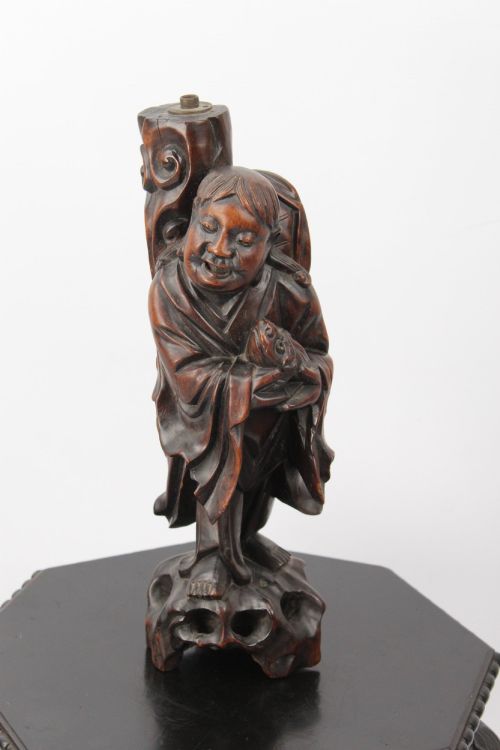
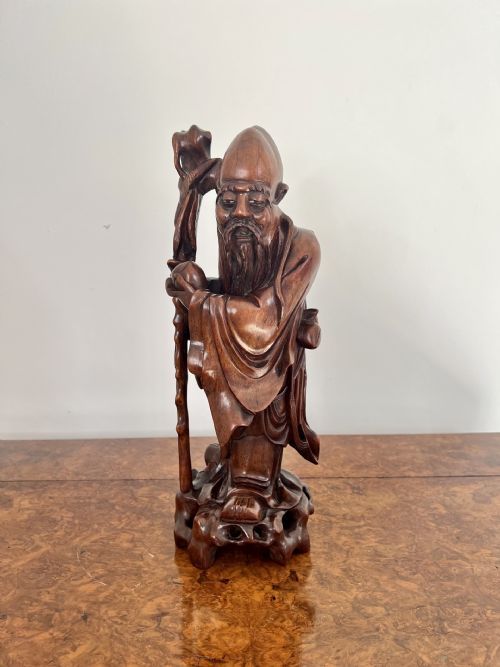


Brown Wood Immortal Statue
These brown wood immortal statue examples are carved hardwood and root figures of deities and scholars, bringing centuries of traditional Chinese artistry straight to your interior.

Brown Wood Immortal Statue
When searching for a brown wood immortal statue, you encounter carved Chinese figures and sculptures depicting Daoist immortals, scholars, and oriental deities. These works embody traditional Chinese art, often taking the form of solitary figures or paired groupings.
The pieces available here predominantly span the nineteenth century and the early twentieth century, including items made during the Qing Dynasty and late nineteenth century eras. Sculptures frequently incorporate characteristic attributes such as mythical creatures or symbolic companions.
Forms range from large monumental hardwood carvings to intricate root wood and bamboo deity representations. Each piece reflects the rich heritage of Chinese sculpture, shaped by traditional craftsmanship and natural material grains.
Materials and construction
Makers utilised dense natural materials including hardwood, rosewood, burr root wood, and bamboo root to construct these sculptures. Carvers worked directly with the organic contours of roots and timber to define the flowing robes and postures of the figures.
Surface finish is achieved through traditional carving techniques that accentuate the grain and develop a rich patina over time. Certain examples integrate contrasting elements such as brass alongside the primary wooden medium.
Distinctions in quality
Quality rests upon the depth of the carving and the sculptural command over the natural medium. Finer examples display intricate facial expressions, expressive drapery, and thoughtful integration of the root or wood grain.
The presence of a well-developed, warm patina indicates age and handling that enhances the visual depth of the hardwood. Scale and proportion also distinguish monumental matched pairs from smaller single figures.
The Brown Wood Immortal Statue Glossary
- Hardwood
- Dense timber derived from broad-leaved trees, prized for durability and fine grain in traditional Chinese carving. It provides a stable base for detailed sculptural work.
- Root wood
- Timber sourced from the root systems of trees, featuring wild, organic contours that carvers incorporate into figurative shapes. Each root carving remains entirely unique.
- Patina
- The lustrous surface sheen developed through age, handling, and oil absorption on wooden objects. A good patina adds depth to the appearance of antique carvings.
- Daoist Immortal
- A revered figure in Chinese philosophy and religion, commonly depicted in art as a sage or deity. These figures often hold specific symbolic items.
- Qing Dynasty
- The final imperial dynasty of China, spanning from sixteen forty-four to nineteen twelve, known for flourishing decorative arts. Pieces from this era reflect established traditional styles.
Brown Wood Immortal Statue: Frequently Asked Questions
What is a brown wood immortal statue?
These pieces are traditional Chinese carvings made from materials like hardwood, root wood, and bamboo, depicting deities, scholars, and Daoist immortals.
They serve as decorative sculptures that showcase nineteenth-century and early twentieth-century craftsmanship from China.
How were these wooden figures used?
Historically, these sculptures functioned as scholarly desk objects, religious figures, or decorative works within traditional Chinese interiors.
Today, they are collected and displayed as standalone art objects in homes and studies.
How do I style these statues at home?
Place them on plain wooden surfaces, sideboards, or mantels where their natural wood grains and carved details can be appreciated up close.
Pairing single figures or matched pairs with minimalist surroundings allows the sculptural forms to stand out effectively.
How do I identify the age of these carvings?
Age is indicated by the carving style, material characteristics, and the depth of the surface patina developed over decades.
Pieces originating from the nineteenth century often exhibit traditional Qing Dynasty influences and organic root construction methods.