
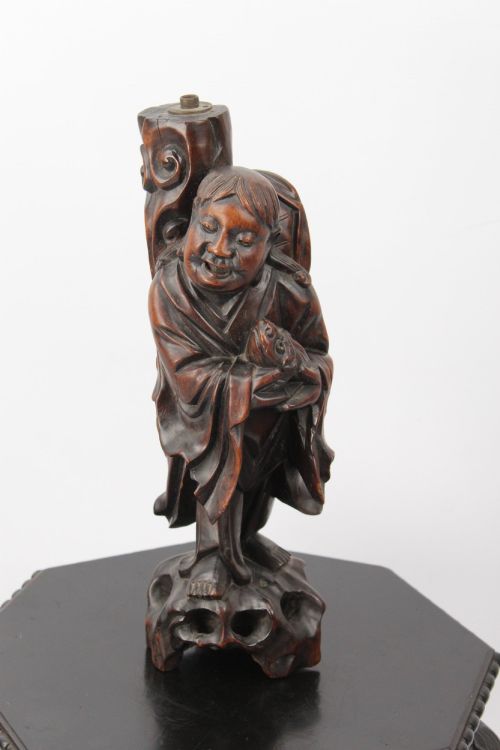
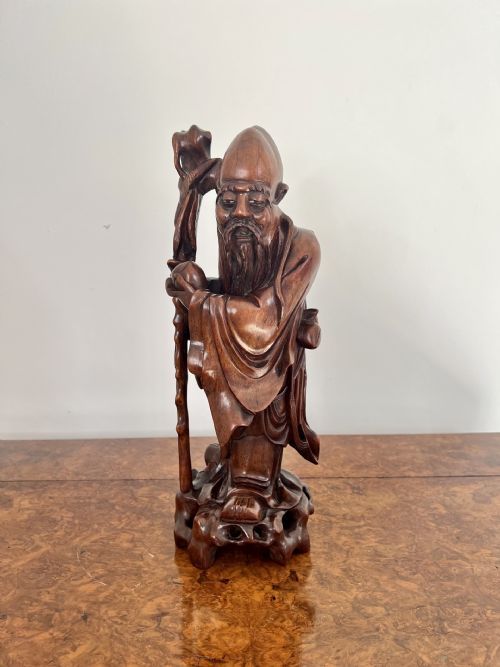


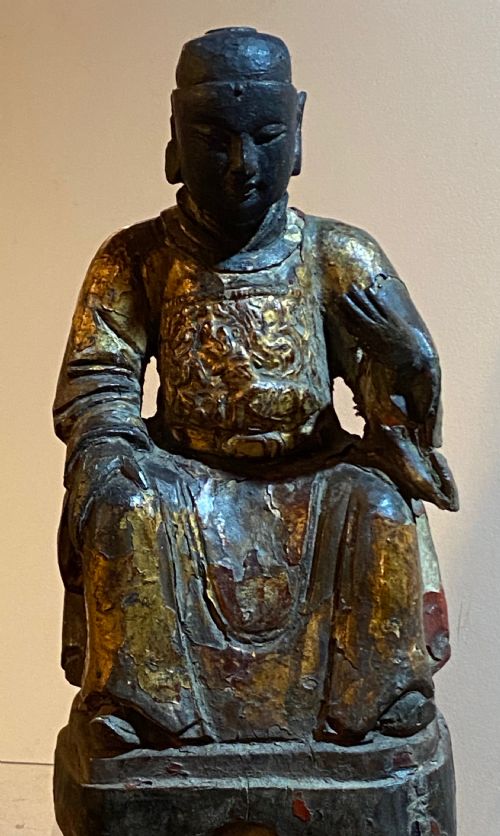

Hand Carved Wooden Immortal
These hand carved wooden immortal figures are sculptural depictions of revered sages and deities, bringing centuries of craftsmanship and Eastern philosophy into your home.
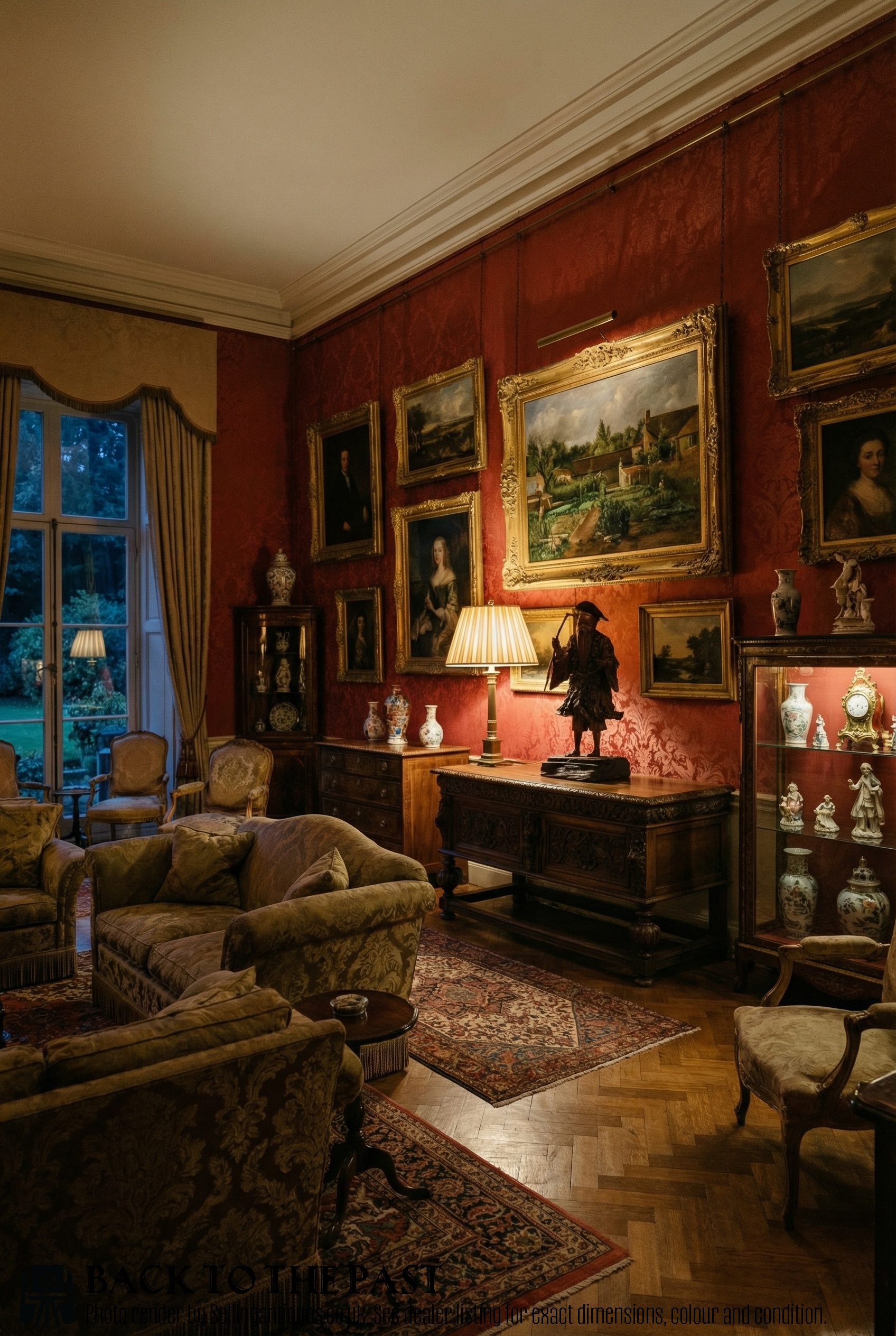
Hand Carved Wooden Immortal
Makers shaped these subjects using traditional East Asian artistic conventions, notably aligning with Qing Dynasty and Meiji Period aesthetics. The selection encompasses both single figures and grouped compositions, reflecting varied regional approaches to depicting mythological immortals.
How they were made
Artisans carved these figures from dense hardwoods, rosewood, burr wood, and root wood, exploiting the natural grain and organic contours of the timber to define the shape of robes and limbs. Root wood pieces particularly showcase how makers incorporated natural burls and twisted roots into the dynamic postures of scholars and immortals.
Some sculptures receive supplementary decoration through gesso and polychrome paint, adding surface colour and detail to the carved wood基体. Metal elements such as brass appear in related temple bells and fittings that accompany the sculptural works.
Listings feature pieces spanning the eighteenth century, nineteenth century, and Edwardian eras, executed in hardwood, root wood, rosewood, and burr wood.
What varies in quality
Proportion and balance also divide the range, as finer sculptures maintain anatomical harmony and spatial presence even within asymmetrical root wood forms. The treatment of surface finishes, from subtle polishing of dense hardwood to delicate polychrome application, further separates utilitarian workshop output from ambitious artistic creation.
The Hand Carved Wooden Immortal Glossary
- Hardwood
- Slow-growing timber from broad-leaved trees, prized by carvers for its density, fine grain, and capacity to hold crisp, intricate details over centuries. It forms the primary structural material for the finest Chinese figures.
- Root wood
- The gnarled, twisted subterranean growth of a tree, utilised by carvers to inspire the eccentric postures and flowing garments of immortals and scholars. Each piece exploits the unique natural contours of the timber.
- Burr wood
- A tree growth where the grain has grown in a deformed manner, resulting in intricate, swirling patterns when polished. Carvers used this highly decorative material to add visual texture to figures and lamp bases.
- Polychrome
- The practice of decorating sculptural surfaces in a variety of colours using paint or tinted gesso. This technique highlights facial expressions and garments on specific wooden figures.
- Qing Dynasty
- The final imperial dynasty of China, lasting from the seventeenth to the early twentieth century, which defined the traditional decorative arts and sculptural styles seen in many of these antiques.
Hand Carved Wooden Immortal: Frequently Asked Questions
What is a wooden immortal?
A wooden immortal is a carved representation of a mythological sage, deity, or enlightened figure from Asian folklore and religious traditions. These sculptures were created to honour revered figures and bring auspicious presence to interiors.
They appear as standalone figures, groups, or incorporated into functional objects like table lamps. Each depicts specific attributes, such as sacred animals, scrolls, or traditional scholar robes.
How do I date a carved figure?
Dating relies on examining the tool marks, the specific type of timber utilised, and the stylistic conventions of the carving. Eighteenth-century pieces often display deeper weathering and traditional Daoist iconography.
Later nineteenth-century and Edwardian examples may integrate practical functions like electric lamp fittings or reflect Meiji Period Japanese sensibilities. Comparing the patina of the exposed wood helps establish the age of the object.
Are root wood lamps original?
Root wood pieces from the late nineteenth century were frequently converted into table lamps as electricity became common in homes. The conversion often repurposed antique sculptural root wood carvings by mounting them with electrical wiring and brass fittings.
This adaptation creates a blend of antique sculptural art and functional lighting. The core carved wood remains a period artefact while the electrical components reflect later domestic use.
How should I clean my sculpture?
Maintenance requires gentle dusting with a dry, soft brush to prevent accumulation in the crevices of the carved wood and root formations. Avoid using liquid cleaners, polishes, or damp cloths, which can harm historic finishes or damage exposed timber.
Keep the piece away from direct sunlight and strong heat sources to prevent the wood from drying out and cracking over time. Natural wax can be applied sparingly if the hardwood appears dry.