




Qing Scholar Figure Carving
A qing scholar figure carving brings scholarly poise and tactile depth into a room, capturing the quiet dignity of traditional literati life.
Qing Scholar Figure Carving
A qing scholar figure carving represents the scholarly and philosophical traditions of historical China, often depicting sages, wealthy scholars, or figures engaged in tranquil pursuits like feeding geese. These pieces function both as decorative carvings and as desk accessories that bring an air of contemplation to a workspace.
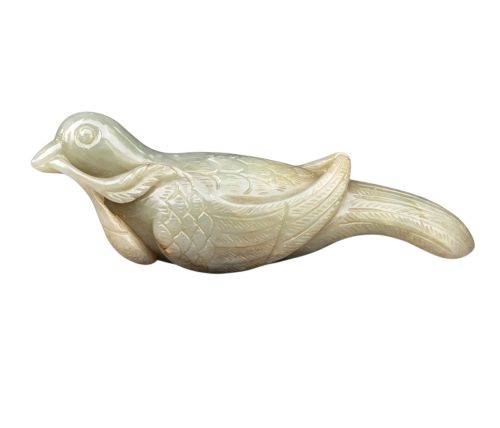
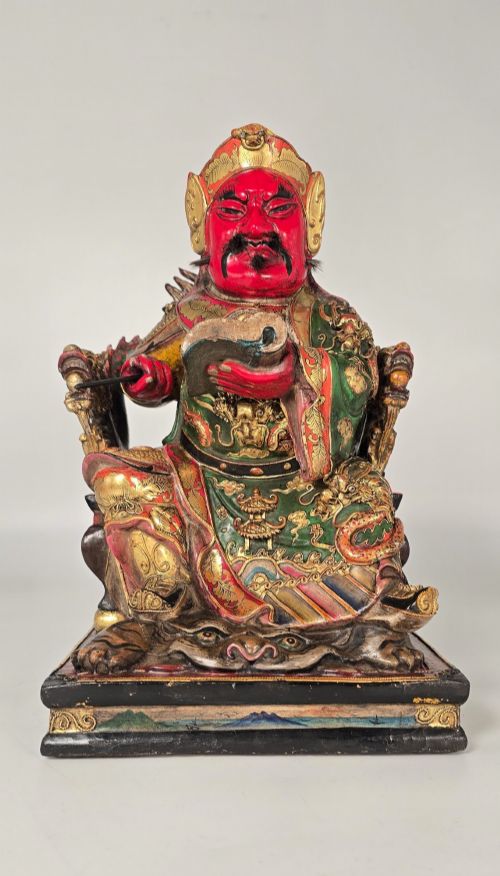
The objects seen here span multiple periods, predominantly drawing from the 18th century, 19th century, and the early 20th century, encompassing various forms such as standalone sculptures, miniature figure groups, and reclining figures that may double as wrist rests. Collectors frequently encounter root wood and hardwood interpretations alongside carved stone and lacquered examples.
Materials and carving techniques
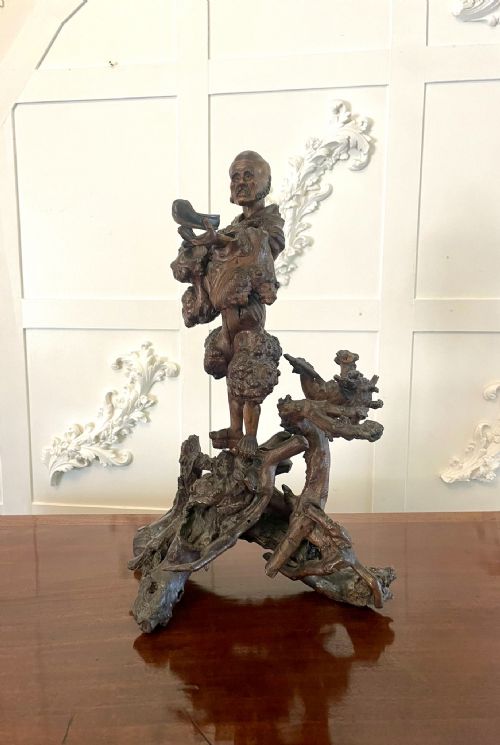
Carvers utilised organic materials like root wood, boxwood, and hardwood, working closely with the natural contours and burrs of the grain to shape organic forms. Root wood carvings embrace the knotty, gnarled properties of the timber to give the drapery and background elements a lifelike movement.
Mineral materials such as Shoushan stone and celadon jade required meticulous hand-shaping and detailed incision to render intricate motifs like dragons, pearls, and water birds. Gesso and gold leaf additionally appear on select pieces, adding a reflective layer to lacquered and painted wooden surfaces.
One attentive scholar figure is caught in the act of feeding geese, bringing a touch of rural serenity directly to the desk.
Distinctions in quality
The selection of the raw material also plays a role, as finely figured burr root wood or unblemished celadon jade displays a superior handling of the natural medium. Pieces that retain harmonious proportions and integrated base elements show a higher level of workshop discipline.
The Qing Scholar Figure Carving Glossary
- Celadon jade
- A pale green mineral prized for its translucency and smooth texture. It is shaped into intricate carvings and scholar's desk objects.
- Shoushan stone
- A traditional Chinese soapstone utilised for detailed pictorial carvings and seals. It allows for soft, translucent colour variations across the sculpture.
- Root wood
- Timber sourced from the root system of a tree, displaying complex, gnarled grains. Carvers shape these natural twists into figures and landscapes.
- Giltwood
- Wood that has been coated with a thin layer of gold leaf. This technique illuminates specific details on miniature figure groups.
- Wrist rest
- A curved support placed on a desk to keep the sleeve or arm clear of wet ink during calligraphy. Boxwood figures sometimes double as these functional items.
Qing Scholar Figure Carving: Frequently Asked Questions
Where were these carvings displayed?
Historically, scholars and literati placed these figures on desks, tables, and scholar's studio displays to inspire meditation and literary pursuits. They formed part of an intellectual desktop landscape.
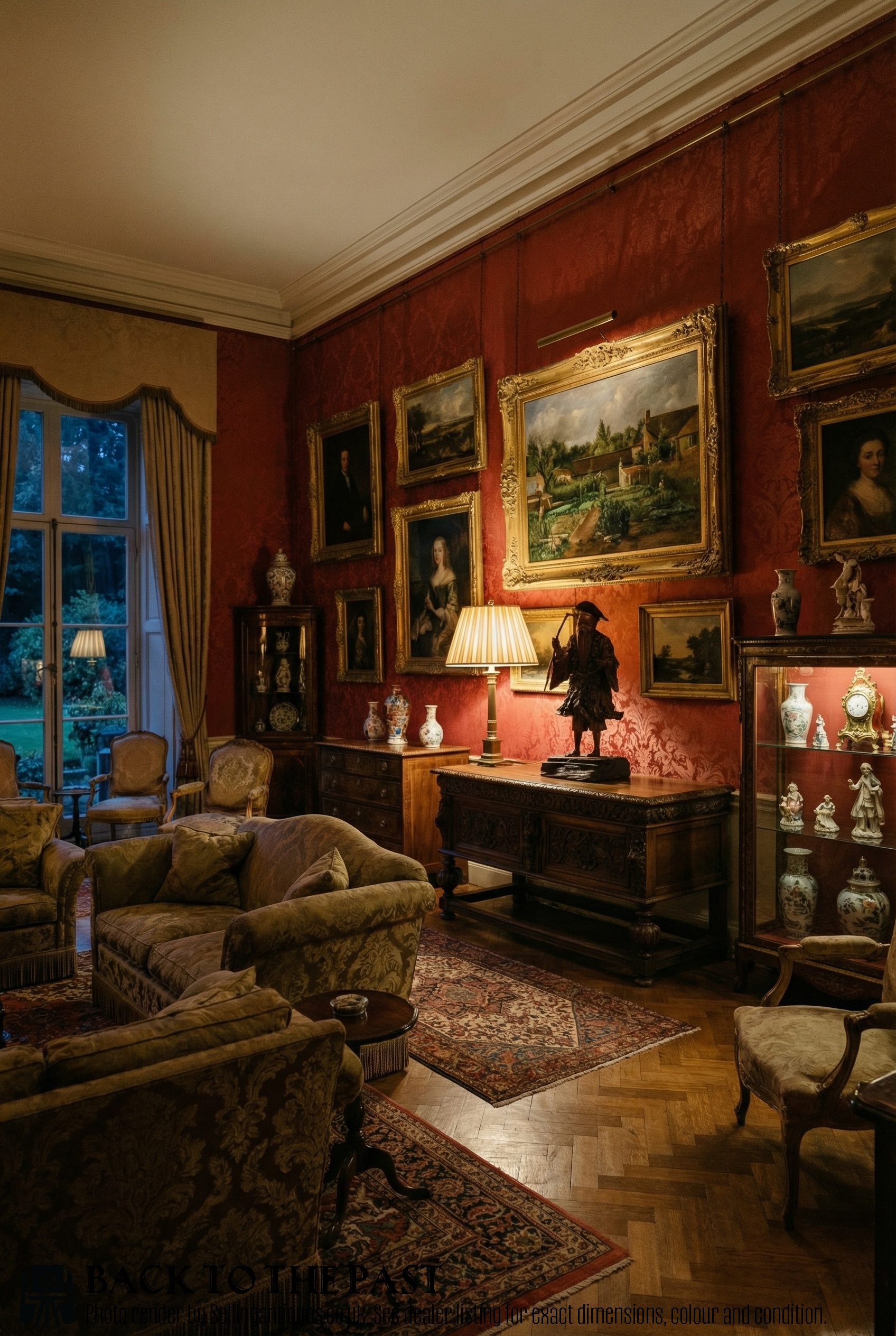
Today, they function as sculptural focal points in studies, libraries, or living spaces where organic textures and historic character are appreciated.
How do I care for wooden carvings?
Keep wooden and root wood figures away from direct heat sources and sudden humidity fluctuations to prevent the timber from splitting. Dust them gently with a soft, dry brush.
Avoid applying harsh chemical polishes or modern cleaning liquids to the aged wood surfaces or gilt details.
How can I tell the age of a carving?
Age is indicated by the style of the carving, the natural patina of the material, and the specific historical period associated with the piece. Listings often reference the 18th or 19th century based on stylistic traits.
Examining the tool marks and wear patterns on the underside or base provides further clues to the manufacturing era.