
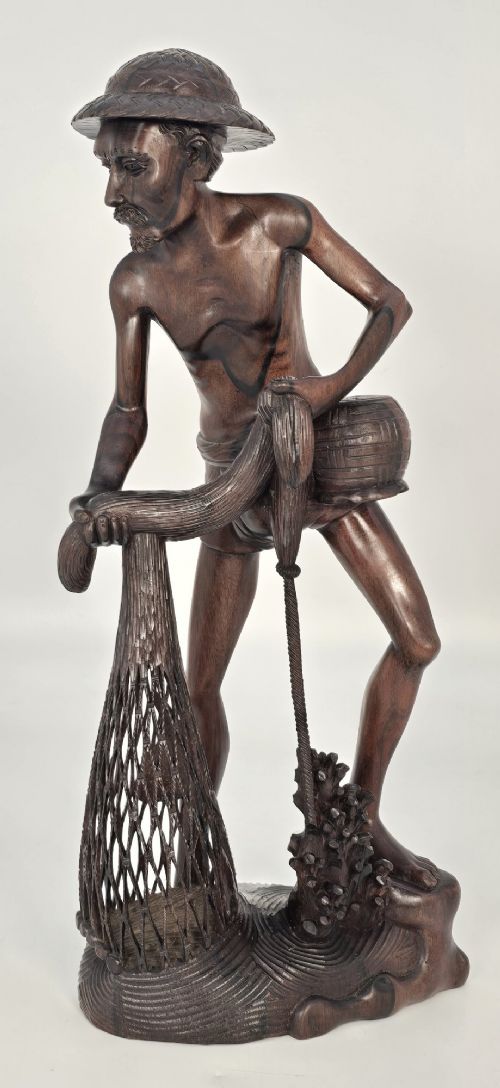


Oriental Hardwood Figurine
An oriental hardwood figurine brings dense grain and hand-carved character into a room, spanning Chinese, Japanese, Indian, and Indonesian traditions.
Oriental Hardwood Figurine
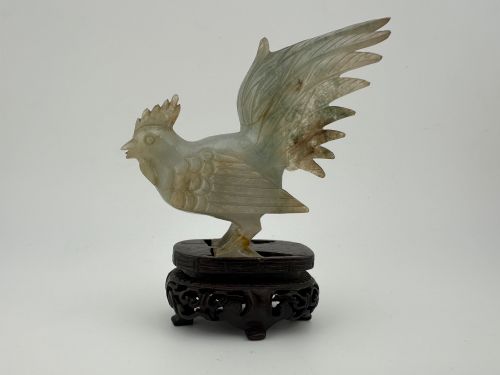
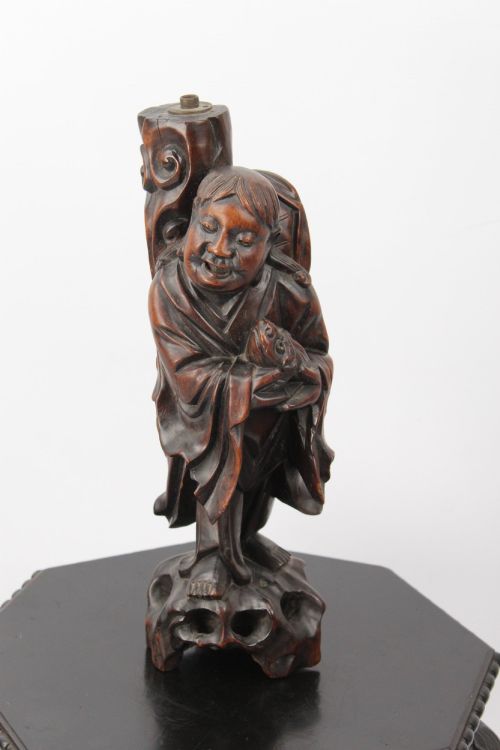
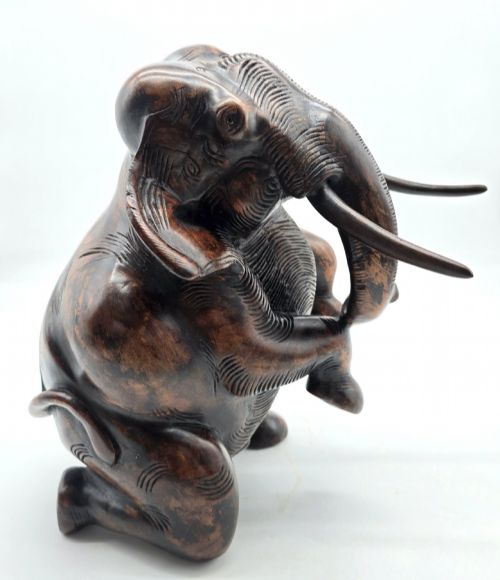
An oriental hardwood figurine represents carved subjects ranging from Daoist immortals and fishermen to animals such as elephants, water buffaloes, tigers, and Mandarin ducks. These sculptures emerge from diverse regional traditions, including Qing Dynasty workshops, Japanese Meiji period studios, Raj period India, and Balinese art deco ateliers.
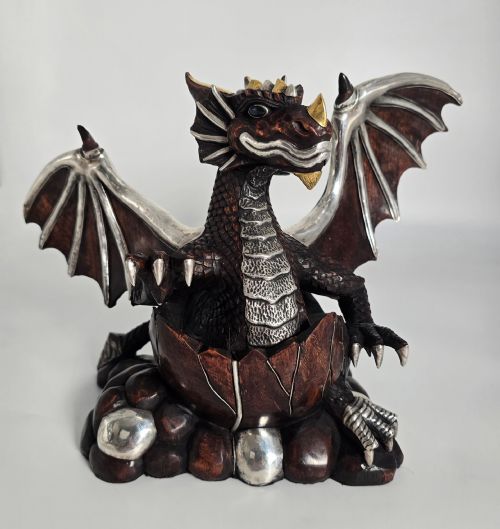
Most pieces date from the nineteenth and early twentieth centuries, capturing traditional figures, folk art, and mythological creatures. Buyers most frequently encounter Chinese hardwood carvings depicting human figures alongside Japanese okimono and root wood studies.
The forms vary from single standing figures to pairs of water buffaloes and multi-figure groups. Makers utilised dense timbers to render intricate details like flowing robes, woven fish traps, and ceremonial trappings.
Assessing Quality and Execution
The distinction between standard works and superior sculptures lies in the anatomical accuracy and the depth of the carving. Master carvers exploited the natural irregularities of root wood or the dense grain of hardwood to give life to hair, folds of fabric, and muscular tension.
Compositional complexity also dictates standing; pairs, groups with multiple figures, and pieces incorporating mixed metal mounts demonstrate greater ambition. The handling of extremities, such as hands and facial expressions, separates competent regional work from exceptional studio output.
Materials recorded across the inventory include standard hardwood, root wood, bone, brass, glass, and silvered metal.
The Oriental Hardwood Figurine Glossary
- Hardwood
- Dense timber derived from broad-leaved trees, prized for its durability and fine grain. This material resists warping and takes a high polish.
- Root Wood
- Gnarled timber sections chosen for naturally twisting forms. Carvers incorporated these organic shapes directly into the subject matter of the sculpture.
- Okimono
- A Japanese decorative statue intended for display on a shelf or in a tokonoma alcove. These carvings often depict humans, animals, or legendary beings with realistic detail.
- Raj Period
- The era of British rule in the Indian subcontinent. Carvings from this time often portray ceremonial elephants and figures with distinct regional attributes.
- Qing Dynasty
- The final imperial dynasty of China, lasting until nineteen twelve. Sculptures from this period follow established iconographic traditions for immortals and auspicious animals.
Oriental Hardwood Figurine: Frequently Asked Questions
How do I clean an antique wood carving?
Dust the surface regularly with a soft, dry brush to prevent dirt accumulation in the carved recesses. Avoid using water, liquid cleaners, or modern polishes, which can damage the aged patina.
Apply a microcrystalline wax sparingly only if the wood appears dry. Buff gently with a clean cloth to maintain the natural sheen.
Where should I place these figures in my home?
Position sculptures away from direct sunlight and heat sources to prevent the wood from drying out and splitting. Stable room temperatures protect the structural integrity of dense timbers and root wood.
Display them on sturdy shelves or tabletops where the detailed grain and carving can be appreciated from multiple angles.
How do I tell Chinese from Japanese carvings?
Chinese pieces often depict Daoist immortals, fishermen, or auspicious animals like Mandarin ducks and water buffaloes within traditional motifs. The subjects usually reflect specific cultural narratives and imperial iconographies.
Japanese Meiji period carvings, particularly okimono, tend to focus on realistic human subjects and organic forms with precise attention to everyday posture and expression.
What is root wood carving?
Root wood carving utilises the gnarled, twisting subterranean growth of trees rather than straight timber planks. Artisans work around the natural knots and voids to create organic shapes.
This technique produces asymmetrical sculptures where the natural contour of the root dictates the final form of the figure or animal.
Are these sculptures signed by makers?
Most antique oriental carvings are unsigned, reflecting a tradition of anonymous workshop production rather than individual artist branding. Pieces originating from Japanese Meiji period studios occasionally carry artist signatures or seals on the base.
Evaluation relies on the quality of the carving, the choice of material, and the stylistic execution rather than the presence of a signature.