



Carved Hardwood Immortal Figure
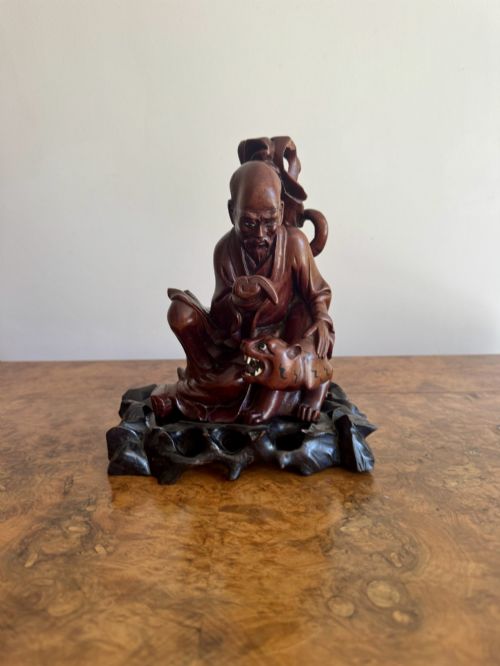
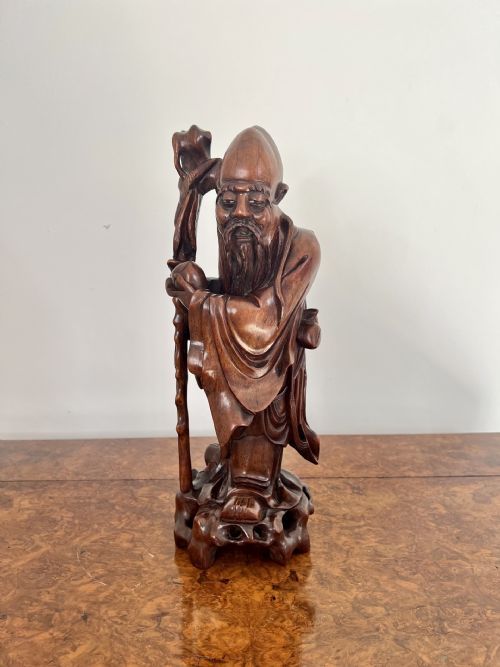
A carved hardwood immortal figure brings the presence of ancient Daoist sages and Buddhas straight into a room.
Carved Hardwood Immortal Figure
A carved hardwood immortal figure represents Daoist sages, laughing Buddhas, and mythical figures shaped from dense timber. You meet these primarily as nineteenth-century Chinese carvings, alongside root wood examples and related temple objects.
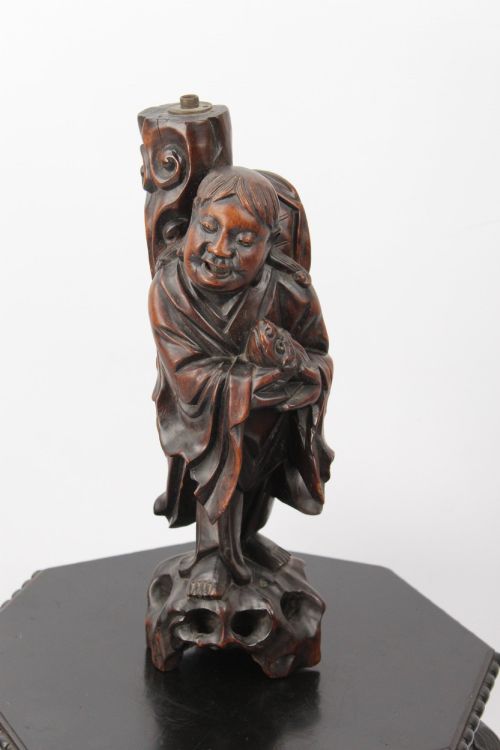
The forms range from single standing sculptures to figures accompanied by mythical creatures or elephants. Some pieces double as functional items, appearing in the record as table lamps and groups rather than static statues.
Dating clusters around the nineteenth century and the opening decade of the twentieth century. Traditional Chinese craftsmanship dictates the aesthetic across every piece on show.
How they were made
Carvers shaped these pieces using dense hardwoods and organic root wood, exploiting the natural contours of the timber for drapery and stance. Artisans occasionally integrated contrasting materials such as brass, bone, and wire inlay to accent robes and accessories.
The sculptural technique relies on deep relief and freestanding reduction, where the grain of the wood dictates the flow of the carving. Master carvers preserved the natural knots and twists of the root wood to give vitality to figures like Budai and Liu Hai.
Carved Hardwood Immortal Figure Retail Price Guide 2026
Typical asking prices for carved hardwood immortal figure among the pieces listed under this phrase on Sellingantiques today, from the lower quarter to the upper quarter. They describe what is for sale here now, not the wider market.
Listings feature traditional Chinese hardwoods and root wood dating primarily from the nineteenth century through to nineteen-ten.
What varies in quality
Quality rests entirely in the ambition of the carving and the treatment of the timber. Finer examples display a crisp command of facial expression and garment folds, whereas lesser pieces rely on mechanical smoothing that flattens the surface.
The choice of material alters the character of the object, moving from plain timber surfaces to deeply figured root wood that demands greater skill to carve. Pieces that incorporate subtle wire inlay or brass details demonstrate a higher level of workshop ambition.
The Carved Hardwood Immortal Figure Glossary
- Hardwood
- Slow-growing timber prized for its density and fine grain. It allows carvers to achieve sharp detail that resists wear over centuries.
- Root wood
- The gnarled underground growth of a tree selected for eccentric shapes. Carvers follow its natural twists to form figures and scenic bases.
- Qing Dynasty
- The imperial period of China lasting from the seventeenth to the early twentieth century. Objects from this era often carry traditional court and folk motifs.
- Immortal
- A mythical or historical sage who achieved divine status in Chinese tradition. Figures like Liu Hai are depicted with attributes such as coins or sacred animals.
- Wire inlay
- A decorative technique where thin metal threads are hammered into channels cut into the wood. It creates geometric or organic patterns across the surface.
Carved Hardwood Immortal Figure: Frequently Asked Questions
What is a carved hardwood immortal figure?
It is a traditional sculpture carved from dense timber depicting a sage, deity, or religious figure from Chinese folklore. These works capture figures such as the laughing Buddha or Daoist immortals in expressive poses.
They reflect the sculptural traditions of the nineteenth and early twentieth centuries, often utilising the natural grain of the wood to emphasise movement and texture.
How were these figures used originally?
These sculptures served as devotional objects, scholar's desk ornaments, or decorative displays within traditional interiors. They brought auspicious presence and cultural narratives into domestic and temple spaces.
Some pieces were later adapted into functional objects like table lamps while retaining their original carved sculptural bodies.
How do I date a root wood carving?
Dating relies on assessing the dryness and oxidation of the timber, tool marks left by the carver, and stylistic markers of the period. Nineteenth-century examples typically show deep patination and honest wear from handling.
Comparing the carving depth and subject matter against documented Qing dynasty styles helps narrow the manufacturing window.
How do I care for antique hardwood?
Keep the wood away from direct heat sources and sudden humidity changes to prevent the timber from splitting. Dust the carved surfaces gently with a dry, soft cloth.
Avoid modern liquid polishes that can build up in the recessed crevices of the carving and dull the natural patina of the hardwood.