


Chinese Carved Hall Table
A Chinese carved hall table grounds an entrance with deep relief work and substantial proportions, bringing centuries of regional craftsmanship straight to your hallway.
Chinese Carved Hall Table
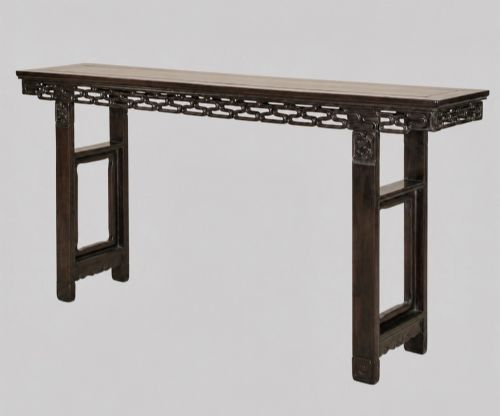
A Chinese carved hall table encompasses console, altar, and side table forms designed for domestic interiors and grand halls. These pieces bridge traditional ritual furniture and functional surface spaces suited to modern entryways.
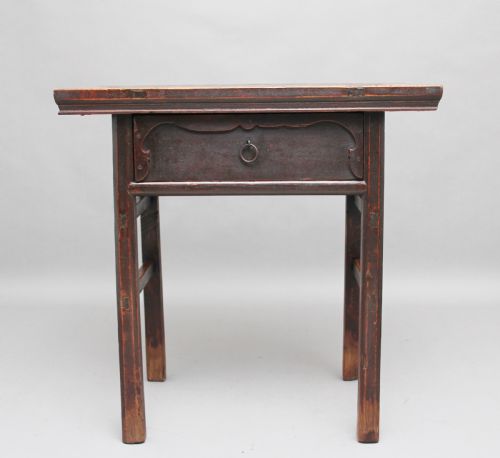
The selection on this page draws heavily from the nineteenth century and the Qing Dynasty, alongside later revivals. You will encounter rectangular altar tables, demi-lune consoles, and sturdy elm or hardwood centre tables.
Makers adapted temple and domestic forms for both export and home markets, creating surfaces that double as writing desks and occasional tables. Each piece reflects the specific utilitarian needs and aesthetic values of its period of origin.
How they were made
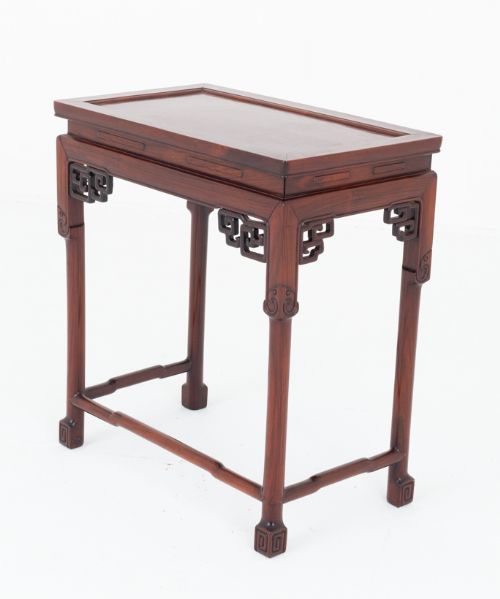
Woodworking relies on dense timbers like hardwood, rosewood, elm, and hongmu, often joined without metal fixings through traditional joinery methods. Artisans selected these durable woods to support intricate hand-carved panels and heavy stone inserts.
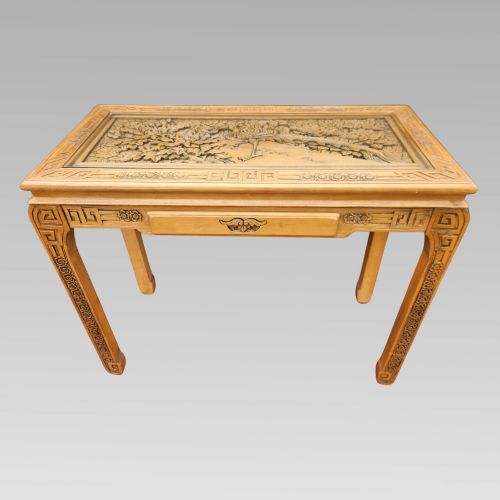
Surface decoration frequently combines deep relief carving with red or black lacquer finishes, brass accents, and inset marble or glass tops. These contrasting materials highlight the structural lines while protecting the underlying timber from daily wear.
Listings span the eighteenth century to the early twentieth century, featuring elm, hardwood, marble, and lacquer across altar, console, and centre table forms.
What varies in quality
The depth, sharpness, and clarity of the hand-carved motifs separate standard production from superior work. Master carvers achieved clean undercutting and balanced symmetry that lesser workshops simply sketched out with shallow cuts.
Timber selection and the stability of the joinery dictate the longevity and weight of the table. Dense hardwoods and well-seasoned elm retain their structural integrity far better than composite alternatives or poorly dried stock.
The Chinese Carved Hall Table Glossary
- Altar table
- A long, narrow table historically used in domestic or temple settings for ritual objects, featuring upturned flange ends or recessed legs. They now serve primarily as architectural console tables in hallways.
- Demi-lune
- A half-moon table designed to sit flush against a wall, frequently found as paired consoles or individual hall pieces. This shape maximises floor space in narrow corridors.
- Hongmu
- A translation meaning red wood, referring to dense, dark tropical hardwoods prized by Chinese cabinetmakers for structural stability and fine grain. It takes a high polish without needing heavy stains.
- Chinoiserie
- European interpretation and imitation of Chinese artistic traditions and motifs, prevalent in revival pieces like English Chippendale consoles. It blends Western forms with Oriental decorative themes.
- Lacquer
- A natural resin applied in numerous thin coats to create a glossy, durable protective seal over wood. Red and black variants dominate traditional pieces.
Chinese Carved Hall Table: Frequently Asked Questions
What is a Chinese carved hall table?
A Chinese carved hall table is a wooden console, altar, or side table featuring traditional Asian joinery and relief carving. These surfaces were built to anchor entrance spaces and living areas.
They combine decorative presence with practical surface utility, utilising dense timbers and regional designs dating back to the Qing Dynasty.
How were these tables used originally?
Many tables started as altar pieces for domestic shrines or formal reception rooms before evolving into general furniture. They held ceremonial objects, vases, and daily items.
In modern settings, they function effectively as narrow hallway consoles, writing desks, or statement accent tables.
What woods should I look for?
Construction relies heavily on regional timbers such as elm, rosewood, hongmu, and general hardwood. These materials provide the necessary density for intricate carving.
Hardwoods and elm dominate the older inventory, offering durability and substantial weight that anchors the piece against a wall.
How do I date an antique table?
Dating relies on assessing the timber, joinery techniques, wear patterns, and stylistic markers tied to specific eras like the Qing Dynasty or the nineteenth century. Revival pieces often borrow earlier motifs.
Comparing the depth of the hand carving and the natural patina of the wood helps distinguish nineteenth-century production from later twentieth-century interpretations.