


Chinese Carved Writing Desk
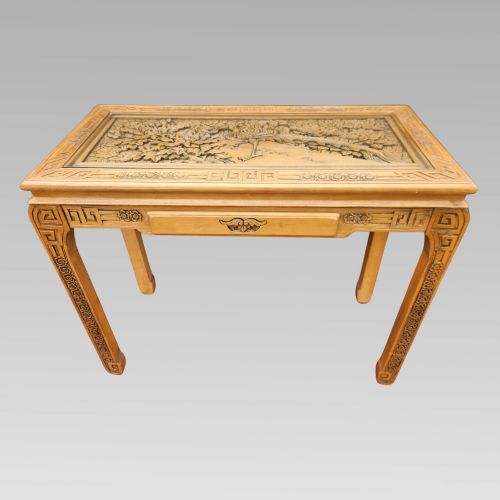
A chinese carved writing desk brings substantial presence to a room, combining practical surface space with deep relief carving.
Chinese Carved Writing Desk
A chinese carved writing desk unites practical workspace with traditional craftsmanship, often taking the form of a partners desk, writing table, or reception house desk. These pieces emerge predominantly from the nineteenth century, including specific dates such as 1880, 1890, and 1930, alongside Edwardian interpretations.
Buyers seeking this phrase encounter regional variations and export styles that blend traditional motifs with functional English or Qing forms. Alongside standard writing tables, the inventory incorporates related writing furniture and side tables designed for similar administrative or display purposes.
The aesthetic bridges functional utility and ornamental artistry, drawing on stylistic traditions like Chinese Export, Qing Dynasty, and Chinese Chippendale. This variety ensures that every desk serves as both a practical writing surface and a significant decorative focal point.
How they were made
Construction relies upon dense timbers including mahogany, elm, camphorwood, padouk wood, and assorted hardwoods. These materials provide the structural stability necessary to support deep, intricate carving across panels, legs, and surrounds.
Surface treatments incorporate traditional red lacquer alongside natural timber finishes polished to accentuate the grain. Secondary details frequently involve brass hardware, leather writing inserts, and glass protective tops that complement the carved wooden structures.
Listings span the nineteenth century, 1880, 1890, 1930, Edwardian, and Victorian periods, utilising mahogany, elm, camphorwood, padouk wood, and brass.
What varies in quality
Quality rests primarily in the depth, crispness, and complexity of the carved ornamentation, particularly where dragon motifs or regional scenes appear. Superior examples demonstrate confident handling of the timber, where relief work remains sharp and well-defined across all visible surfaces.
The choice of primary wood dictates much of the inherent value, with dense padouk and figured mahogany holding greater prestige than simpler domestic hardwoods. Construction integrity, original hardware retention, and the harmonious integration of export styles with functional proportions further separate exceptional pieces from standard workshop output.
The Chinese Carved Writing Desk Glossary
- Chinese Export
- Items manufactured in China specifically for Western markets, blending traditional domestic techniques with European furniture forms. This category defines much of the cross-cultural exchange seen in nineteenth-century workshops.
- Qing Dynasty
- The final imperial dynasty of China, spanning from 1644 to 1912, known for sophisticated hardwood carving and administrative furniture production. Pieces from this era reflect formal court standards and regional scholarly tastes.
- Padouk Wood
- A heavy, dense tropical timber prized for its reddish hue and durability, frequently utilised in high-status nineteenth-century desk construction. Its stability allows for extremely fine, sharp relief carving.
- Partners Desk
- A large double-sided desk designed for two people to work opposite one another, featuring opposing drawers and cupboards. These heavy forms provide expansive surface areas for shared administrative tasks.
- Chippendale Revival
- A late nineteenth and early twentieth-century design movement that reinterpreted eighteenth-century English furniture incorporating Chinese fretwork and lattice patterns. Edwardian iterations frequently adopt these stylistic elements.
Chinese Carved Writing Desk: Frequently Asked Questions
What is a chinese carved writing desk?
A chinese carved writing desk is a functional writing surface featuring elaborate relief carving, often produced during the nineteenth century for export or domestic use. These pieces range from simple side tables adapted for writing to large partners desks.
They combine practical drawer storage and writing surfaces with traditional motifs such as dragons, foliage, and regional scenes. Their robust construction utilises dense hardwoods like mahogany, elm, and padouk.
How do I date a carved desk?
Dating relies upon examining construction methods, timber choices, and stylistic markers recorded across Victorian, Edwardian, and nineteenth-century periods. Specific dates such as 1880, 1890, and 1930 appear in workshop records and hardware styles.
Cabinetmaking techniques, such as drawer dovetailing and the application of red lacquer, help distinguish earlier Qing examples from later revival pieces. Comparing the hardware and secondary woods provides further chronological clarity.
Where were these desks made?
These desks originate from Chinese workshops catering to both domestic scholars and international markets through the export trade. Regional centres produced varying interpretations influenced by traditional woodworking traditions.
Later revival pieces were also produced in Britain during the Edwardian period, adopting Chinese Chippendale motifs. The geographical origin often shapes the specific choice of hardwood and carving style.
How do I care for hardwood furniture?
Maintaining carved hardwood requires stable indoor humidity levels to prevent timber movement and cracking in the dense woods. Regular dusting with a soft, dry cloth preserves the finish without abrasive chemical buildup.
Leather inserts and glass tops benefit from gentle, periodic cleaning appropriate to their specific material. Avoiding direct sunlight protects both the natural timber grain and any red lacquer surfaces.