





Oriental Hardwood Console Table
An oriental hardwood console table anchors a hallway with rich grain, deep carving and quiet presence.
Oriental Hardwood Console Table
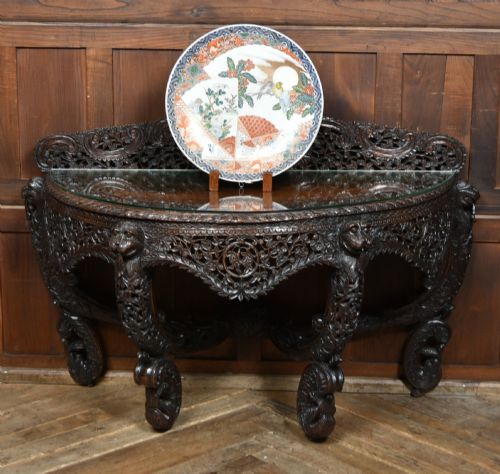
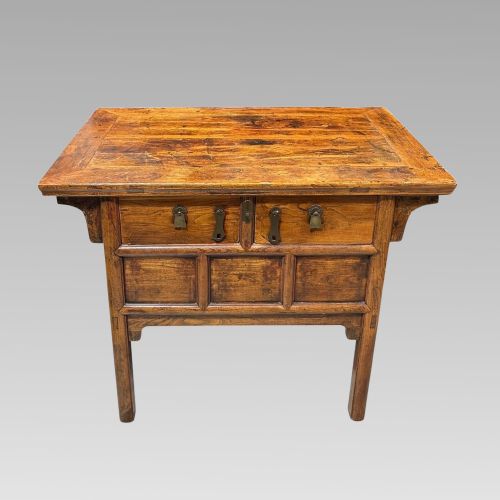
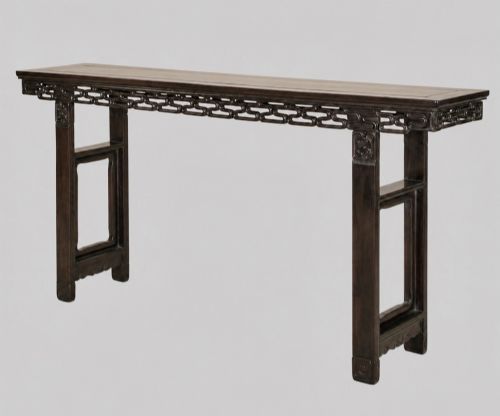
An oriental hardwood console table brings centuries of tradition into a modern interior through forms designed for ritual, display and everyday utility. These tables span several centuries, with pieces emerging from the 18th century through the late Qing Dynasty and into the early 20th century.
Originating predominantly from China, alongside examples from India and Burma, these tables serve as focal points in entrance halls and living spaces. Their construction reflects regional woodworking traditions, utilising durable timbers built to endure.
How they were made
Cabinetmakers constructed these tables using dense timbers including hongmu, elm, teak and amboyna wood. Many pieces integrate inset marble panels, such as rouge marble tops, providing a cool, smooth surface that contrasts with the surrounding timber frame.
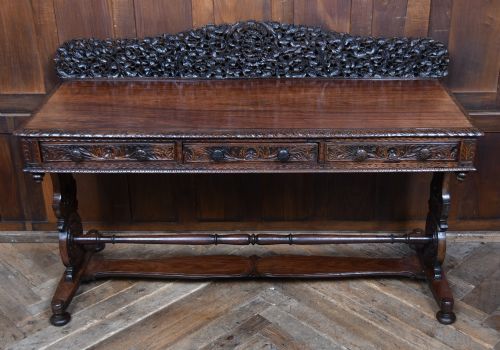
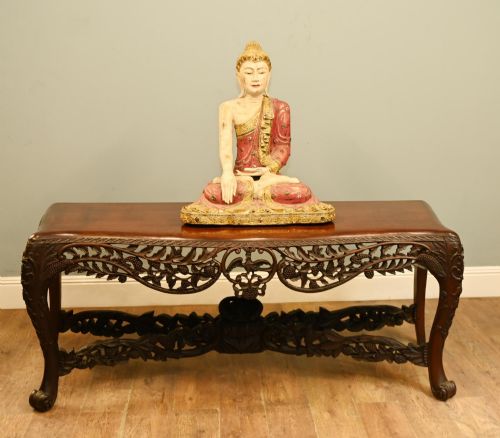
Carving techniques define the ornamentation, ranging from restrained mouldings to deep relief carving depicting dragons and traditional motifs. Joinery relied on precise traditional methods rather than metal fixings, allowing the timber to move naturally over time.
Oriental Hardwood Console Table Retail Price Guide 2026
Typical asking prices for oriental hardwood console table among the pieces listed under this phrase on Sellingantiques today, from the lower quarter to the upper quarter. They describe what is for sale here now, not the wider market.
Materials documented across the inventory include elm, teak, amboyna wood, lacquer, marble and various dark hardwoods.
What varies in quality
The distinction between ordinary and exceptional pieces lies in the selection of the timber and the crispness of the carved detail. Dense woods like hongmu display finer grain patterns and retain sharp architectural lines where lesser timbers soften with age.
Proportion and structural integrity dictate the standing of a table. Tables that retain their original plank tops, inset marble panels and balanced joinery command greater attention from collectors than those altered by later repairs.
The Oriental Hardwood Console Table Glossary
- Hongmu
- A dense, heavy Asian hardwood prized for its deep colour and durability in fine furniture. Cabinetmakers utilised this timber for formal altar and console tables.
- Altar table
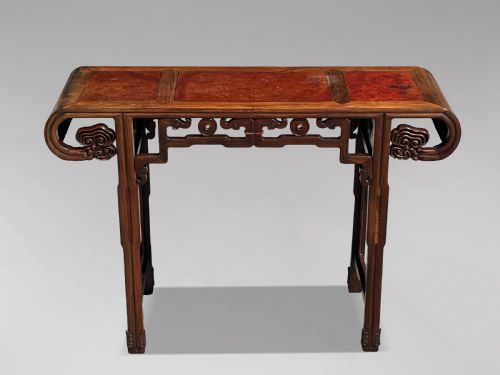
- A traditional rectangular table featuring upturned ends or flanged tops, originally designed for ceremonial use. These pieces now function effectively as narrow console tables in hallways.
- Demi-lune
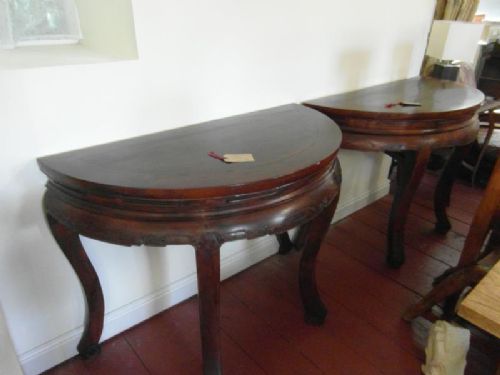
- A half-moon shape characteristic of console tables designed to sit flush against a wall. This format saves floor space while offering a substantial surface.
- Amboyna wood
- A highly figured burl timber utilised for decorative panels and contrasting inlays. Its intricate grain adds visual texture to tabletop surfaces.
- Trestle table
- A table structure supported by horizontal beams resting on vertical legs or feet. This form provides sturdy stability without obstructing legroom.
Oriental Hardwood Console Table: Frequently Asked Questions
Where should I place a console table?
These narrow tables suit entrance halls, corridors and living rooms where floor space is limited. Their shallow depth allows them to sit against walls without obstructing movement.
Pair a console table with a mirror or artwork above to create a balanced focal point in a reception room or hallway.
How do I care for hardwood surfaces?
Dust the timber regularly with a soft, dry cloth to prevent the buildup of grit in carved recesses. Avoid placing tables in direct sunlight or near heat sources to protect the wood.
Apply occasional natural wax to nourish dense timbers like hongmu and elm, preserving their natural sheen over time.
What is the difference between an altar table and a console table?
Altar tables often feature distinct upturned flanges at the short ends of the rectangular top. Console tables typically present a flat surface designed specifically to rest against walls.
Both forms serve identical functional roles in modern interiors as narrow display surfaces.
Are marble inserts original to these tables?
Many nineteenth-century centre and altar tables incorporate inset marble panels, such as rouge marble, to create a durable, cool surface. These inserts were fitted during the initial construction to contrast with the dark hardwood frames.
Inspect the seating of the stone within the wooden rebate to confirm its original integration.