


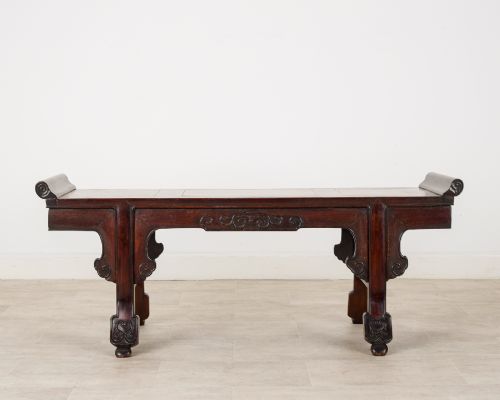


Carved Hardwood Altar Table
These carved hardwood altar table pieces bring grounded form and historic craft to a room, offering practical surface space steeped in traditional Chinese design.
Carved Hardwood Altar Table
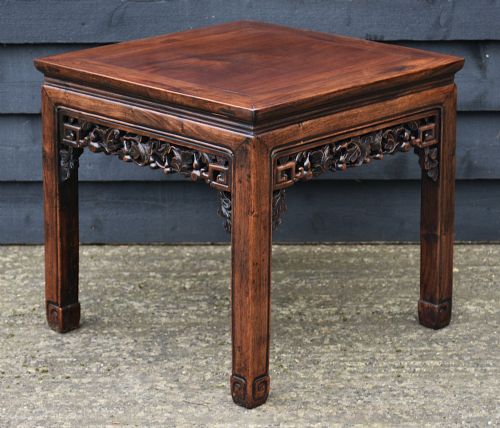
A carved hardwood altar table is a traditional form rooted in Chinese craftsmanship, appearing predominantly across the nineteenth century and into the early twentieth century. These pieces function as console tables, side tables, low tables, and benches, reflecting the aesthetic standards of the Qing Dynasty.
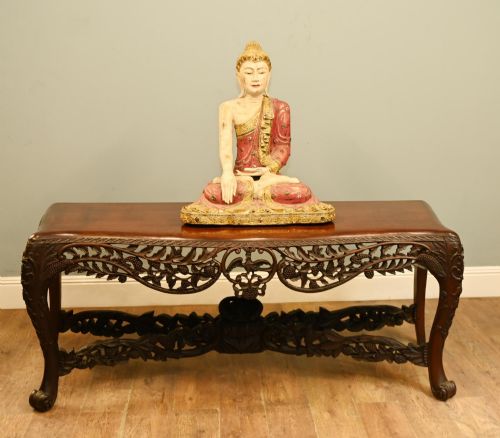
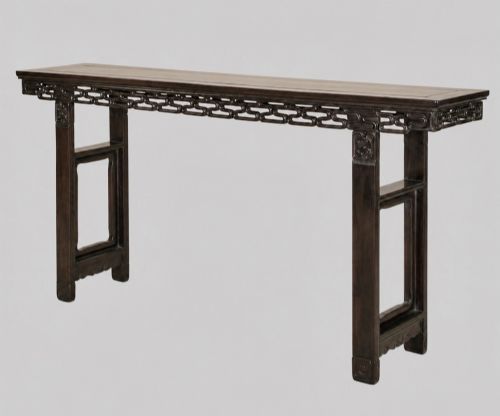
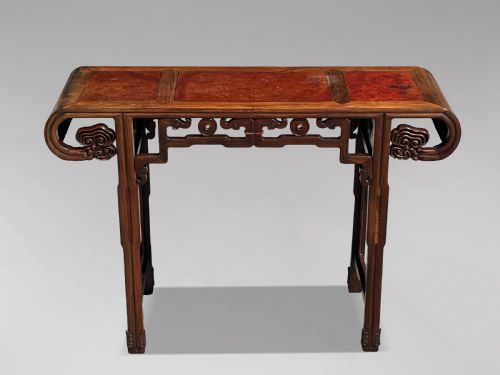
The versions met most frequently on this page include rectangular altar tables, console tables, and benches executed in dense timbers, often associated with Qing Dynasty production or Chinoiserie styles. Collectors also encounter variations such as scholar's tables, scroll-ended tables, and low kang tables.
Originating primarily from China, these furnishings serve as focal points in modern interiors, adapting easily as hall tables, sideboards, or central display surfaces. Their enduring appeal lies in the combination of architectural joinery and sculptural carving.
Qualities that separate the range
The top of the range is distinguished by the depth, precision, and crispness of the carving across the aprons and spandrels, showing a sure hand in traditional motifs. Dense, highly figured timbers like hongmu or rosewood, combined with well-preserved surface finishes, elevate an example above standard production.
Proportion and balance also dictate distinction, particularly in pieces featuring scroll ends or inset rouge marble panels that sit flush within the hardwood frame. Simpler forms in elm or standard hardwood occupy the broader middle ground, where utility outweighs elaborate ornamentation.
Gradations in quality rest upon the integrity of the original construction and the preservation of the timber's natural figure over time. Pieces that retain their original structural rigidity and surface patina command greater appreciation among collectors.
Carved Hardwood Altar Table Retail Price Guide 2026
Typical asking prices for carved hardwood altar table among the pieces listed under this phrase on Sellingantiques today, from the lower quarter to the upper quarter. They describe what is for sale here now, not the wider market.
Listings feature pieces spanning the nineteenth century up to nineteen ten, predominantly in the Qing Dynasty style using hongmu, rosewood, elm, and marble.
The Carved Hardwood Altar Table Glossary
- Hongmu
- A category of dense, fragrant tropical hardwoods prized in Chinese furniture making for its heavy weight and rich colour. It translates literally to red wood.
- Kang table
- A low table traditionally used on a heated brick platform in northern China, often mirroring the proportions of larger altar tables in miniature form.
- Chinoiserie
- European interpretation and imitation of Chinese artistic traditions and motifs, popular across decorative arts and furniture design.
- Demi lune
- A half-moon shaped console table designed to stand flat against a wall, appearing in pairs within the listed items.
- Scroll-ended
- A table design where the short ends of the top surface curve upward in a distinctive scroll shape, enhancing the formal silhouette.
Carved Hardwood Altar Table: Frequently Asked Questions
What is a carved hardwood altar table used for?
These tables originally served ritual or display purposes in traditional Chinese interiors, providing an elevated surface for ancestral tablets, vases, or decorative objects. In contemporary spaces, they function effectively as console tables, hall tables, or distinctive sideboards.
Their narrow rectangular proportions allow them to sit flush against walls in hallways, living rooms, or dining spaces without obstructing walkways.
How do I date a nineteenth-century Chinese table?
Dating relies on assessing the timber density, tool marks left by traditional joinery, and the style of the carving relative to Qing Dynasty conventions. Pieces often date from the nineteenth century up to around nineteen ten.
Examining the wear patterns on the feet and the patina of the hardwood helps distinguish nineteenth-century production from later interpretations.
What woods were used in these tables?
Makers utilised a variety of hardwoods, most notably hongmu, rosewood, and elm, sometimes complemented by amboyna wood veneers. These timbers were chosen for their durability and dark, rich grain patterns.
In some instances, builders incorporated contrasting materials such as rouge marble panel inserts or brass hardware to add visual texture to the design.
Where were these tables made?
The pieces originate primarily from China, reflecting regional workshop traditions associated with the Qing Dynasty and traditional Chinese craftsmanship. Certain examples show cross-cultural influences linked to Tibetan or Chinoiserie aesthetics.
Regional variations appear in the choice of secondary woods like elm and the specific motifs chosen for the carved aprons.
How do I care for a hardwood altar table?
Maintain the wood by keeping the table away from direct heat sources and sudden humidity changes that might affect the timber and joinery. Dust regularly with a soft cloth and avoid chemical polishes that can degrade the historic finish.
Applying a traditional wax occasionally helps nourish the hardwood and preserve the natural patina developed over the centuries.