





Carved Chinese Hardwood Bench
A carved chinese hardwood bench brings sculptural presence and dense, figured grain to a hallway or living space.
Carved Chinese Hardwood Bench
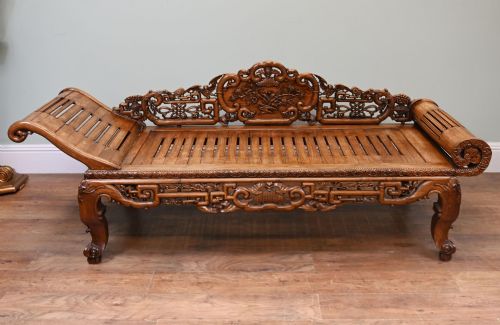
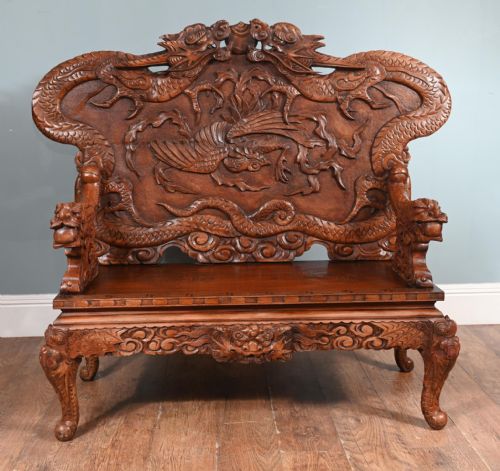
A carved chinese hardwood bench encompasses seating forms ranging from nineteenth-century altar benches and hall settles to day beds and window seats. These pieces emerge primarily from the nineteenth century and the early twentieth century, spanning Qing Dynasty and Chinese Export traditions.
How they were made
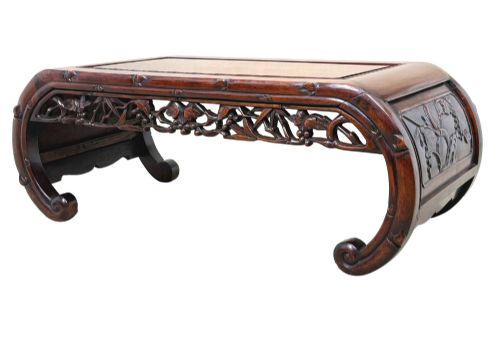
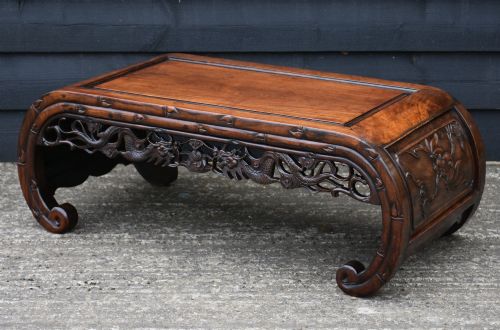
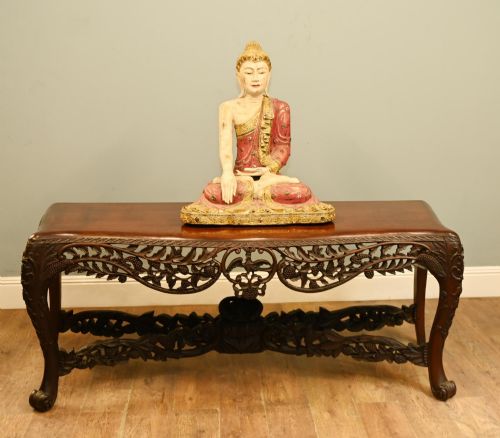
Craftsmen built these benches using dense timbers such as hongmu, huali, huanghuali, and rosewood, joined through traditional mortise and tenon construction without metal nails. This dense framing supported intricate surface carving depicting dragons, foliage, and scroll ends.
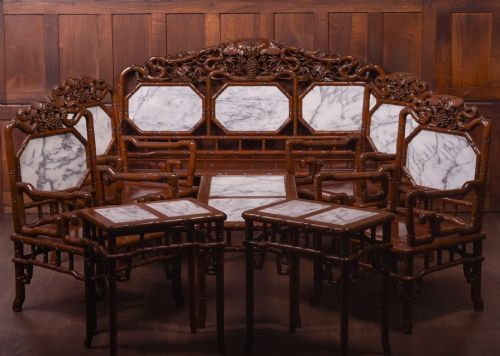
Selected examples incorporate contrasting inlays of mother of pearl or accents of cinnabar lacquer, applied to polished hardwood surfaces. These decorative techniques required specialist skill to embed delicate shell or lacquer layers flush into the heavy timber frame.
Carved Chinese Hardwood Bench Retail Price Guide 2026
Typical asking prices for carved chinese hardwood bench among the pieces listed under this phrase on Sellingantiques today, from the lower quarter to the upper quarter. They describe what is for sale here now, not the wider market.
The listings combine nineteenth-century altar benches and window seats with early twentieth-century mahogany and ebonised coffee tables.
What varies in quality
Quality rests primarily in the choice of timber and the crispness of the hand carving. Denser, heavier woods like hongmu and huanghuali provide a superior tactile weight and deeper natural grain compared to standard blonde wood or plain hardwood.
The refinement of the joinery and the depth of relief work separate standard utility seating from exhibition-grade pieces. Higher-tier examples display sharply defined dragon motifs and securely seated mother of pearl inlays that sit entirely flush with the polished surface.
The Carved Chinese Hardwood Bench Glossary
- Hongmu
- A dense, heavy tropical hardwood prized in traditional Chinese furniture making for its deep colour and durability. It takes a high polish and supports intricate relief carving.
- Kang table
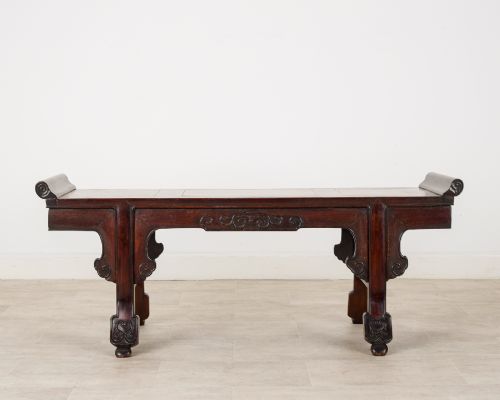
- A low platform table traditionally used on a heated brick bed for dining or resting. These low tables frequently share the stylistic carved details of full-sized benches.
- Cinnabar lacquer
- A decorative finish created by applying numerous layers of coloured tree sap and carving the hardened surface. It provides a rich red hue often seen on dragon bench panels.
- Altar bench
- A long, narrow seating form derived from temple furniture styles. These pieces often feature distinct scroll ends and formal architectural proportions.
Carved Chinese Hardwood Bench: Frequently Asked Questions
How do I care for a hardwood bench?
Maintain the timber by keeping it away from direct heat sources and sudden humidity shifts. Apply natural wax polish sparingly to nourish the polished hardwood grain.
Avoid using wet cloths or chemical cleaning sprays on the carved surfaces or mother of pearl inlays. A soft, dry brush removes dust from intricate recesses safely.
Where should I place a hall bench?
Position a hall bench in an entranceway, along a wide corridor, or beneath a large window as a dedicated seat. Their shallow depth allows them to sit comfortably against walls without dominating the room.
Pairing a bench with low coffee tables or matching armchairs creates a cohesive seating arrangement in a larger parlour or living space.
What is the difference between a kang table and a bench?
A kang table is a low surface designed for resting or dining near floor level, whereas a bench provides elevated seating with backrests or armrests. Both share similar dense hardwood construction and traditional Chinese carving styles.
Kang tables are typically scaled lower and smaller than standard hall benches or window seats.
How can I identify a Qing Dynasty piece?
Qing Dynasty furniture is characterised by heavy tropical hardwoods, traditional mortise joinery, and motifs such as dragons and scroll ends. Dating relies on stylistic conventions and the natural patina developed over the centuries.
Later pieces often reflect transitional Republic styles while maintaining traditional carving techniques and dense timber construction.