
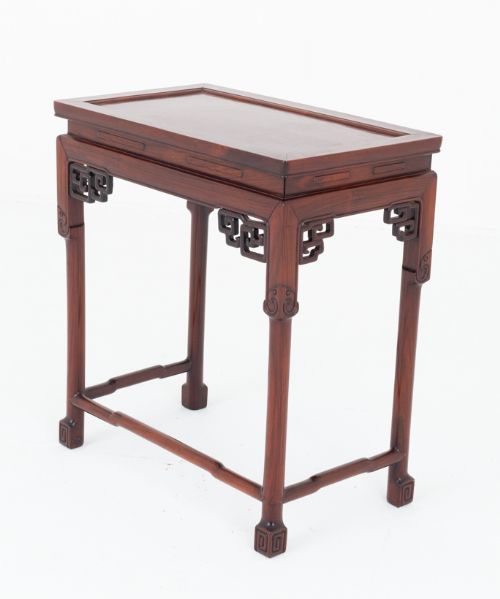


Brown Oriental Hall Table
A brown oriental hall table brings architectural presence to a narrow space through rich timber and disciplined Qing dynasty or provincial lines.
Brown Oriental Hall Table
A brown oriental hall table encompasses console tables, altar tables, and occasional tables originating from Chinese workshops and international export markets. These pieces serve narrow corridors and reception spaces with shallow profiles and balanced proportions.
The selections here span the eighteenth century, nineteenth century, and early twentieth century. Elm, hardwood, and amboyna form the backbone of these listings, accompanied by brass hardware and lacquer finishes.
Buyers most frequently encounter nineteenth-century elm console tables and altar tables. These examples range from austere provincial forms to deeply carved dragon centre tables and chinoiserie occasional tables.
How they were made
Joiners built these tables using dense timbers such as elm and hardwood, relying on traditional framing techniques that accommodated seasonal wood movement without metal fasteners. Tabletops often feature floating panels set within sturdy mitred frames.
Carvers shaped complex motifs directly into the solid wood of apron rails and friezes, utilising chisels for deep relief work. Surfaces received protective and decorative treatments including lacquer applications and polished wax over natural grain.
What varies in quality
The hierarchy of quality rests on the selection of timber and the precision of the joinery. Dense, heavily grained elm and choice hardwoods command attention for their weight and stability, whereas lesser examples employ softer secondary woods.
Carving execution defines the upper tier of these pieces. Crisp, deep relief work on aprons and legs demonstrates superior hand-tool mastery, contrasting with shallow or perfunctory surface decoration found on standard utility pieces.
The Brown Oriental Hall Table Glossary
- Altar table
- A rectangular ritual table featuring upturned flange ends on the top surface and openwork carved spandrels beneath the frame. These tables historically stood against ancestral hall walls.
- Console table
- A wall-mounted or freestanding narrow table designed to fit against a hallway or parlour wall. They often feature half-moon or rectangular top formats.
- Elm
- A durable, fibrous timber valued for its distinct grain pattern and structural resilience in Chinese cabinetmaking. It takes a rich brown tone under traditional polishing methods.
- Qing dynasty
- The imperial era spanning from the mid-seventeenth to the early twentieth century. Furniture from this period exhibits both refined court aesthetics and robust regional styles.
- Chinoiserie
- European stylistic interpretations of Chinese artistic motifs and construction methods. This aesthetic gained momentum during the eighteenth and nineteenth centuries.
Brown Oriental Hall Table: Frequently Asked Questions
Where should I place a hall table?
These tables suit narrow entranceways, hallways, and landings where floor space remains at a premium. Their shallow depth allows them to sit flush against walls without obstructing thoroughfares.
They also function effectively behind sofas or beneath large mirrors in reception rooms to anchor decorative objects.
How do I clean wooden surfaces?
Dust surfaces regularly with a soft, dry cloth to prevent particulate buildup in carved recesses. Avoid silicon-based polishes that can degrade historical wax finishes over time.
Apply a microcrystalline wax sparingly once or twice a year to nourish the timber and maintain a soft sheen.
Are these pieces structurally solid?
Traditional joinery relies on interlocking wooden joints rather than nails or screws, allowing the frame to flex naturally with humidity changes. Most antique examples remain robust for daily use.
Placing them away from direct heat sources and severe moisture fluctuations protects the timber from warping.
How do I distinguish age?
Age reveals itself through hand-cut joinery marks, natural timber shrinkage, and the accumulated patina of use over centuries. Tool marks left by hand chisels differ markedly from machine-toothed modern manufacturing.
Examining the underside and interior framing components often exposes the construction methods of nineteenth-century or earlier workshops.