
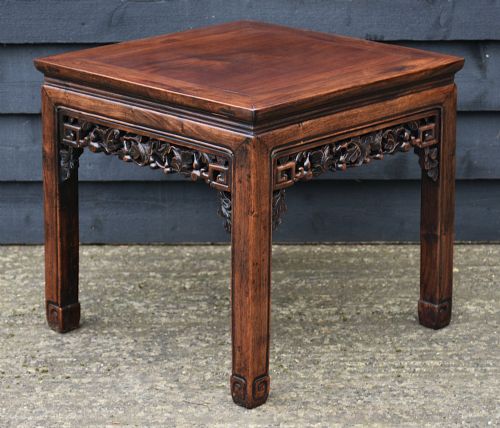
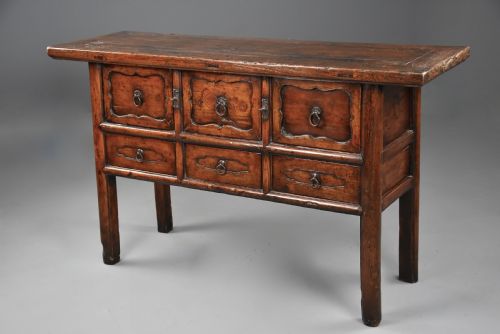
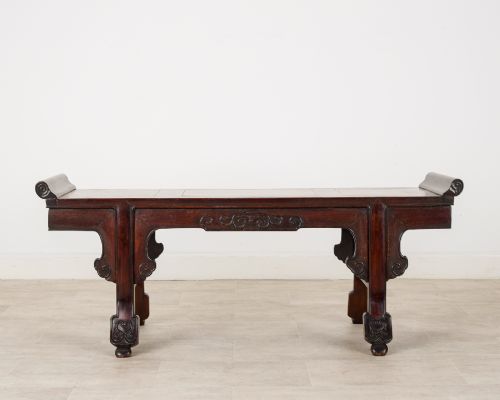
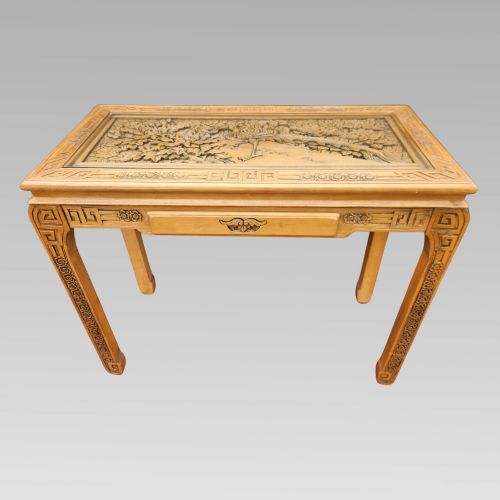


Oriental Wooden Altar Table
An oriental wooden altar table brings architectural line and centuries of regional craftsmanship straight into a modern hall or living space.
Oriental Wooden Altar Table
These oriental wooden altar tables span pieces made across the nineteenth and early twentieth centuries, drawing on Qing dynasty traditions and regional Chinese workshops.
A buyer searching this phrase encounters console tables, low tables, benches, and small sideboards alongside traditional altar forms fashioned from elm, rosewood, and general hardwoods.
Many examples reflect classic provincial or export designs, utilising deep carved timber, linear frames, and occasional red lacquer surfaces.
Materials and construction methods
The workshops relied heavily on native timbers such as resilient elm and dense rosewood, often choosing specific local varieties like locust wood for their grain and durability.
Construction techniques combined traditional joinery with restrained carving, sometimes incorporating brass fittings or glass panels while preserving the natural patina of the wood.
One unexpected item slips into the line-up: an oriental brass temple bell standing quietly among the timber tables.
Distinctions in construction and finish
Quality reveals itself in the handling of the timber, where a rich, untouched patina and crisp carving separate standard utility pieces from finer examples.
The structural integrity of the joinery and the balance of proportion between the linear legs and the upper surface determine the visual weight and stability of the piece.
The Oriental Wooden Altar Table Glossary
- Altar table
- A traditional rectangular form featuring upturned flanges at the short ends, originally designed for ritual offerings.
- Patina
- The surface sheen and deep colour developed through decades of handling, use, and age.
- Qing dynasty
- The imperial period spanning from sixteen-forty-four to nineteen-twelve, which defined classical Chinese furniture proportions.
- Elm
- A tough, fibrous timber favoured by regional makers for its resistance to splitting and its pronounced grain pattern.
- Chinoiserie
- European decorative styles imitating Chinese artistic motifs, occasionally reflected in later export pieces.
Oriental Wooden Altar Table: Frequently Asked Questions
How do I use an altar table at home?
These tables fit naturally as narrow console tables in hallways, behind sofas, or as statement display surfaces for ceramics and lamps.
Their linear profiles allow them to occupy minimal floor space while adding significant architectural character to a room.
What woods were used for these tables?
Makers principally relied on elm and dense hardwoods like rosewood, selecting them for their structural strength and rich natural grain.
Some pieces also feature lacquer finishes or secondary timbers depending on their regional origin and intended function.
Are these tables from the Qing dynasty?
Many examples date from the nineteenth century during the later Qing dynasty or follow those established stylistic traditions.
Provincial workshops continued producing these traditional forms well into the early twentieth century.
How do I care for antique elm furniture?
Keep the wood away from direct heat sources and sudden humidity changes to prevent the timber from drying out or splitting.
An occasional application of suitable wax helps maintain the surface patina without building up a heavy artificial shine.