


Chimneypiece Wall Mirror
A chimneypiece wall mirror anchors the room above the hearth, bringing light and scale to a period interior.
Chimneypiece Wall Mirror
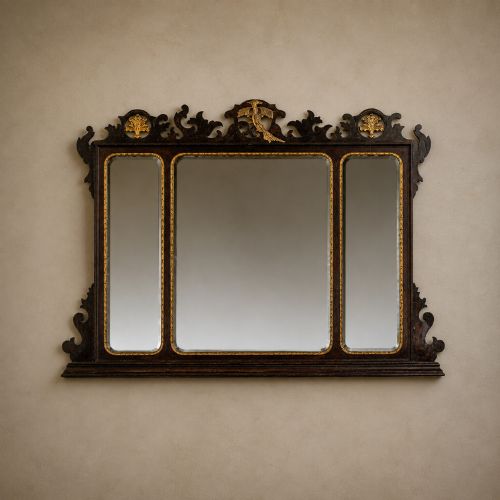
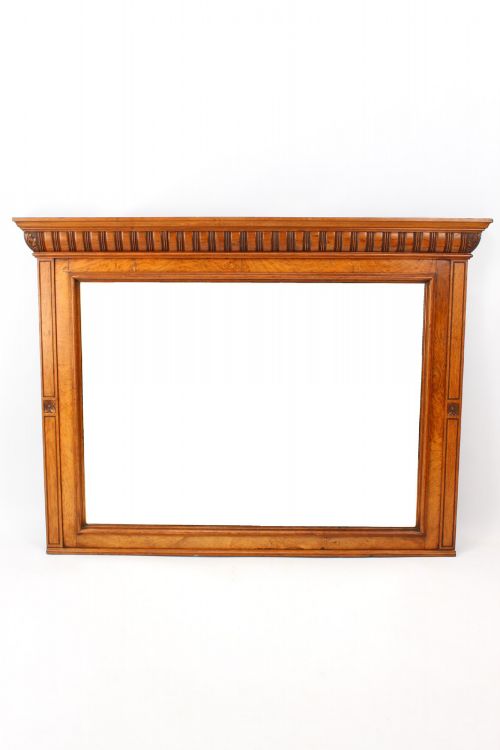
A chimneypiece wall mirror sits above a fireplace, framed to command the central wall of a principal room.
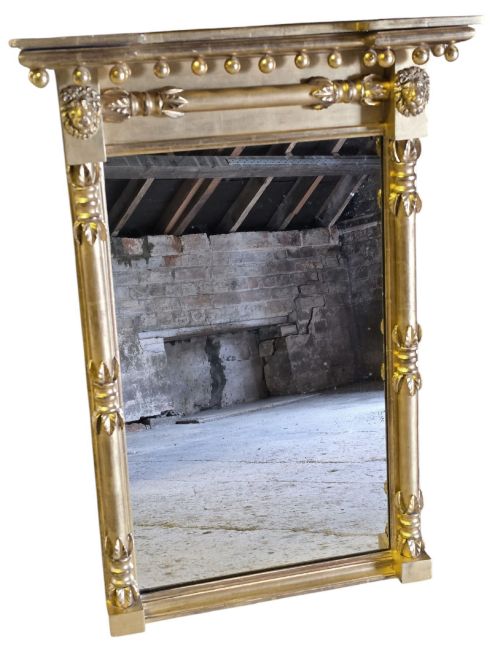
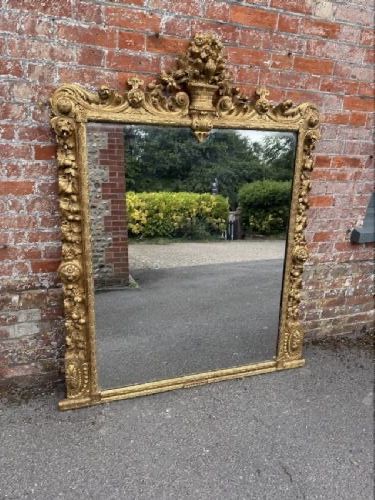
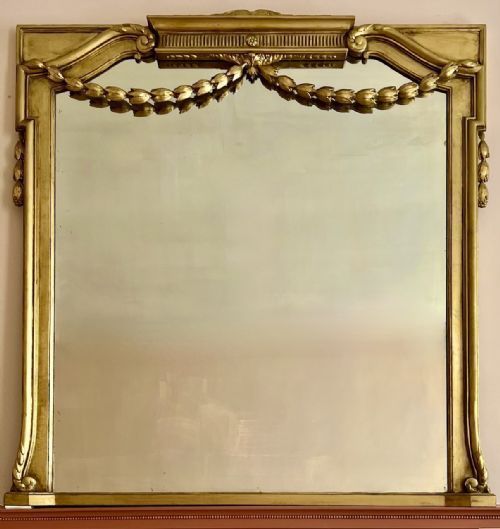
Most examples encountered here are large overmantel mirrors spanning the 18th, 19th, and early 20th centuries.
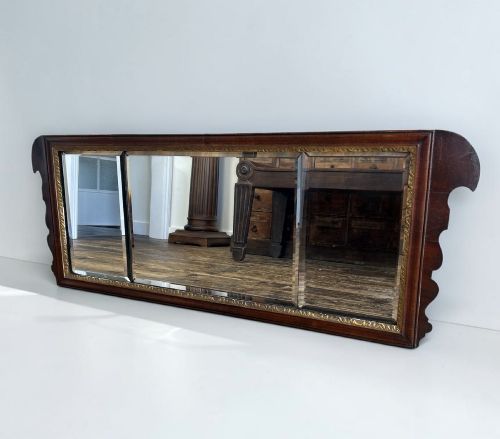
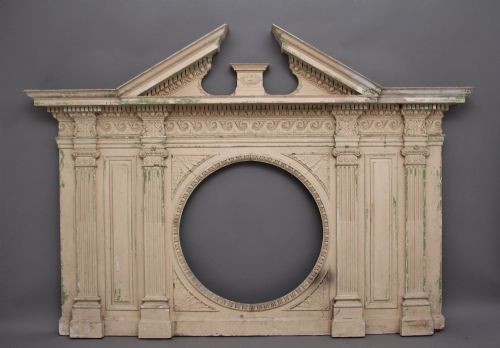
The form encompasses architectural trumeau panels, arched top plates, and tripartite glass configurations.
How they were made
Carved wood frames receive layers of gesso before being gilded with gold leaf or painted.
Joiners construct the carcase from pine, mahogany, oak, or walnut, housing mirror glass plates secured by backboards.
Materials recorded across the selection include giltwood, painted pine, mahogany, gesso, and glass.
What varies in quality
Depth of carving and crispness in the gesso ornamentation dictate the calibre of the frame.
The presence of original mirror glass plates with authentic silvering and foxing elevates the piece.
The Chimneypiece Wall Mirror Glossary
- Overmantel
- A mirror designed specifically to hang on the wall directly above a fireplace mantelpiece. These frames are usually wide in proportion to fit the span of the hearth below.
- Gesso
- A plaster mixture applied to wooden frames as a smooth base for gilding or painting. Artisans mould or carve intricate relief details directly into this layer.
- Trumeau
- An architectural mirror incorporating a painted panel or artwork directly above the glass plate. Originating in France, these pieces function as decorative wall panelling.
- Pier glass
- A tall, narrow mirror intended for the wall space between windows. They share similar decorative vocabularies with overmantel mirrors.
- Parcel-gilt
- Woodwork partially decorated with gold leaf while other areas show exposed wood, paint, or stain. This technique highlights specific carved motifs on the frame.
Chimneypiece Wall Mirror: Frequently Asked Questions
How do I hang a heavy overmantel mirror safely?
These large frames require secure fixing directly into masonry or substantial wall studs using heavy-duty brackets. Professional installation is strongly recommended due to the considerable weight of the wood and glass.
Distributing the load evenly across the frame prevents structural strain on the original mitre joints and antique fixings.
What is the difference between a pier mirror and an overmantel mirror?
An overmantel mirror is proportioned to sit horizontally across a fireplace, whereas a pier mirror is typically taller and narrower to fit between windows.
Both serve to reflect natural light around a period room, though their original placement within the architectural layout differs.
How should I clean antique mirror glass?
Use a soft, dry microfibre cloth to gently remove dust from the glass surface without disturbing aged silvering. Avoid commercial liquid cleaners that can seep behind the plate and damage the original backing.
If moisture is necessary, apply a minimal amount to the cloth rather than spraying directly onto the glass.
Are the mirror plates original?
Many surviving examples retain their early or original glass, which often exhibits characteristic foxing, minor distortion, and age spots. These optical imperfections confirm the age and authenticity of the piece.
Replacements occur when earlier glass was broken, though period replacement glass still carries historic value.