



Antique Regency Chimneypiece
An antique regency chimneypiece brings striking architectural presence to a room, anchoring the hearth with classic proportion and refined detail.
Antique Regency Chimneypiece
When you search for an antique regency chimneypiece, you are looking at substantial focal points designed to sit above a fireplace, though the current selection on this page consists predominantly of mirrors and a clock rather than stone surrounds. These pieces bridge the late Georgian and Victorian periods, capturing the architectural ambitions of the nineteenth century.
The objects available span rectangular formats, arched tops, and tryptic layouts that reflect light across a room. Originating primarily from the nineteenth century, including examples dated around eighteen-hundred and eighteen-seventy, these works utilise classic framing to create a sense of space.
Makers such as John Barwise of London represent the horological side of this aesthetic, offering fusee mantel clocks that complement the period interior. Buyers will find that the forms lean heavily towards overmantel mirrors and wall mirrors framed in gilded wood.
Materials and construction
Craftsmen built these pieces using solid timbers such as mahogany, pine, and ebonised wood, which provided a stable foundation for decorative elements. Carved wood and gesso were applied to create intricate surface relief before gilding was added.
Makers employed gold leaf and composition ornaments to achieve the bright, reflective surfaces characteristic of the period. Glass plates, including original mirror glass, were fitted within these frames to complete the functional decorative objects.
Antique Regency Chimneypiece Retail Price Guide 2026
Typical asking prices for regency chimneypiece among the pieces listed under this phrase on Sellingantiques today, from the lower quarter to the upper quarter. They describe what is for sale here now, not the wider market.
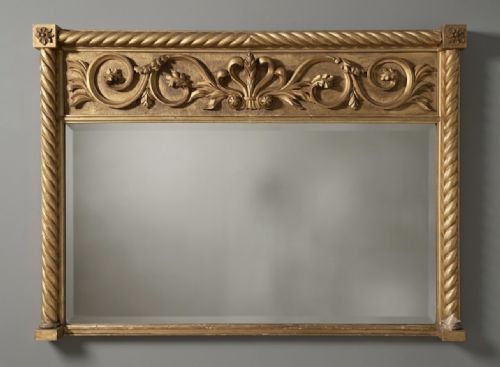
Several mirrors incorporate a subtle rope twist frame, adding a nautical touch to formal nineteenth-century drawing rooms.
Assessing craftsmanship
The distinction between tiers of quality lies in the depth of the carving and the crispness of the gesso mouldings applied to the wooden frames. Superior pieces exhibit hand-carved detail that retains sharp edges, whereas lesser examples rely on softer composition ornaments.
Another measure of quality is the preservation of the original glass and the integrity of the gilding. Original surfaces that show honest patination without heavy later intervention command greater appreciation among collectors.
John Barwise of London
The Antique Regency Chimneypiece Glossary
- Gesso
- A plaster-like mixture applied to wood frames to create a smooth surface for gilding. It allows intricate low-relief ornamentation to be moulded onto the timber base.
- Tryptic
- A three-part mirror layout divided by vertical pillars or dividers. This format was popular in the nineteenth century to widen perceived interior spaces.
- Fusee
- A conical pulley mechanism in a clock movement that equalises the driving force of the mainspring as it unwinds. It ensures consistent timekeeping.
- Parcel Gilt
- A finishing technique where only specific portions of an object are covered in gold leaf while the rest is painted or left as exposed wood.
Antique Regency Chimneypiece: Frequently Asked Questions
How were overmantel mirrors used?
Overmantel mirrors were hung directly above fireplace mantels to reflect the flames and illumination of the room. They served as the visual anchor for the chimney breast.
By placing them low over the hearth, interiors gained both a sense of expanded scale and a grand decorative focal point.
Where should I hang a large overmantel?
The traditional placement is centrally mounted above a living room or dining room fireplace. This aligns with the original architectural purpose of the frame.
Ensure the wall fixings are secure enough to support the substantial weight of carved wood, gesso, and glass.
How do I care for antique giltwood?
Giltwood requires a dry environment away from direct sunlight and excessive humidity to protect the delicate gold leaf and underlying gesso. Dusting should be done gently with a soft, dry brush.
Avoid using liquid cleaners or commercial polishes, as these can permanently strip the fragile metallic finish.