
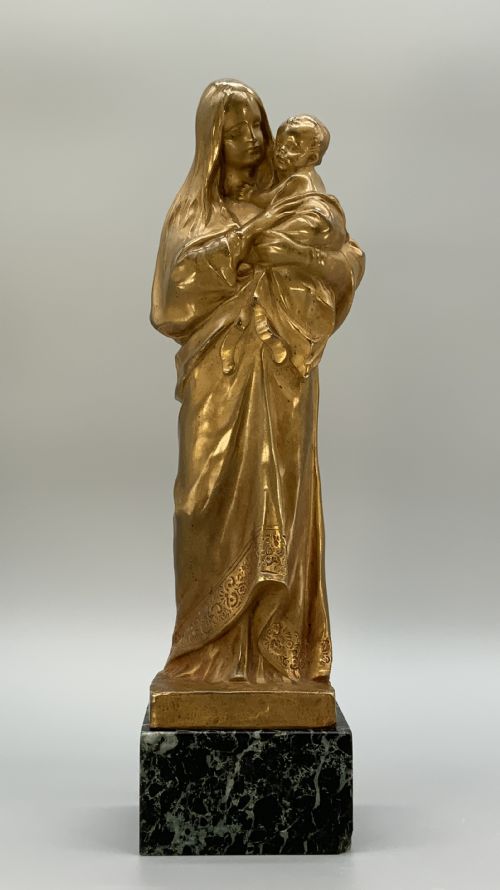
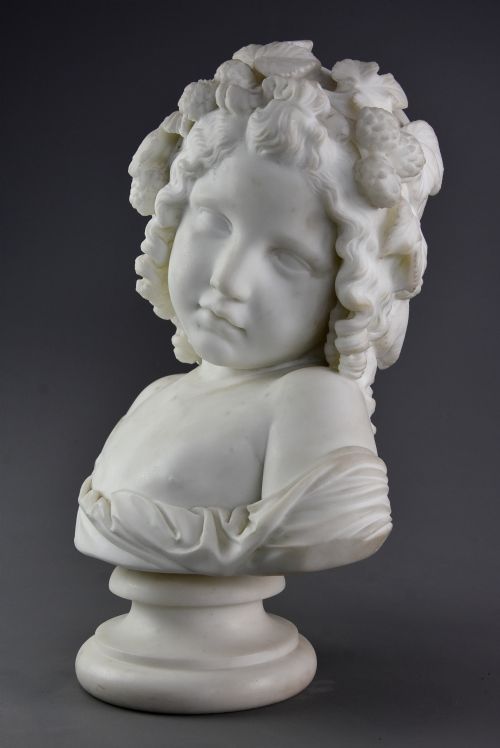
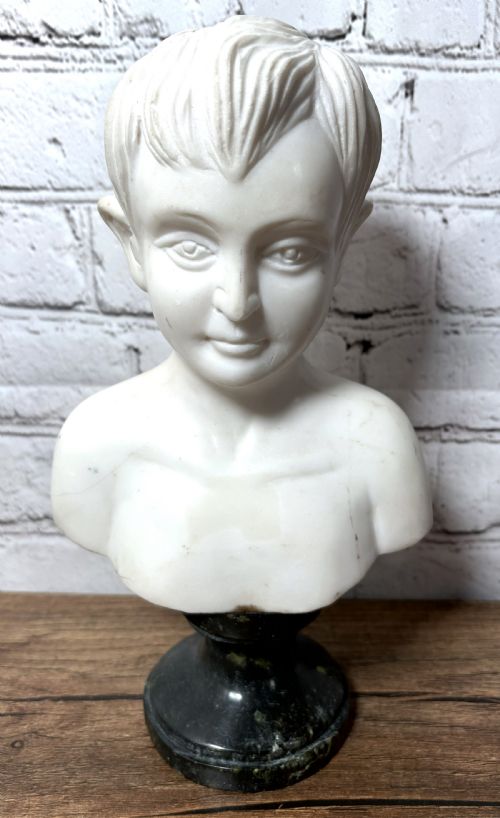


Child Marble Sculpture
A child marble sculpture captures youth in carved stone, offering a timeless focal point for a mantelpiece or library table.
Child Marble Sculpture
Many works originate from French and Italian studios, reflecting grand tour influences or domestic portraiture popular in Victorian homes. Subjects range from solitary young girls holding flowers to children interacting with animals like puppies and cats. The physical scale varies from intimate table lamps and library busts to larger statues designed for garden or interior display.
Materials and Sculptural Technique
Carvers shaped these figures primarily from white marble and Carrara marble, alongside softer materials such as alabaster. Artisans utilised traditional chisel and rasp techniques to achieve the smooth, translucent flesh tones characteristic of carved stone. Parian porcelain also appears as a ceramic alternative designed to mimic the matte finish of marble statuary.
Composites frequently integrate mixed media, mounting marble or alabaster figures onto contrasting bronze or gilt bronze bases. Patinated bronze and spelter versions provide metallic counterparts to the stone works, often cast using the lost-wax method. Details like hair texture and drapery were hand-finished by the sculptor or studio assistants.
Listings feature child marble sculpture examples alongside works cast in bronze, patinated bronze, gilt bronze, alabaster, and Parian porcelain.
Assessing Sculptural Execution
Quality rests upon the naturalism of the carving, particularly in the rendering of youthful proportions, hands, and facial expressions. Superior pieces display crisp detailing in the hair and drapery without mechanical stiffness or overly polished surfaces that obscure the stone's grain. The integration of the figure with its base also dictates overall refinement.
Signatures and attribution to known modellers elevate a piece, though unsigned studio works still command attention through exceptional anatomical fluency. The choice of unblemished stone free from distracting natural fissures separates masterworks from standard commercial output.
Hans Müller·Houdon·Antonio Merente·P. Sega·H. Chiparus·Carl Kauba·John Durham·Alexandre Kelety·P. Della Vedova·Xavier Raphanel·Joseph Gott·Pugi
The Child Marble Sculpture Glossary
- Carrara marble
- A type of white or blue-grey marble from the city of Carrara in Tuscany, prized for its fine grain since classical times. Sculptors favour it for its smooth texture and subtle translucency.
- Alabaster
- A fine-grained mineral commonly carved into delicate translucent figures and lamps. It is softer than marble, allowing for intricate surface detail.
- Parian porcelain
- A bisquewhite porcelain developed in Britain to imitate carved marble. It gained popularity for Victorian statuary figures due to its smooth, matte finish.
- Grand tour
- The traditional trip of Europe undertaken by upper-class young European men of means. Souvenirs often included small marble and alabaster sculptures purchased in Italy.
- Patinated bronze
- A metal sculpture treated with chemical solutions to produce a coloured surface layer. This process protects the metal and enhances tonal depth.
Child Marble Sculpture: Frequently Asked Questions
How do I clean a marble sculpture?
Dust the surface regularly with a soft, dry microfibre cloth to prevent particulate buildup. Avoid household detergents, acidic cleaners, or excess water, which can etch the stone or damage historic patinas.
For stubborn grime, consult a professional conservator rather than attempting chemical washing. Preserving the original surface finish maintains both the visual integrity and historical value of the carving.
How do I tell marble from alabaster?
Marble is a hard metamorphic rock that resists scratching from everyday metal objects and feels cool to the touch. Alabaster is significantly softer and can be marked with a fingernail or steel blade.
Alabaster also exhibits greater translucency when held near a light source compared to denser marble. This optical property made alabaster a favourite material for nineteenth-century night lights and lamps.
Are these sculptures signed by the artist?
Many nineteenth- and twentieth-century figures feature artist signatures, foundry stamps, or cachets inscribed directly into the base or stone. Signed pieces often attribute the work to established European sculptors working in bronze or marble.
Unsigned works remain common, representing quality studio output from the period. The absence of a signature does not diminish the craftsmanship of a well-executed carving.