



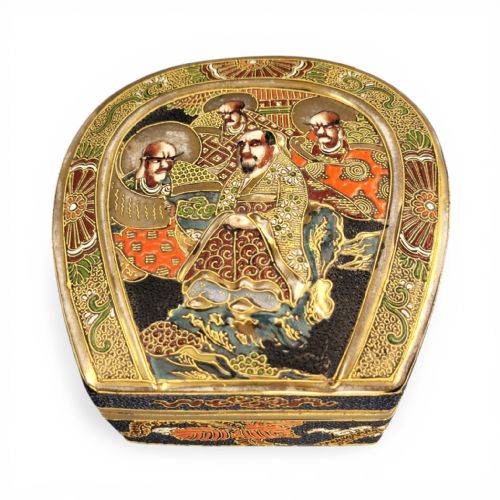


Ceramic Trinket Dishes
These ceramic trinket dishes hold small keepsakes while bringing period character to a dressing table or desk.
Ceramic Trinket Dishes
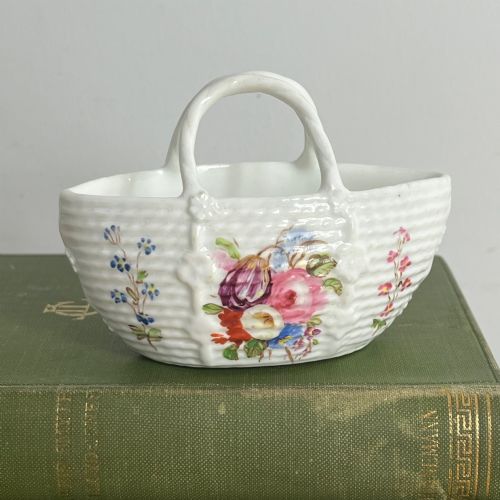
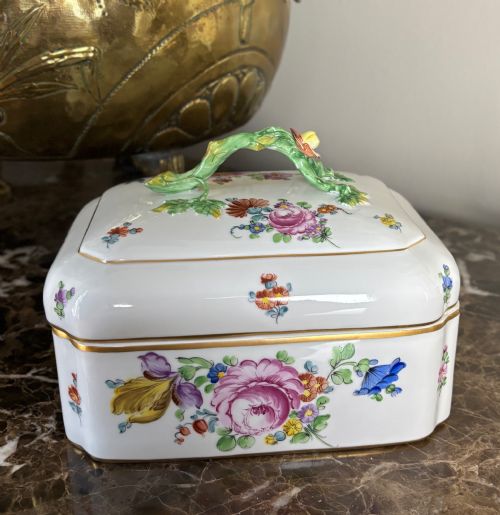
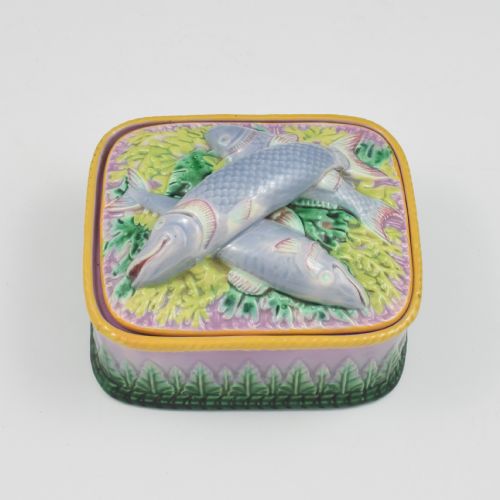
Ceramic trinket dishes encompass small containers, shallow bowls, lidded boxes, and trays designed for dressing tables and desks. The examples found here stretch across the nineteenth and early twentieth centuries, moving from Regency and Victorian floral baskets through to Art Deco powder boxes featuring figural half dolls. European porcelain factories and Japanese export studios both dominate the available forms.
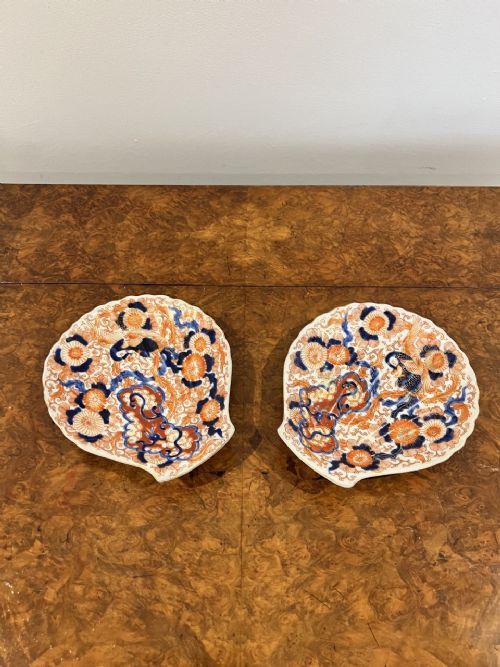
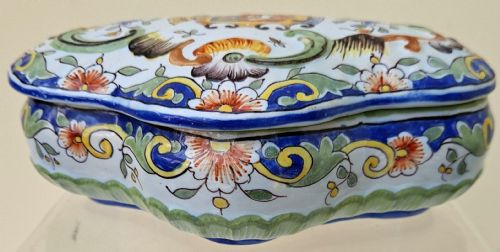
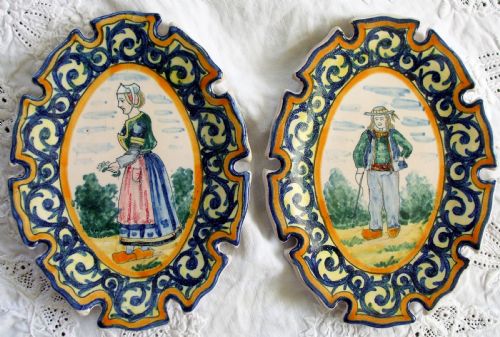
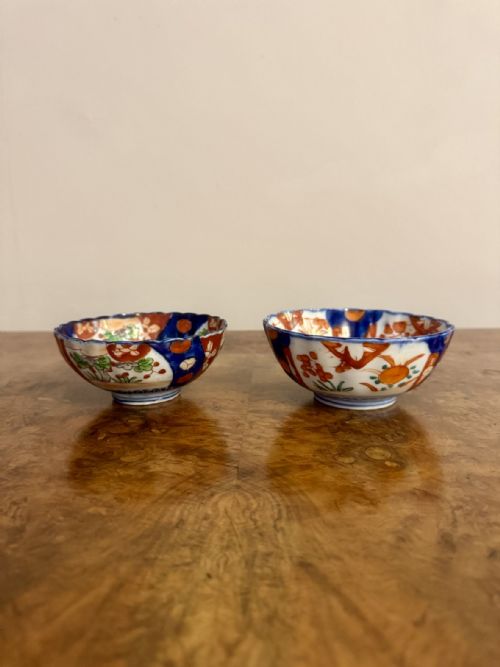
Lidded boxes and small trays often served specific dressing table duties, holding pins, powder, or visiting cards. Japanese Imari shell-shaped plates and small bowls sit alongside French faience pin trays and German porcelain boxes, showing how domestic surfaces were accessorised in past centuries. Pieces range from simple blue and white printed spoon trays to elaborately modelled shell dishes.
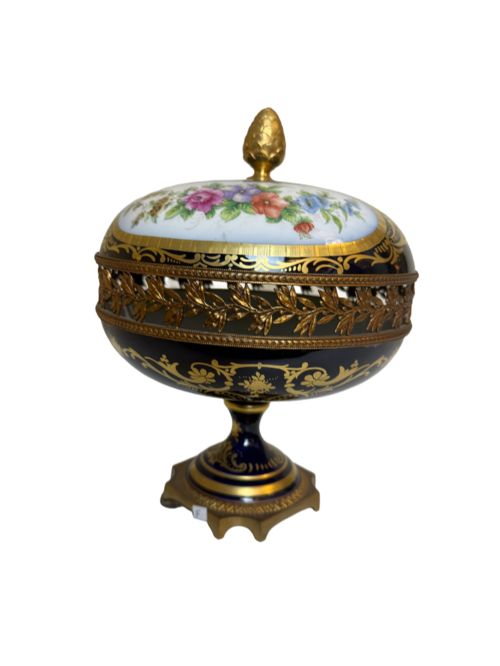
The twentieth century brings moulded ceramic bathing belle and flapper girl powder boxes alongside Wedgwood lustre bowls. Meanwhile, nineteenth-century examples lean towards painted floral sprays, gilt detailing, and figural supports like the Royal Dux maiden leaning on a shell. Each format reflects the specific domestic habits of its period of manufacture.
Materials and Technique
Potters relied on porcelain, earthenware, and faience as the primary bodies for these vessels, shaping them by hand or in moulds. Earthenware pieces often received tin glazes or colourful majolica treatments, while porcelain bodies allowed for crisp, thin walls suited to delicate miniature baskets and pill boxes.
Decoration combined hand-painting, transfer printing, and applied details such as flowers and gilt edges. Makers utilised enamel colours and gold leaf to accent borders and motifs, firing the pieces multiple times to fix the pigments and glazes to the ceramic surface.
Bath-loving flapper girls gaze up from powder boxes while porcelain maidens lean indefinitely against giant sea shells.
Evaluating Quality
Quality rests in the crispness of the moulding and the control evident in hand-painted details. Finer pieces display finely brushed floral sprays, even glaze distribution, and cleanly applied gilding that has not rubbed away from high points.
The distinction between standard domestic items and superior works often lies in the depth of relief modelling and the complexity of the palette. Modelled figures on powder boxes show more expressive facial painting on better examples, while utilitarian dishes rely on the balance of their printed or painted borders.
Flight Barr And Barr·George Jones·Paul Muller Selb·Royal Worcester·Toshozan·Kuznetsov·Meissen·Rockingham·Helena Wolfsohn·Moorcroft·Royal Dux
The Ceramic Trinket Dishes Glossary
- Faience
- Tin-glazed earthenware produced in France and other European regions. It provides an opaque white surface suitable for painted decoration.
- Imari
- A style of Japanese export porcelain featuring underglaze blue and iron red, frequently augmented with gold. The palette remains remarkably vivid.
- Vide-Poche
- A small tray or dish intended for emptying pockets of coins, keys, or pins upon entering a room. These sit neatly on hall tables or desks.
- Majolica
- A type of earthenware coated with an opaque tin glaze and painted with coloured metallic oxide enamels. It achieves rich, vibrant tones.
- Lustre
- A ceramic glaze containing metallic reflections that produce an iridescent sheen. Wedgwood pieces utilise this technique to show butterflies and mottled patterns.
Ceramic Trinket Dishes: Frequently Asked Questions
What were ceramic trinket dishes used for?
These small vessels held personal items on dressing tables, from pins and rings to face powder and calling cards.
Their compact size made them practical companions for daily grooming routines in period bedchambers.
How do I date a porcelain trinket box?
Dating relies on maker marks, style markers such as Art Deco geometric lines or Victorian floral painting, and the composition of the ceramic body.
Examining the wear on the base often provides further clues regarding age.
Are Japanese Imari dishes fragile?
Japanese Imari pieces utilise robust porcelain bodies designed for export and daily handling.
While durable, their hand-painted glazes benefit from gentle cleaning without abrasive agents.
How should I display small trays and bowls?
Small trays and bowls work well on dressing tables, mantelpieces, or nested within open cabinets.
Their shallow forms allow them to hold modern rings or keys while remaining decorative objects in their own right.