





Central Asian Folk Textile
A central asian folk textile brings nomadic warmth and vibrant threadwork into a modern interior.
Central Asian Folk Textile
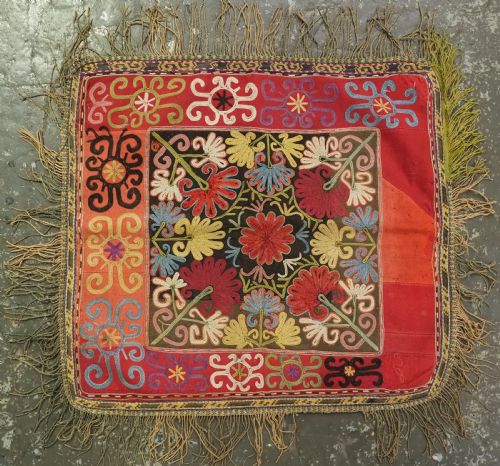
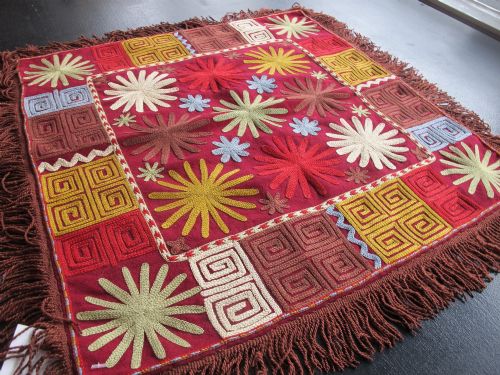
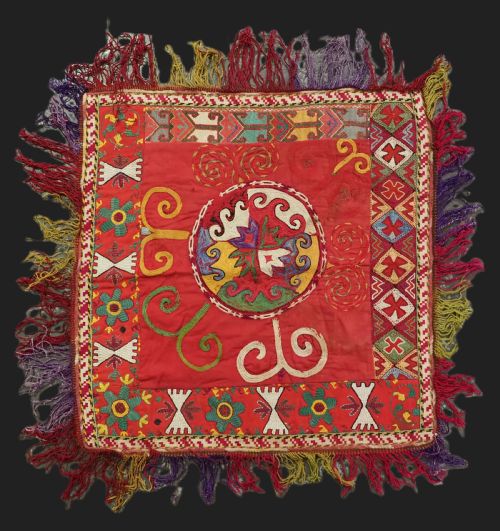
When you examine a central asian folk textile, you are looking at utilitarian objects transformed by needlework into decorative panels, wall hangings, and dowry items. The pieces gathered here span from the mid nineteenth century into the early twentieth century, reflecting the tribal traditions of the region.
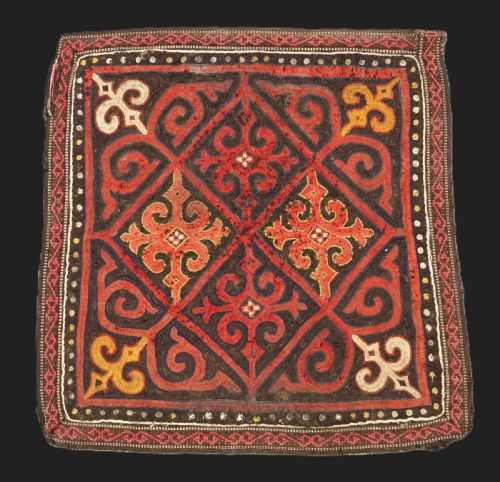
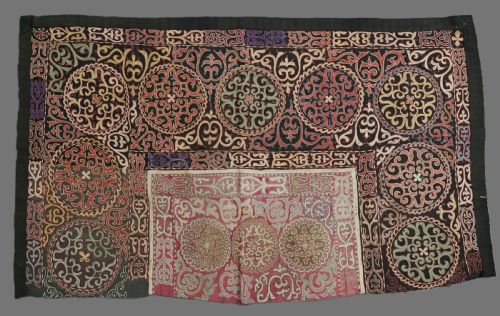
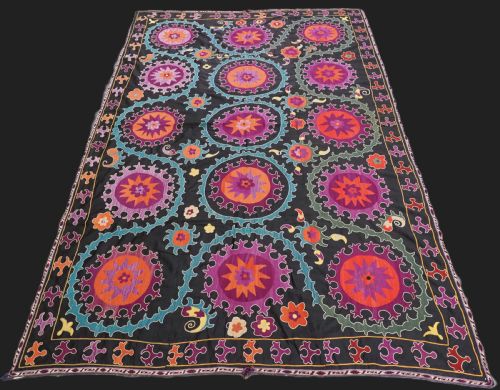
The most common examples you will encounter on this page are Uzbek suzanis and Lakai tribal ilgiches, alongside Kirghiz embroidered felt panels and yurt wall hangings. These textiles served specific domestic and ceremonial functions within nomadic and settled communities before finding their way into the collector market.
Makers utilised local materials to create distinctive regional formats, ranging from full sized Palak suzanis to small prayer formats and tent storage bags. Each piece carries the distinct geometric or floral vocabulary of its specific tribal origin.
How they were made
Artisans constructed these pieces using a foundation of handwoven cotton, wool, or felt, onto which they applied dense silk embroidery. Grounds vary in colour, appearing in shades of red, yellow, black, and moguls red wool.
Stitchwork dominates the surface, often covering the entire ground cloth in intricate patterns that require months of sustained needlework. The combination of silk threads on sturdy cotton or wool backings provided both decorative impact and structural durability.
Central Asian Folk Textile Retail Price Guide 2026
Typical asking prices for central asian folk textile among the pieces listed under this phrase on Sellingantiques today, from the lower quarter to the upper quarter. They describe what is for sale here now, not the wider market.
The listings on this site feature silk, cotton, wool, and felt as the primary materials used across these textile panels.
What varies in quality
Quality in these textiles rests upon the density of the embroidery and the complexity of the design layout. Fully embroidered surfaces demand significantly more labour and skill than sparse or partially worked grounds.
The vibrancy and condition of the natural silk threads, alongside the integrity of the base fabric, determine the visual strength of the piece. Well preserved grounds and secure stitching elevate an example above standard decorative items.
The Central Asian Folk Textile Glossary
- Suzani
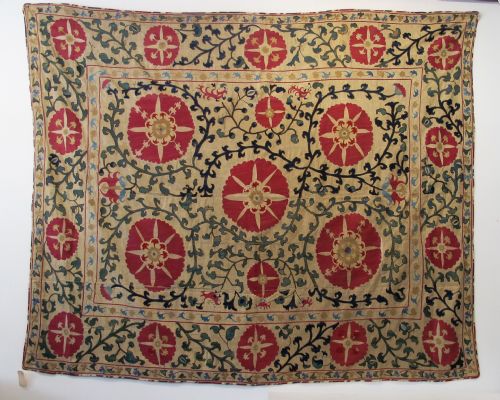
- An embroidered textile from Uzbekistan, traditionally stitched in silk on a cotton or linen ground by brides as part of their dowry. These large panels often feature bold floral and sun motifs.
- Ilgich
- A specific type of Central Asian hanging or wall decoration associated with nomadic groups such as the Lakai tribes. They were often used within the yurt to store household items or adorn living spaces.
- Palak
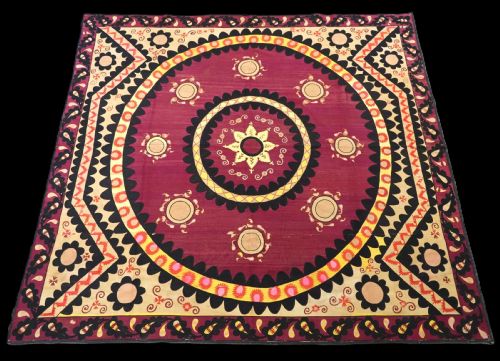
- A large scale Uzbek suzani entirely covered in embroidery, typically featuring dense disk or moon patterns. The name derives from the Persian word for heaven or sky.
- Torba
- A small storage bag or trapping produced by nomadic tribes for use inside a yurt. They combine utility with decorative weaving and embroidery.
Central Asian Folk Textile: Frequently Asked Questions
What is a central asian folk textile?
These items are traditional embroidered panels, wall hangings, and domestic trappings created by nomadic and settled communities across regions like Uzbekistan and Kyrgyzstan.
They represent generations of textile artistry, utilising silk threads on wool, cotton, or felt grounds to produce striking decorative statements.
How were these textiles used originally?
Nomadic families utilised them as interior decorations for yurts, tent storage compartments, and ceremonial dowry displays.
Many pieces functioned as wall hangings to insulate living spaces while others formed part of a bride's trousseau, marking important life transitions.
How do I hang a textile safely?
Mounting requires careful distribution of weight to avoid placing stress on the antique fabric and silk embroidery.
Conservation grade Velcro stitching or a custom fabric sleeve attached along the top edge allows the piece to hang flat against a wall without damage.
How can I tell the tribal origins apart?
Distinct regional aesthetics separate groups like the Uzbek Lakai from Kyrgyz makers through specific motifs and ground fabrics.
Lakai pieces often display dynamic geometric shapes and vibrant silk on wool, whereas Kyrgyz examples frequently utilise embroidered felt and large yurt hanging formats.