


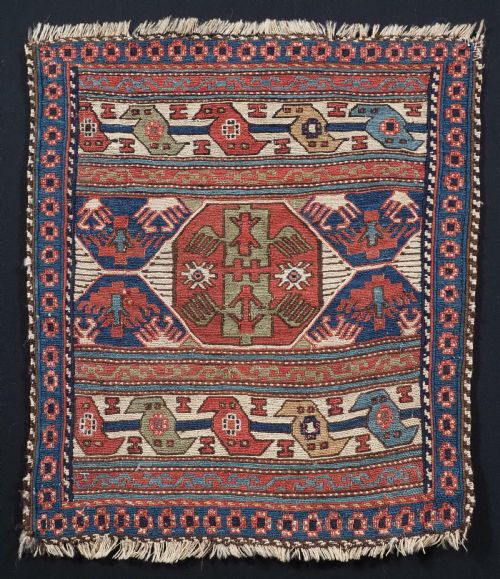
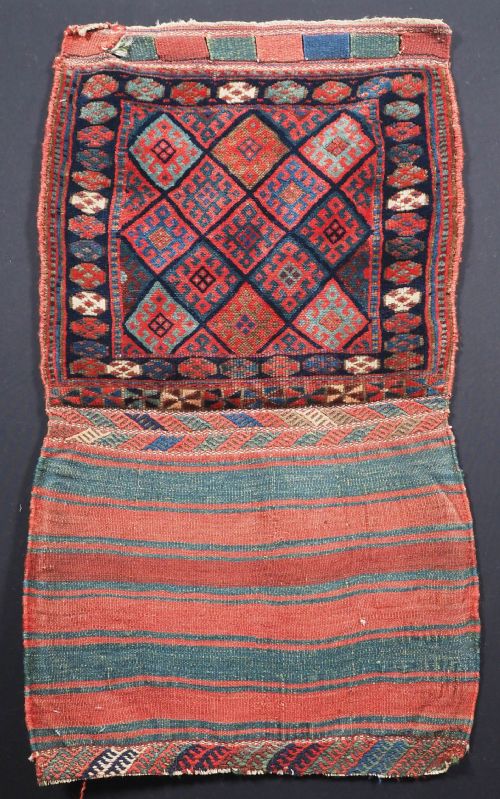
Caucasian Tribal Bag Face
These caucasian tribal bag face textiles are woven fragments of nomadic life, prized by collectors for their bold geometry and rich historical connection.

Caucasian Tribal Bag Face
When you search for a caucasian tribal bag face, you encounter fragments and fronts of storage sacks created by nomadic and village weavers across the Caucasus and surrounding regions. These pieces include saddlebags, khorjin, mafrash panels, and cushion covers that once served utilitarian storage functions in tribal camps.
The selections on this page span from the mid-nineteenth century through the early twentieth century, representing tribal groups such as the Shahsavan, Shahsevan, Jaf Kurd, Yomud, and Heriz. Most examples survive as flatwoven Soumac or sumac panels, half-saddlebags, and repurposed cushions showing distinct regional motifs.
Materials and construction methods
The makers relied primarily on hand-spun wool and natural vegetable dyes to create durable, dense textiles designed for daily nomadic use. Cotton occasionally appears in the foundational structures or supplementary details of these woven items.
Weavers utilised techniques like Soumac or sumac flatweaving, which produces a textured, brocade-like surface distinct from standard pile carpets. This method allowed artisans to render crisp geometric patterns, bird motifs, and dragon designs with remarkable precision.
Listings span the nineteenth and early twentieth centuries, featuring wool, cotton, and natural vegetable dyes across various regional weaving traditions.
Distinctions in quality and execution
Superior examples of a caucasian tribal bag face display exceptional crispness in the Soumac weave and a sophisticated handling of natural vegetable dyes. The complexity of the iconography, such as distinct bird and dragon motifs, elevates the artistic merit of the piece.
Condition and completeness also differentiate the range, with intact faces retaining their original structural integrity and vibrant palette. Weaving precision and the density of the hand-spun wool further distinguish finer nomadic output from standard utilitarian work.
The Caucasian Tribal Bag Face Glossary
- Soumac
- A flatweaving technique where pattern wefts are wrapped over the warp threads before passing back, creating a durable, textured surface. This method allows for detailed geometric designs without a pile.
- Khorjin
- A traditional pair of saddlebags used by nomads for transport and storage. The face represents the decorative front panel of this utilitarian container.
- Mafrash
- A large rectangular storage bag used in nomadic households for bedding and household goods. Panels from these containers frequently survive independently.
- Natural Dyes
- Colourants derived from plants, insects, and minerals rather than synthetic compounds. These dyes yield rich, complex tones that age gracefully over time.
Caucasian Tribal Bag Face: Frequently Asked Questions
How were these bags used originally?
Nomadic groups utilised these sturdy bags for packing possessions, storing bedding, and transporting goods on animals during seasonal migrations. The robust construction protected contents from dust and rough handling.
Because they were made for daily camp life, surviving examples demonstrate the practical artistry embedded in nomadic household objects. Today, collectors preserve them as textile art.
What techniques define these tribal textiles?
The primary technique seen in these pieces is Soumac flatweaving, which creates a textured, durable surface. Weavers wrapped coloured weft threads around warp foundations to build intricate patterns.
This method avoids knotted piles, resulting in a firm fabric that held up well to constant travel. Natural vegetable dyes provided the contrasting palette for the geometric motifs.
How do I care for a textile piece?
Protect antique flatweaves from direct sunlight to prevent natural vegetable dyes from fading. Gentle vacuuming with low suction helps remove dust without damaging the hand-spun wool.
Mounting textile art securely on breathable backing materials supports the structure of older panels. Professional textile conservationists can advise on cleaning and display methods.
How can I tell different tribal groups apart?
Attribution relies on identifying specific structural traits, dye palettes, and characteristic iconography associated with particular regions. For instance, Shahsavan pieces frequently feature intricate Soumac work with dragon or bird motifs.
Jaf Kurd and Yomud weavers employed distinct border patterns and colour combinations unique to their tribal traditions. Comparing wool quality and weave density aids in regional classification.