


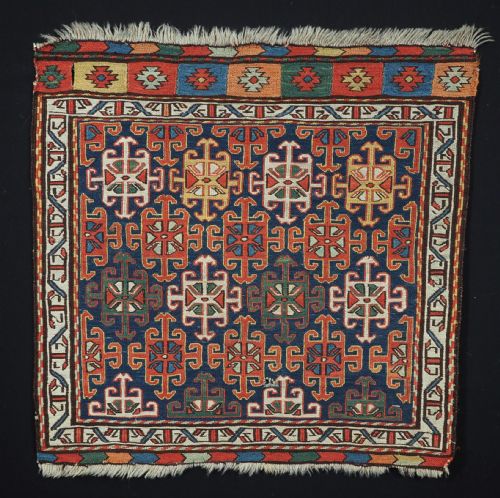


Caucasian Soumak Weaving
When you search for caucasian soumak weaving, you are looking at flat-woven tribal textiles originating from the Caucasus and neighbouring regions.
Caucasian Soumak Weaving
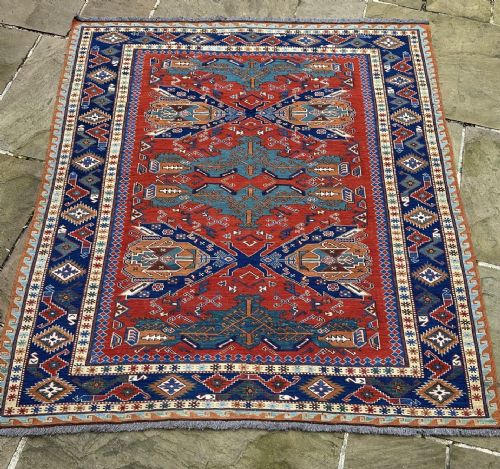
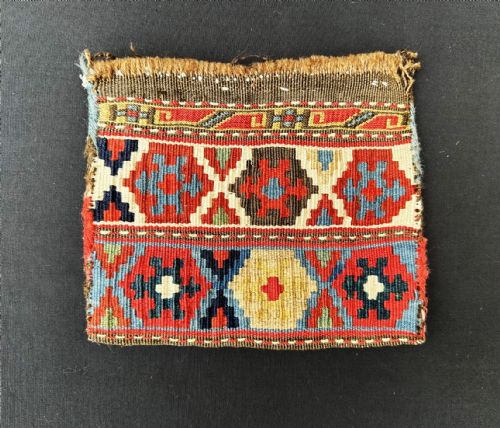
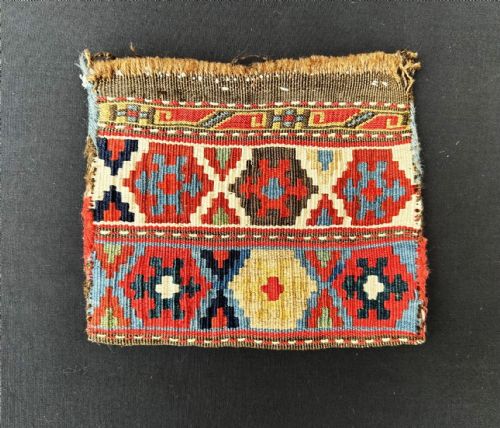
Caucasian soumak weaving comprises tribal textiles such as carpets, saddlebags, vanity bags, storage bags, and panels created by nomadic groups. You will frequently encounter pieces attributed to the Shahsevan nomads of the Moghan region in Azerbaijan, alongside other Caucasian and Kurdish groups.
The objects date from the nineteenth century, including specific years like eighteen fifty, eighteen sixty, eighteen seventy, eighteen eighty, eighteen ninety, and nineteen hundred. Forms range from complete mafrash storage bags and bag faces to larger carpets and kilims.
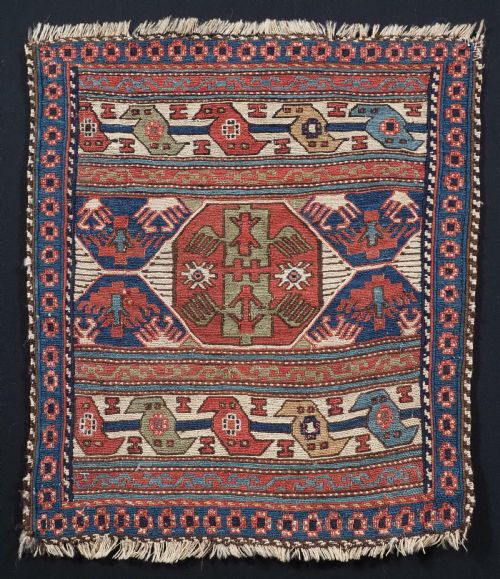
Designs on these pieces often feature traditional motifs including birds, dragons, and triple medallion layouts. These items reflect the functional and artistic output of tribal weavers working within specific regional traditions.
What varies in quality
Quality in these textiles depends on the fineness of the soumak technique and the complexity of the weave. Tighter structures and more intricate handling of the flat-weave wrap-threads elevate certain examples above others.
The clarity and artistic execution of design elements, such as bird and dragon motifs or medallion layouts, distinguish finer bag faces and panels. Preservation of the original natural or vegetable dyed wool also marks out superior pieces.
Object types include storage bags, saddlebags, carpets, kilims, and panels from Caucasian and Persian tribal traditions.
The Caucasian Soumak Weaving Glossary
- Soumak
- A flat-weave technique where coloured weft threads wrap around the warp threads to create a textured, durable surface. This method produces a cleaner reverse side than standard kilims.
- Mafrash
- A large rectangular storage box or chest panel used by nomads for bedding and household goods. These pieces are often woven in soumak technique before being assembled.
- Khorjin
- A traditional pair of double saddlebags used for transport on animals. They feature decorative bag faces that showcase tribal weaving patterns.
- Shahsevan
- A confederation of nomadic pastoralist tribes originating from the Moghan region in Azerbaijan. They are renowned for producing distinctive soumak bags and panels.
- Vegetable dyes
- Organic colouring agents derived from plants, roots, and insects used to dye wool before weaving. These dyes produce complex, muted hues that age with character.
Caucasian Soumak Weaving: Frequently Asked Questions
What is a soumak bag face?
A soumak bag face is the decorative front portion of a nomadic storage bag or saddlebag created using the soumak flat-weaving technique. These panels were separated from their original utility backs over time.
Collectors often frame or display these individual faces as flat textile art to appreciate the tribal iconography and detail.
How were mafrash storage bags used?
Mafrash storage bags served as large rectangular containers for transporting household belongings and bedding during nomadic migrations. They were constructed from four side panels and a base.
Families used these sturdy containers inside tents for daily storage as well as on pack animals during seasonal moves.
How do I date nineteenth century pieces?
Dating nineteenth century Caucasian textiles relies on identifying wool characteristics, natural dye usage, and stylistic markers within the weave. Examiners look at regional design structures to narrow down the decade.
Documentation and comparative analysis with known tribal examples help refine the estimated production period.
How should I care for tribal textiles?
Tribal textiles require protection from direct sunlight to prevent natural dye fading and fibre degradation. Gentle vacuuming through a mesh screen removes dust without damaging the wool.
Professional textile conservators should handle any deep cleaning to preserve the integrity of the hand-spun wool and vegetable dyes.