



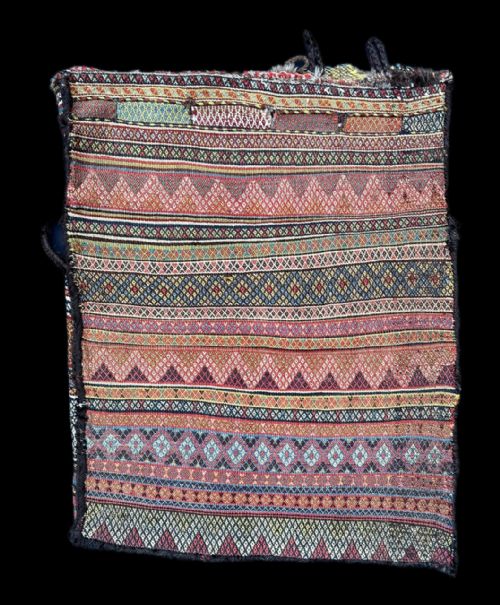
Vintage Nomad Textile
These vintage nomad textile pieces are woven by tribal groups across Persia, Central Asia, and Afghanistan, offering authentic folk artistry for your interior.
Vintage Nomad Textile
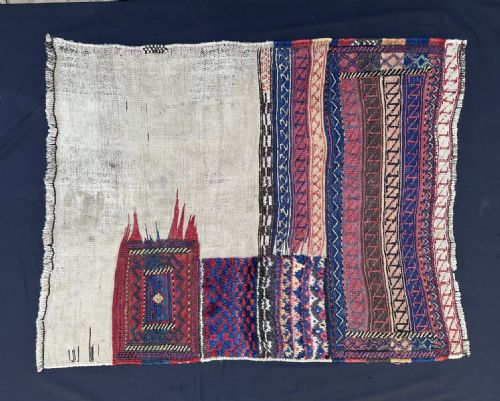
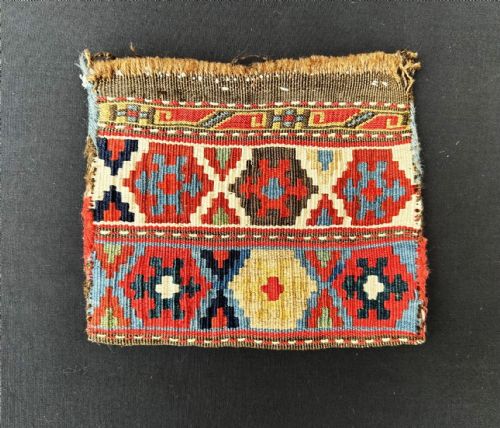
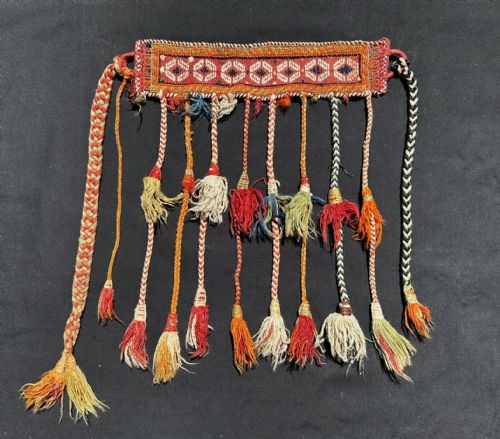
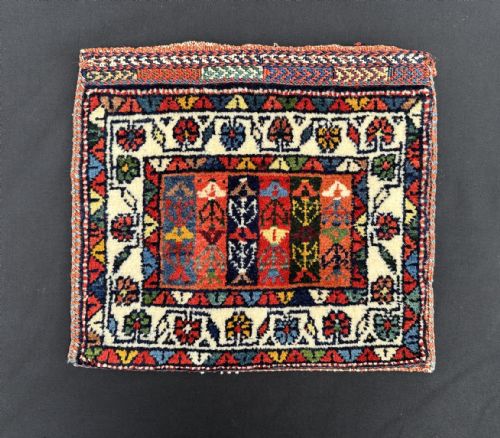
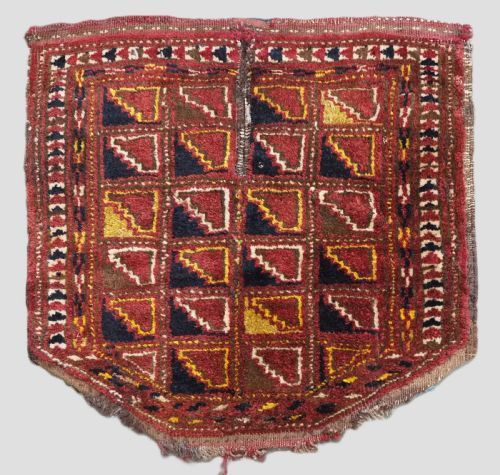
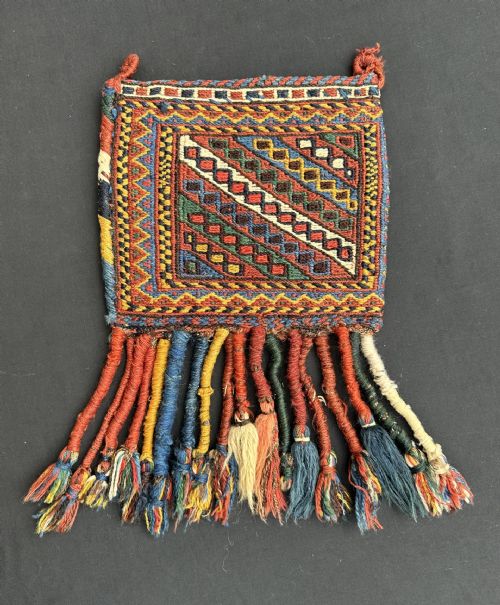
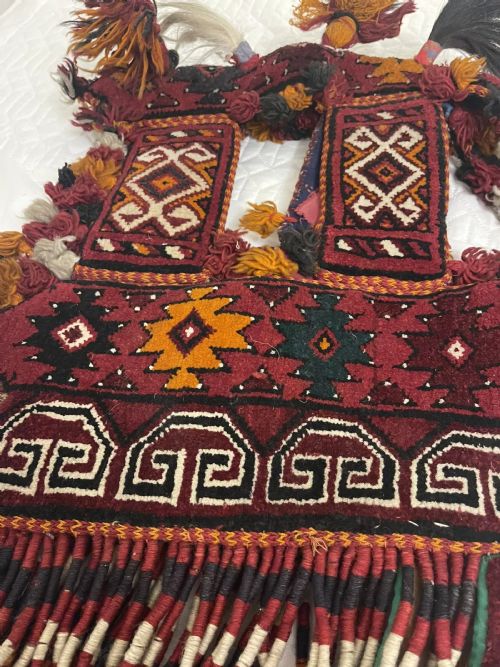
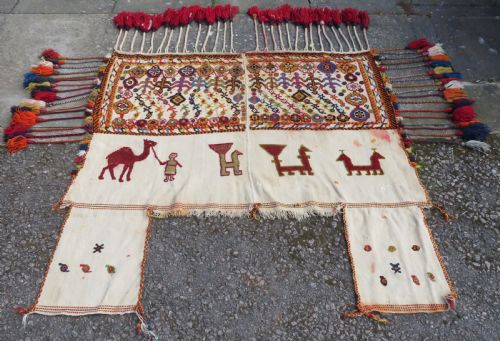
When you search for a vintage nomad textile, you examine functional weavings created by tribal groups such as the Afshar, Qashqa'i, Shahsevan, Lori-Bakhtiari, and various Turkmen tribes including the Ersari, Tekke, and Yomut. These items served practical roles in nomadic camp life, functioning as storage bags, saddle covers, bread sofreh cloths, pipe bags, and animal decorations.
The pieces on this page span from the mid-nineteenth century through the early twentieth century, originating primarily from regions such as Kerman province, Fars, Azerbaijan, and Afghanistan. Most examples you encounter here are utilitarian bags, torba faces, and small panels rather than large floor carpets.
What varies in quality
The quality of a tribal weaving rests upon the crispness of the tribal motifs, the density of the knotting or tightness of the weave, and the depth of the natural dye palette. Superior examples demonstrate a confident mastery of traditional tribal symbols and balanced proportions.
Another factor is the integrity of the surviving structure, where the survival of original plain weave backs, side cordings, and complete borders elevates an example. Pieces that retain their original function and untouched wool surfaces hold greater interest for those studying tribal traditions.
Some horse headdresses still carry the faint dust of nineteenth-century mountain tracks.
The Vintage Nomad Textile Glossary
- Torba
- A small utilitarian storage bag produced by Turkmen nomads, usually hung inside a tent to hold household possessions. These faces display characteristic tribal guls and secondary ornaments.
- Sofreh
- A flatwoven cloth used for food preparation and bread making among nomadic communities. They often feature minimalist geometric layouts reflecting utilitarian necessity.
- Gul
- A medallion or repeating primary motif used in Turkmen and other Central Asian tribal weaving. Each tribal group utilises distinct gul forms to signal identity and lineage.
- Tacheh
- A large square storage bag or cover woven by Lori-Bakhtiari and other Persian nomads for bedding or household goods. They combine pile weaving and supplementary weft-wrapping techniques.
- Chuval
- A large storage bag face made by Turkmen tribes, traditionally used within the yurt for storing clothing and blankets. The field typically contains rows of major guls.
Vintage Nomad Textile: Frequently Asked Questions
What is a torba face?
A torba face is the decorative front panel of a small Turkmen storage bag, preserved after the plain weave back has worn away.
These panels were prized for their dense geometric guls and were often kept as portable examples of tribal weaving art.
How were nomad bags used?
Nomadic families used these bags inside tents and on animals for storing household goods, grains, pipes, and bedding.
Their robust construction of hand-spun wool suited the mobile lifestyle of tribes moving between seasonal pastures.
Where did these textiles originate?
They originate from tribal confederations and villages across Persia, Central Asia, and Afghanistan, including regions like Fars and Kerman.
Specific groups such as the Afshar, Qashqa'i, and Tekke Turkmen each developed distinct regional designs.
How do I care for a textile?
Keep these wool and cotton items out of direct sunlight to protect the natural dyes from fading over time.
Gentle surface vacuuming without a rotating brush helps remove dust while preserving the fragile antique foundation.