

Cast Iron Stick Holder
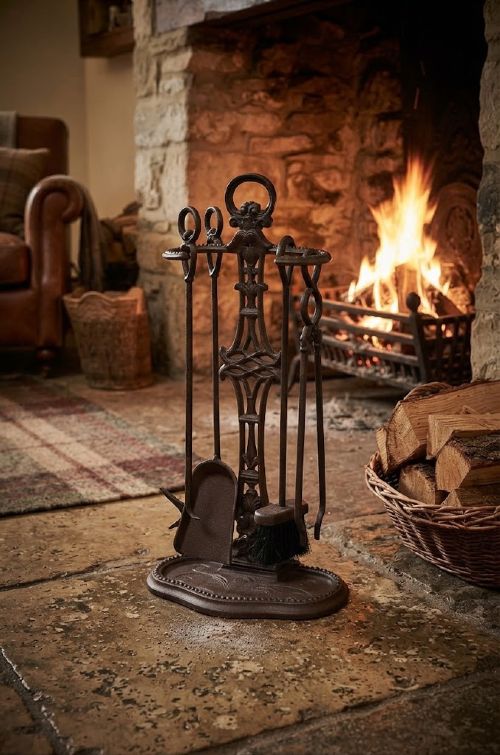
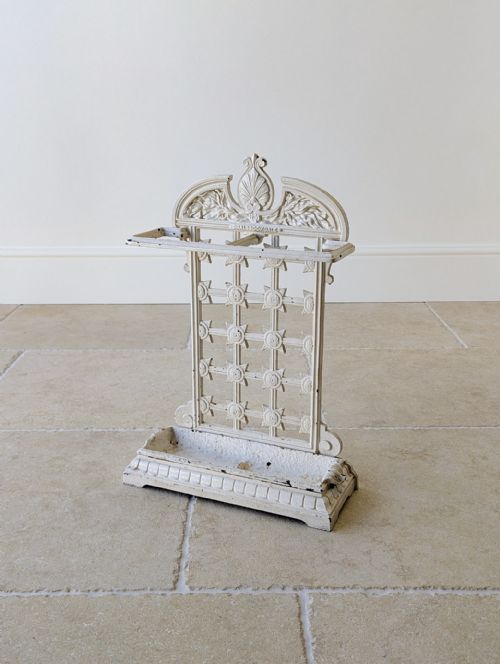
These heavy hall furnishings, known as a cast iron stick holder, keep walking sticks and umbrellas tidy in entranceways.
Cast Iron Stick Holder
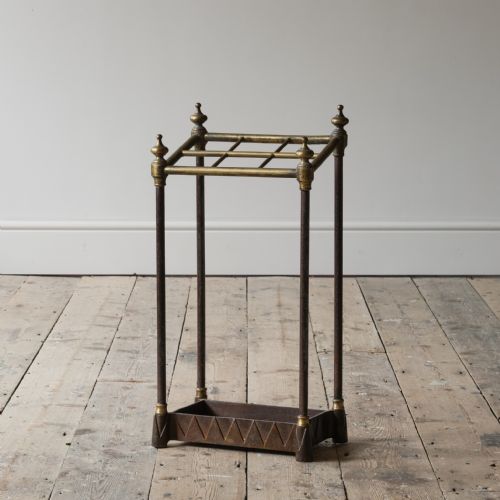
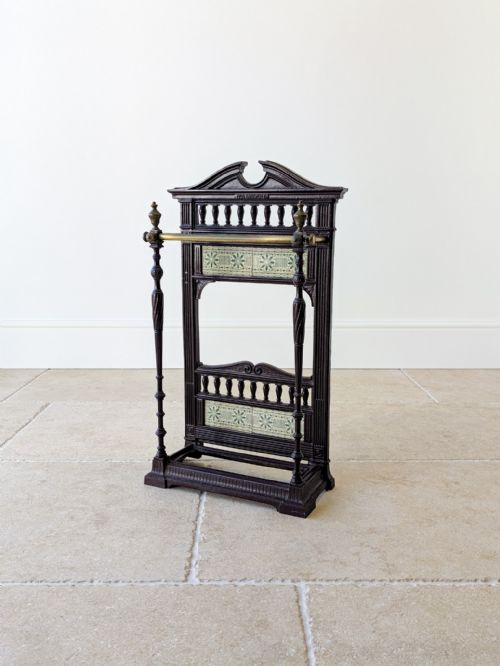
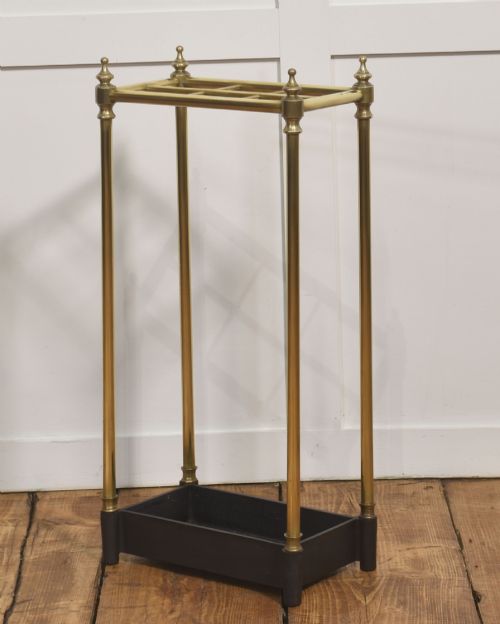
A cast iron stick holder is a functional hall furnishing designed to accommodate walking sticks, umbrellas and occasional fire tools. When exploring this selection, buyers encounter heavy iron examples alongside pieces incorporating brass, ceramic liners and tubular metal. Most originate from the nineteenth and early twentieth centuries, spanning periods from Victorian and Edwardian eras through to Art Deco and Art Nouveau designs.
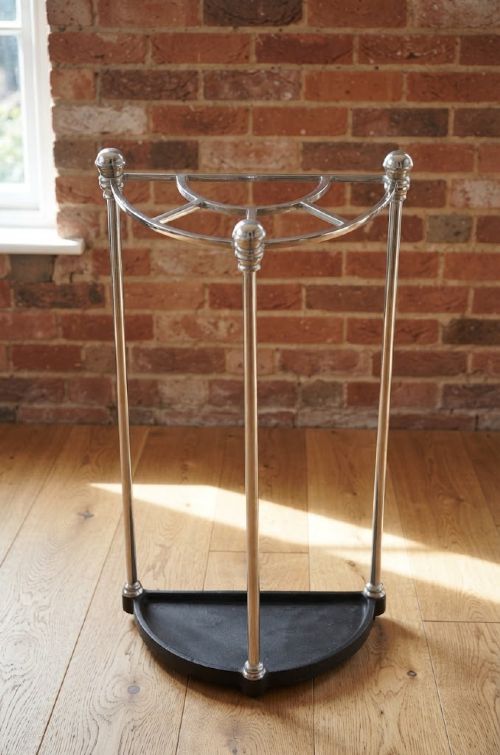
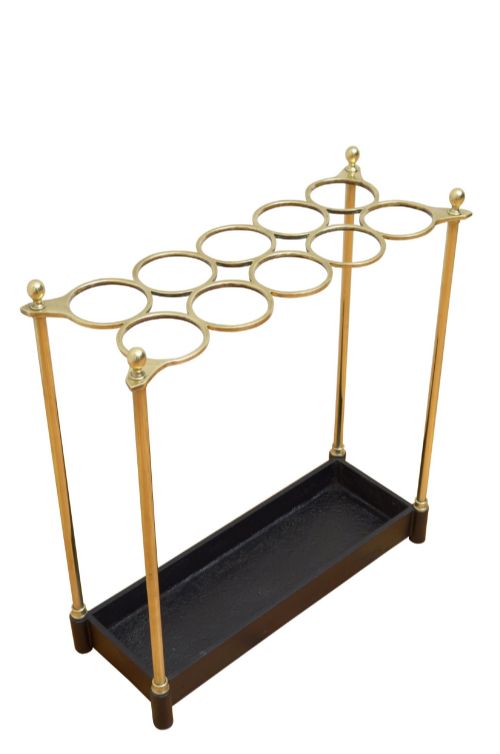
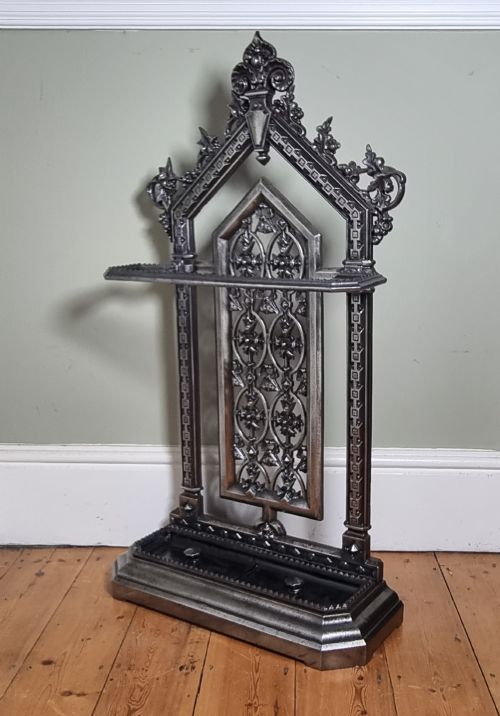
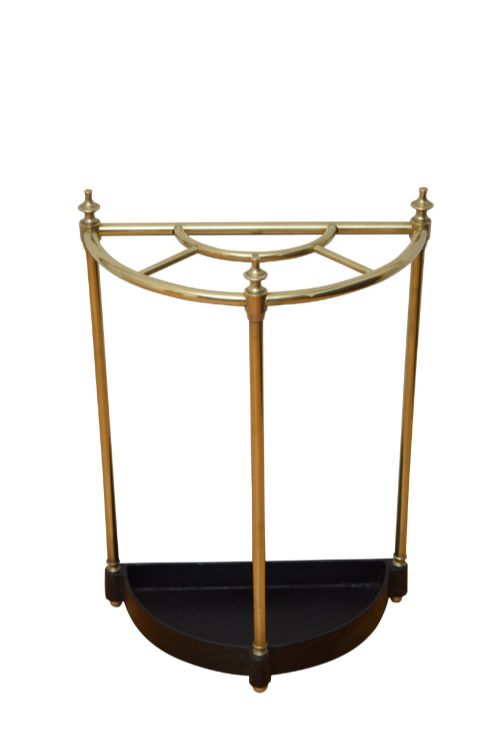
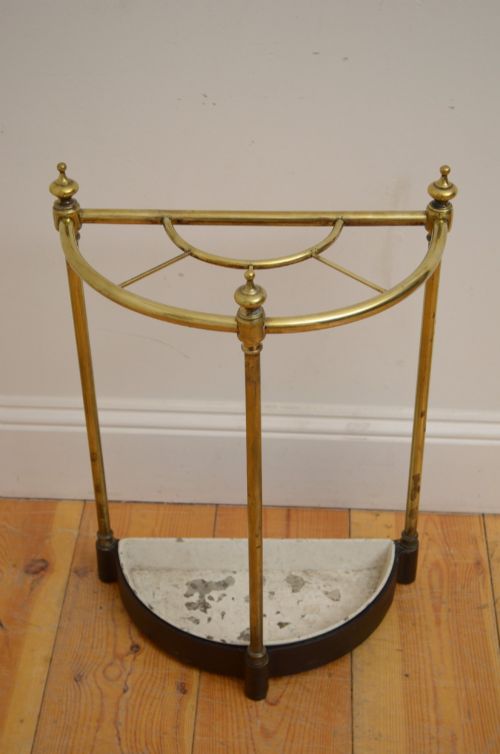
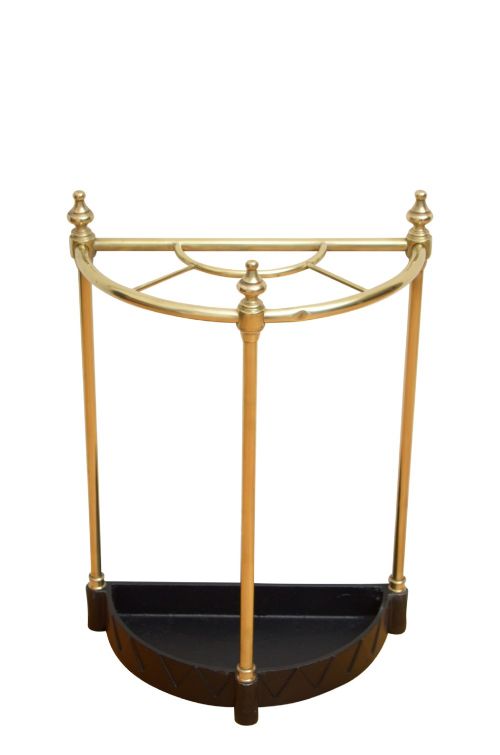
The dominant forms on this page include semicircular demi-lune designs intended to sit flush against a wall, alongside substantial freestanding stands with multiple divisions. Makers employed styles ranging from Gothic revival and Aesthetic Movement patterns to faux bois bamboo textures. Many items double as umbrella stands, reflecting the interchangeable terminology used across different periods.
How They Were Made
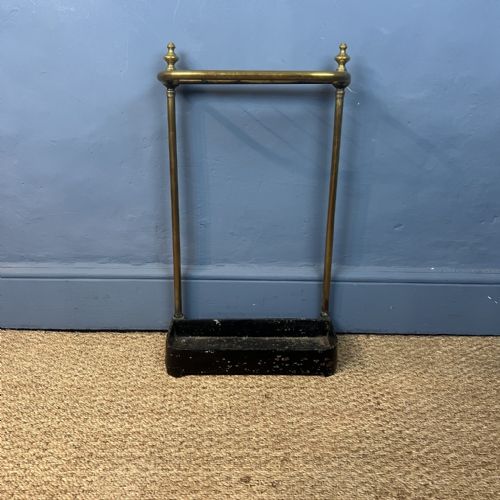
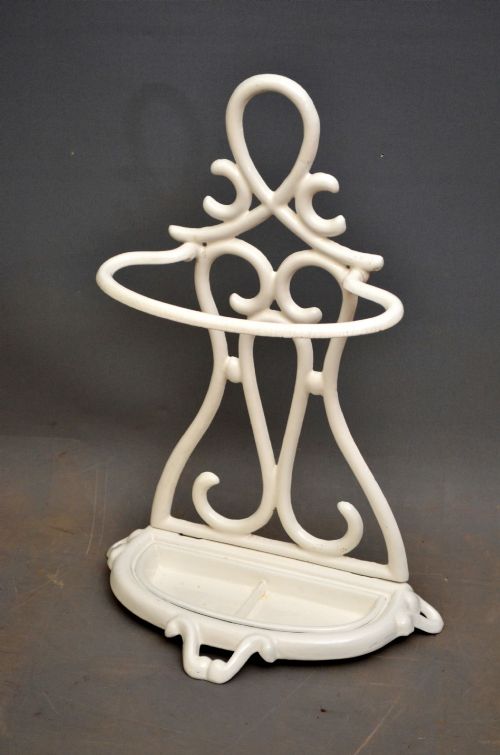
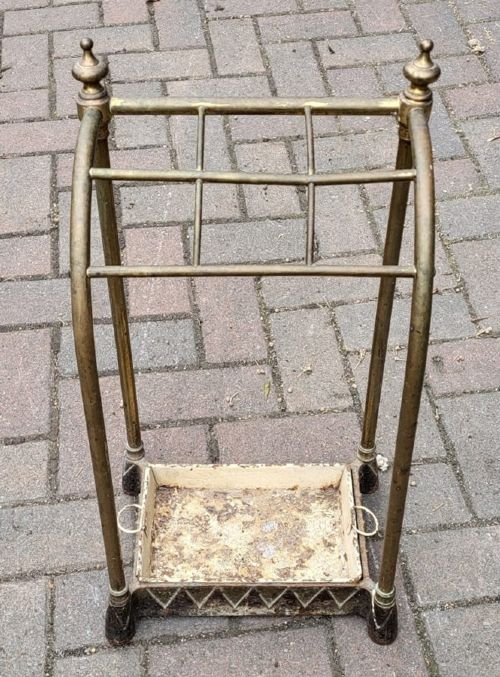
Foundry workers utilised sand casting techniques to pour molten iron into moulds, creating rigid frames with intricate openwork patterns and pierced designs. These heavy iron bodies were frequently paired with brass framing, steel rods and removable ceramic or enamel drip trays to catch rainwater from wet umbrellas. Surface finishes applied to the metal included protective black paint, white enamel coatings and nickel plating.
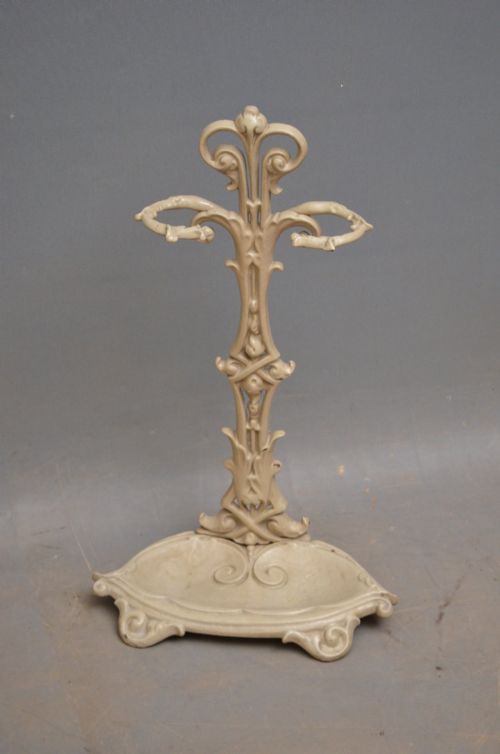
Decorative elements were cast directly into the metal or added via brass ball finials, applied trims and stamped date marks. The combination of structural iron with secondary metals like brass provided both the necessary downward weight to prevent tipping and contrasting bright accents for hallway display.
One exceptional nineteenth century cast iron stand takes the form of a footballer, ready to guard your walking sticks.
What Varies in Quality
Quality rests in the crispness of the casting and the ambition of the design, distinguishing standard commercial foundry work from pieces conceived by notable designers and firms. Examples bearing maker stamps or specific stylistic attribution display sharper relief in foliage, figures or geometric motifs.
The degree of material combination also influences the piece, such as the inclusion of original ceramic drip trays, integrated dog-tooth trays or substantial brass finials rather than replacement elements. Structural integrity depends on the original thickness of the cast metal and the retention of the matching base tray.
Coalbrookdale·Thomas Jeckyll·Falkirk Ironworks·A. Kenrick & Sons
The Cast Iron Stick Holder Glossary
- Demi-lune
- A half-moon shape designed to stand flat against a hallway wall. This configuration saves floor space while holding several sticks or umbrellas.
- Drip tray
- A removable ceramic, enamel or metal basin positioned at the base to catch water. It protects hallway flooring from damp umbrella tips.
- Faux bois
- A decorative technique mimicking the texture and appearance of wood. In these stands, iron is cast to resemble knotted bamboo or branches.
- Finial
- A decorative terminal ornament, often spherical or cast in brass, topping the upright posts. These finish the structural corners of the stand.
Cast Iron Stick Holder: Frequently Asked Questions
Where were these stands placed?
These furnishings stood in entrance halls, boot rooms and vestibules of period homes. They offered a designated drop-off point for visitors entering from the damp outdoors.
Their heavy construction ensured stability when loaded with multiple heavy walking canes or wet umbrellas.
How do I clean a cast iron stick holder?
Maintenance requires only a soft brush to remove dust from recesses and intricate pierced work. Moisture should be avoided on unpainted iron surfaces to prevent rust formation.
Removable drip trays can be lifted out independently for washing and drying before being returned to the base.
Can these hold heavy walking sticks?
The dense metal composition and substantial weight of these pieces provide natural stability. They were built specifically to support heavy timber walking sticks and metal-ferruled umbrellas without tipping.
Divided frames keep individual items upright and prevent them from tangling together.
How do I distinguish Victorian from Edwardian examples?
Victorian models frequently utilise heavier Gothic, Aesthetic Movement or naturalistic foliage designs with dark painted finishes. Edwardian pieces often introduce lighter brass elements and cleaner geometric lines.
Maker stamps and registration numbers cast into the reverse can also help pinpoint the production era.