

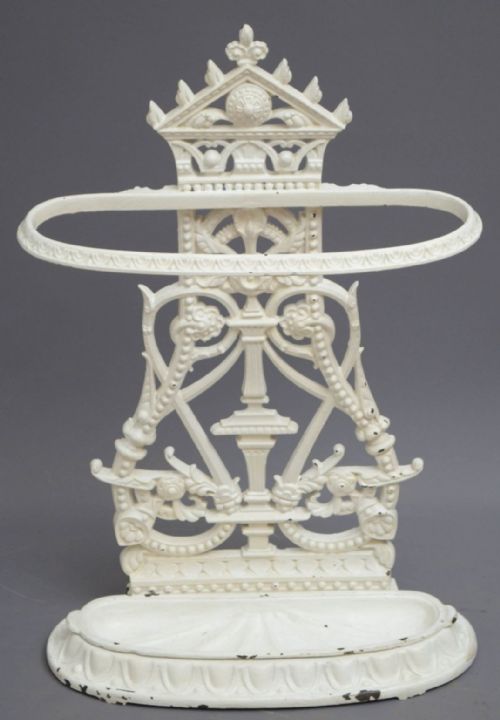


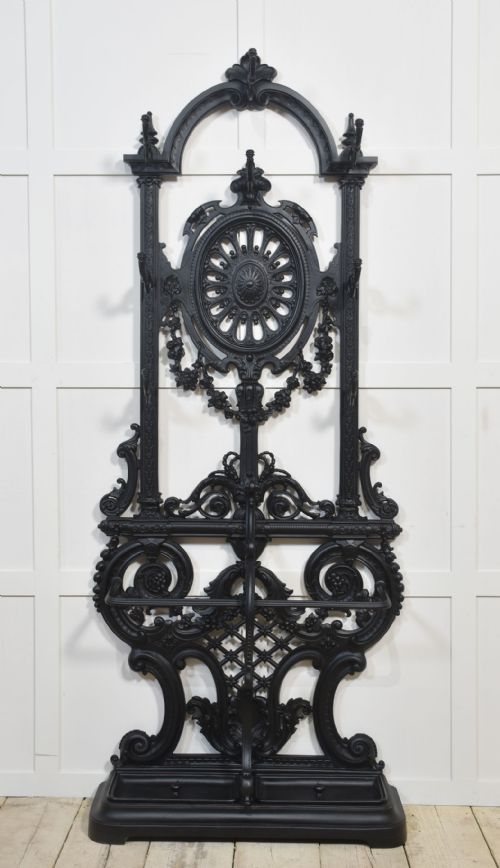


Ornate Cast Iron Umbrella Stand
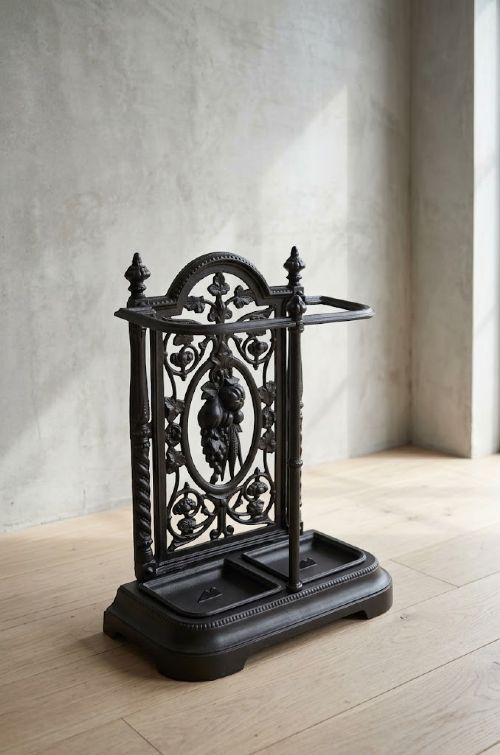
An ornate cast iron umbrella stand brings heavy metal utility and intricate Victorian presence to a hallway, holding wet walking gear with uncompromising structural weight.
Ornate Cast Iron Umbrella Stand
An ornate cast iron umbrella stand provides a sturdy domestic receptacle for wet walking gear, originating primarily from Victorian and Edwardian hallways. Buyers searching for an ornate cast iron umbrella stand will find substantial hall furniture designed to receive dripping sticks and umbrellas without shifting under heavy daily use.
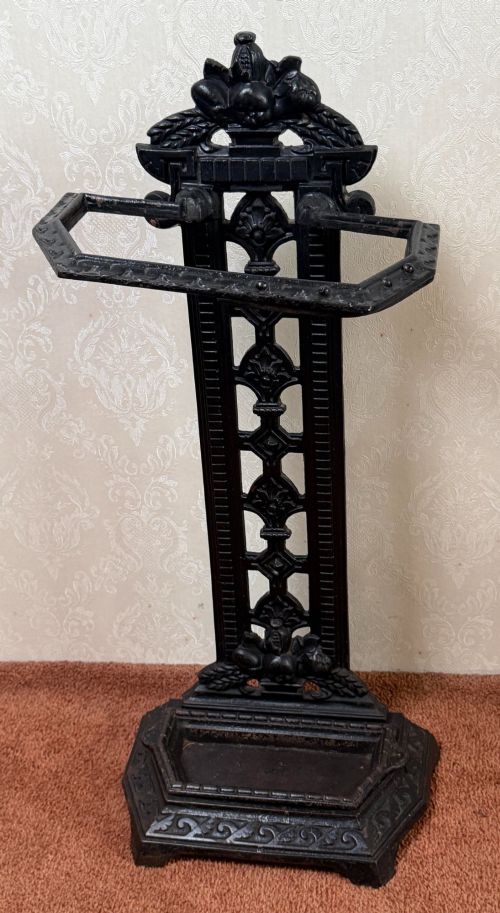
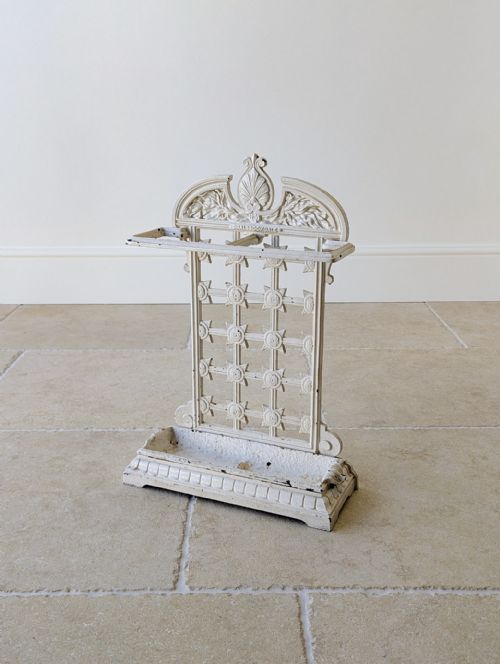
The most common examples on this page are Victorian pieces, often taking the form of dedicated stick stands or combined coat and umbrella stands. These objects combine utilitarian metal casting with decorative styles ranging from Gothic Revival and Rococo to Jacobean taste.
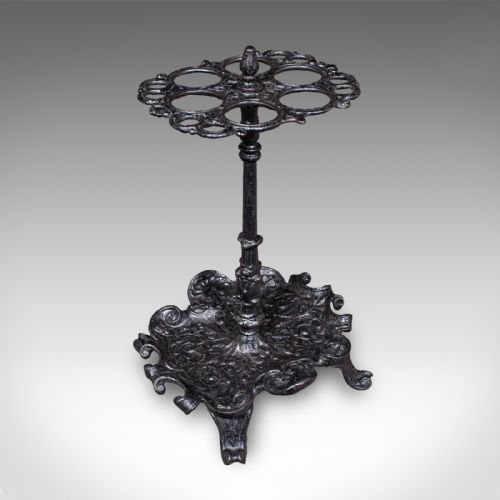
Origins stretch across English and French workshops, utilising robust metal casting techniques to create openwork frames. Forms vary from simple umbrella loops to complex hall stands incorporating glass inserts or painted finishes.
Materials and casting methods
Makers utilised durable cast iron poured into detailed moulds to achieve intricate openwork patterns, foliage, and structural stick loops. This heavy metal medium allowed workshops to produce robust hallway furniture that could withstand constant moisture and heavy daily wear.
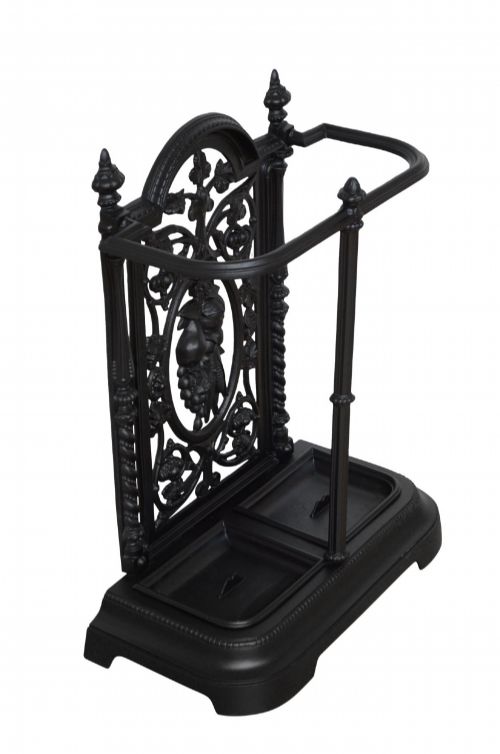
Surface treatment often involved protective black paint or decorative finishes applied over the raw iron foundation. Some multi-functional examples integrated glass components or secondary metal elements to hold drip trays and garments.
Listings feature Victorian, Edwardian, and nineteenth-century periods, utilising cast iron, glass, and paint.
Distinctions in quality
The finest examples display crispness in the cast detail, where openwork patterns, scrollwork, and textured motifs remain sharp and well-defined rather than blurred from worn production moulds. Superior weight and balanced proportions separate ambitious foundry work from simpler utilitarian items.
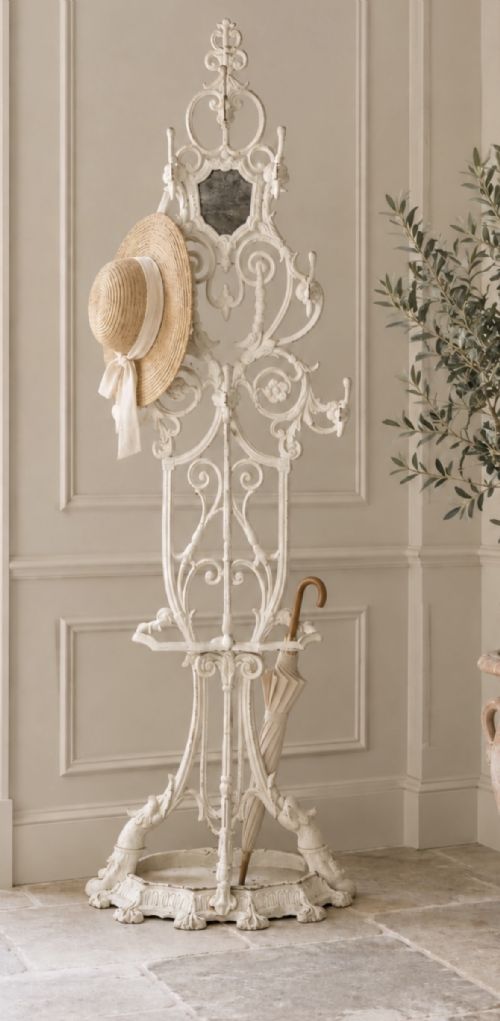
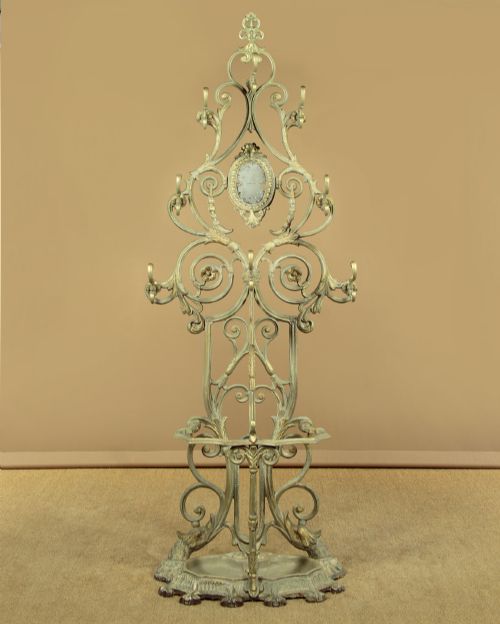
Complexity of form also dictates distinction, moving from basic stick loops to grander hall stands that integrate coat hooks, mirrors, or substantial drip pans. Maker attribution, particularly pieces associated with Coalbrookdale, adds notable pedigree to the casting.
Coalbrookdale
The Ornate Cast Iron Umbrella Stand Glossary
- Cast iron
- A strong, hard alloy of iron and carbon produced by pouring molten metal into a sand mould. It forms the heavy, durable structure of these hall stands.
- Stick loop
- An individual metal ring or aperture designed to keep walking sticks and umbrellas upright. This structural element prevents wet items from leaning against hallway walls.
- Hall stand
- A large piece of entrance furniture combining umbrella storage, coat hooks, and occasionally a mirror or glove box. These multi-functional items dominated Victorian entryways.
- Gothic Revival
- An architectural and decorative style drawing inspiration from medieval design. Pieces in this taste feature pointed arches, trefoils, and heavy structural verticality.
- Drip tray
- A shallow metal or ceramic basin positioned at the base of the stand to catch rainwater. It protects hallway floors from moisture running off wet umbrellas.
Ornate Cast Iron Umbrella Stand: Frequently Asked Questions
What is an ornate cast iron umbrella stand?
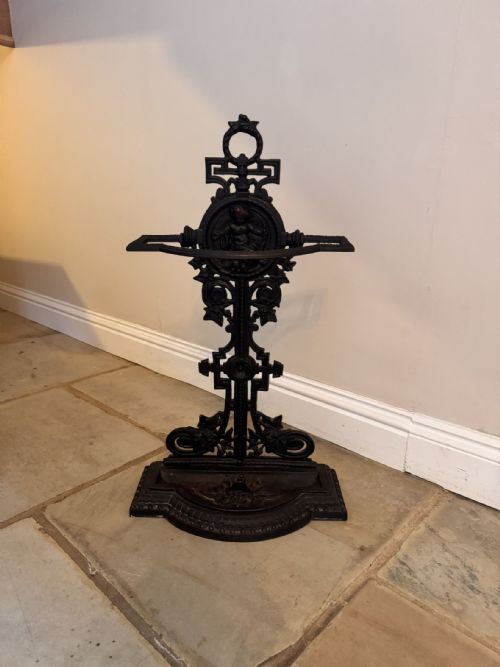
An ornate cast iron umbrella stand is a heavy Victorian or Edwardian hall furnishing designed to hold walking sticks and wet umbrellas. These pieces utilise sturdy metal frames decorated with pierced scrollwork, foliage, or architectural revival motifs.
Foundries produced them in various sizes, ranging from compact standalone stick holders to massive multi-functional hall furniture featuring coat hooks and drip pans. Their primary purpose remains the orderly storage of wet outdoor gear in entrance halls.
How do I care for cast iron?
Caring for cast iron involves keeping the metal dry and free from accumulated moisture that might cause surface oxidation. Regular dusting with a soft cloth preserves the painted or patinated finish without harming the detailed casting.
Avoid using harsh chemical cleaners or abrasive pads that can strip historic paint layers. Ensuring the drip tray is regularly emptied and dried prevents standing water from rusting the base of the stand.
Are these stands French or English?
These umbrella stands originate from both English and French workshops, reflecting the dominant manufacturing styles of the nineteenth century. English examples frequently showcase Victorian Gothic or Jacobean tastes, while continental pieces often display Rococo Revival curves.
Distinguishing between them depends on the casting characteristics, stylistic motifs, and known foundry practices of the period. Both regional traditions prioritised robust construction combined with decorative ironwork.
How do I spot a Coalbrookdale stand?
Coalbrookdale stands display exceptionally crisp casting quality, often featuring naturalistic foliage, ferns, or intricate Gothic tracery. Many pieces bear registration marks, impressed numbers, or stylistic traits associated with the renowned Shropshire foundry.
Later pieces or works produced in the style of the foundry often mimic these distinctive botanical motifs and heavy structural framing. Examining the sharpness of the openwork relief helps identify superior foundry production.