


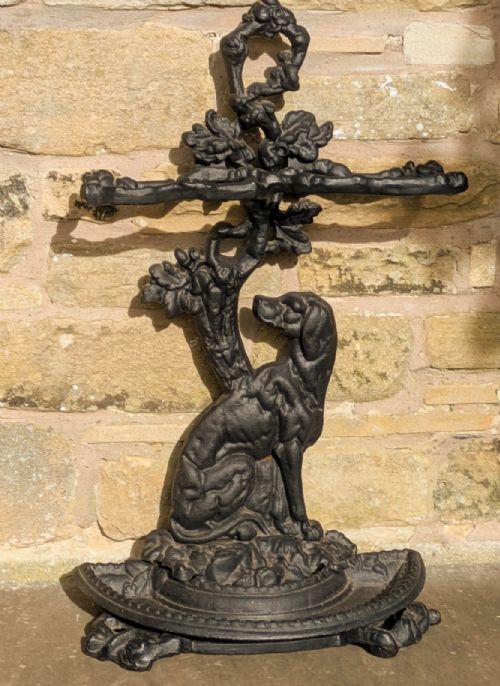
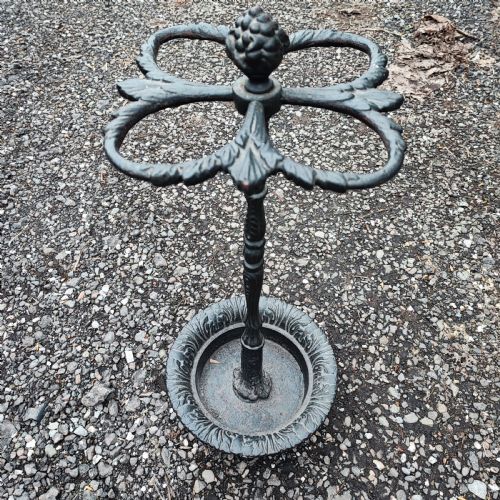


Black Iron Stick Stand
A black iron stick stand holds heavy rain-soaked hallway gear with robust Victorian practicality and industrial character.
Black Iron Stick Stand
A black iron stick stand serves the entrance hall by organising umbrellas, walking canes and coats for daily departure and arrival. These practical hallway furnishings appear most frequently in 19th Century and Victorian incarnations, built to withstand heavy daily use in busy households.
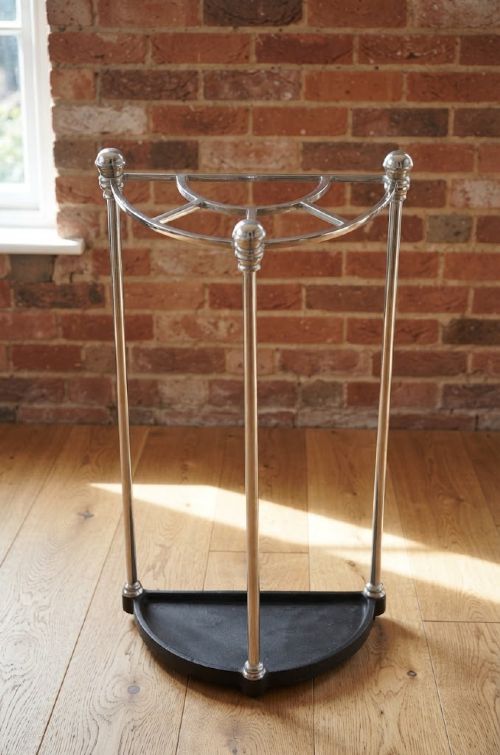
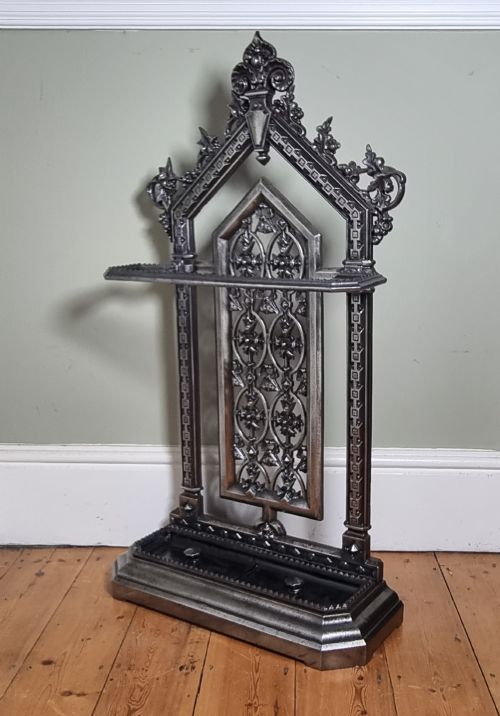
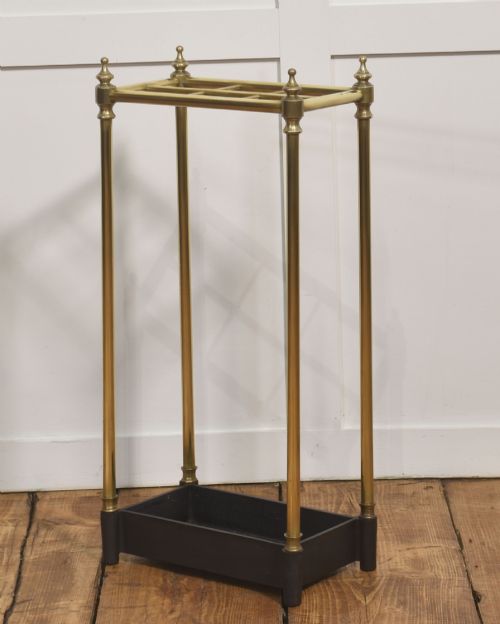
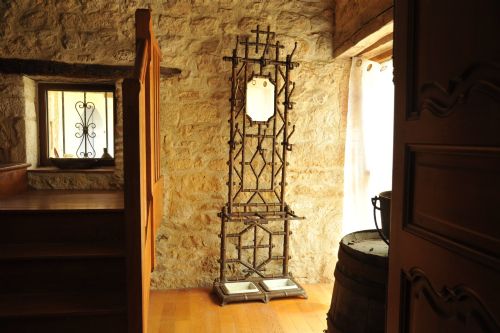
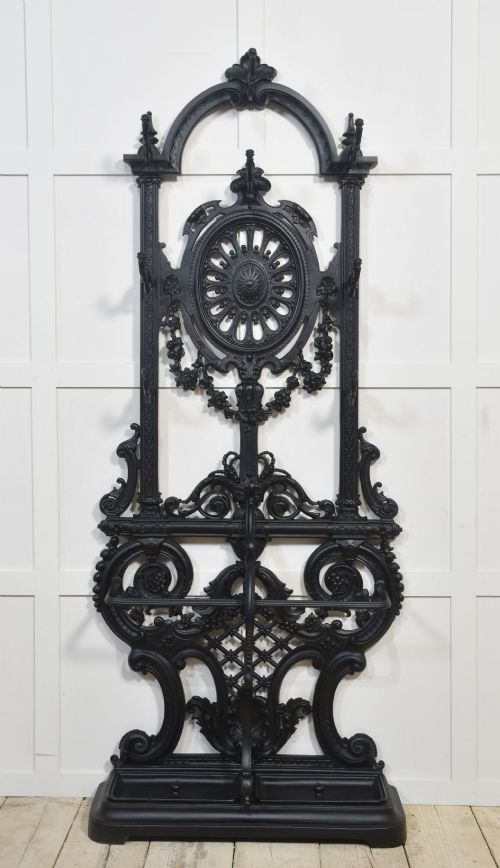
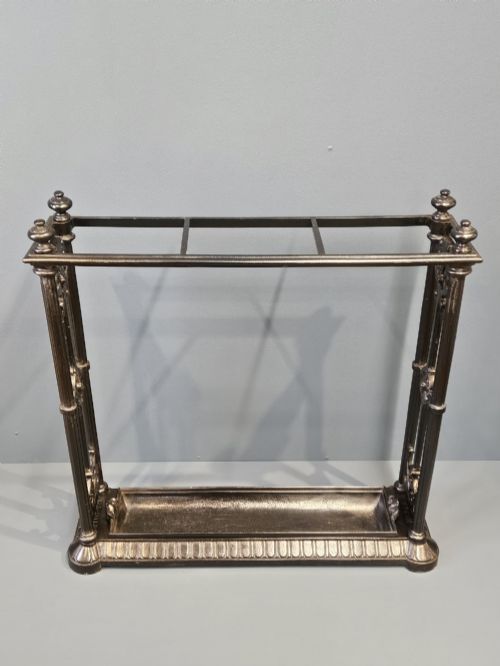
Buyers encounter various structural forms ranging from simple umbrella racks and portico frames to large hall stands incorporating coat hooks and drip pans. The black iron stick stand category includes French faux bamboo designs, geometric Art Deco demi-lune shapes, and intricate Gothic Revival patterns.
Production spanned from the 1860s through the Edwardian era, with many pieces displaying straightforward utilitarian purpose alongside ornamental casting. These hallway pieces remain functional additions to contemporary interiors while carrying the weight of nineteenth-century foundry work.
How they were made
Foundries utilised cast iron and wrought iron as the primary structural materials, often pouring molten metal into detailed moulds to achieve complex openwork patterns and figural motifs. Manufacturers sometimes combined these iron frames with brass elements, nickel plating, or added glass components for drip trays.
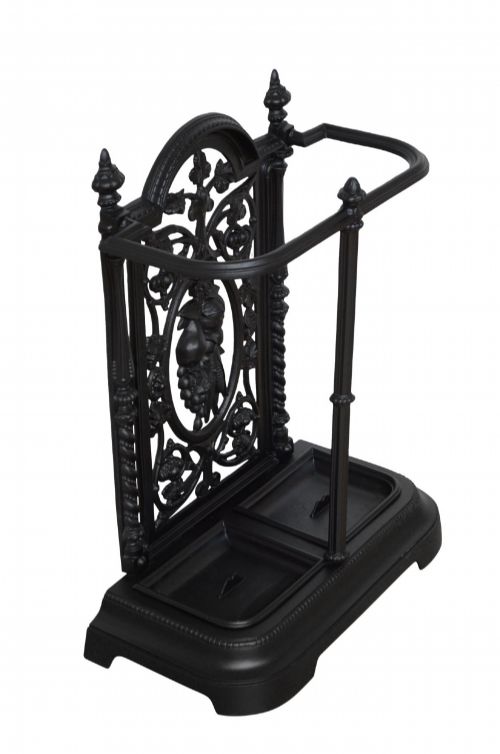
Makers finished the iron surfaces with protective black paint to prevent rust and provide a uniform appearance across decorative halls. Structural components were frequently joined with threaded fixings, whilst integral or removable metal drip pans caught rainwater from wet umbrellas.
Listings demonstrate that 19th Century and Victorian pieces dominate the category, primarily utilising cast iron alongside brass, marble, and nickel plating.
What varies in quality
The clarity of the casting separates standard production items from finer foundry work, as crisp detail in foliage, figures or faux bamboo texturing depends on the precision of the original mould. Heavy gauge metal construction and substantial weight indicate superior structural integrity compared to thinner, lighter castings.
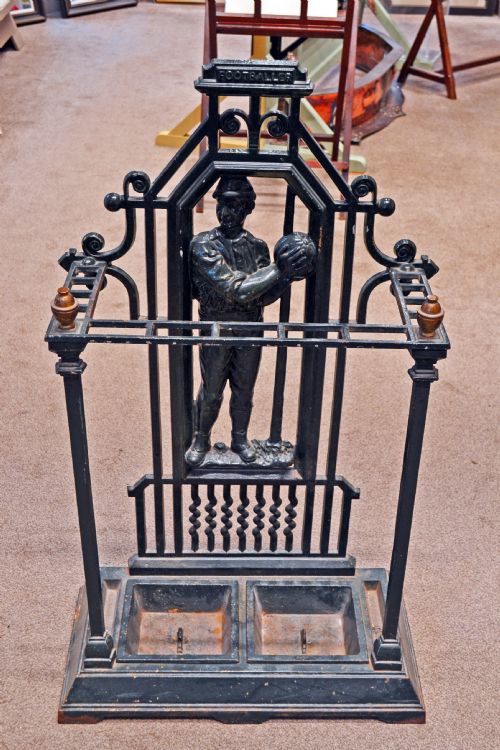
Design ambition dictates distinction within the range, moving from plain functional umbrella loops to elaborate figural compositions depicting dogs, footballers or fairy tale characters. Maker attribution through stamped foundry marks or design registration numbers further elevates a piece above anonymous utilitarian examples.
Coalbrookdale·Falkirk Foundry·Kenrick
The Black Iron Stick Stand Glossary
- Cast iron
- A strong, hard iron-carbon alloy produced by pouring molten metal into a sand mould. This technique allowed Victorian foundries to create intricate openwork patterns and sturdy hallway frames.
- Drip pan
- A removable metal tray positioned at the base of the stand to catch water from wet umbrellas. These pans protected wooden hallway floors from moisture damage.
- Demi-lune
- A half-moon shape characteristic of certain Art Deco umbrella stands designed to sit flush against a hallway wall. This curved footprint maximised floor space in narrow corridors.
- Faux bamboo
- A decorative moulding technique that mimics natural bamboo stalks using cast iron. This style gained popularity during the 19th Century for hallway stands and hat racks.
- Pricket stick
- A type of floor candlestick or candelabrum featuring a central spike to secure a candle. These heavy iron floor pieces share construction methods with umbrella stands.
Black Iron Stick Stand: Frequently Asked Questions
How do I stop rust on an iron stick stand?
Keep the metal dry and apply a light coat of microcrystalline wax or specialist iron oil to protect the painted surface from moisture.
Avoid placing wet umbrellas directly onto unprotected iron for extended periods, and empty the drip tray regularly.
Were these stands only used for umbrellas?
Many examples served multiple functions in Victorian hallways, holding walking sticks, riding crops, and heavy winter coats alongside umbrellas.
Larger hall stands integrated mirror panels, glove boxes, and hat pegs into a single piece of furniture.
How can I tell a Victorian stand from a later one?
Victorian and 19th Century pieces typically feature heavier cast iron construction, sand-cast texture on reverse surfaces, and specific design registration marks.
Later 20th Century versions often utilise tubular metal or simpler manufacturing methods with smoother joints.
Where should I place a heavy iron stand?
Position the stand on solid hallway flooring near the entrance door to balance the substantial weight of iron and wet walking gear.
Ensure the piece sits level so that heavy walking sticks and umbrellas do not destabilise the frame.