




Black Cast Iron Umbrella Stand
A black cast iron umbrella stand brings heavy metal utility and ornate Victorian or Art Deco styling to a hallway.
Black Cast Iron Umbrella Stand
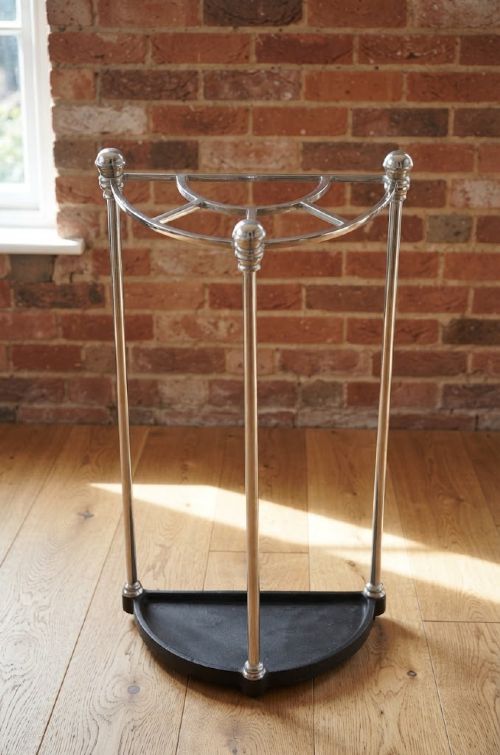
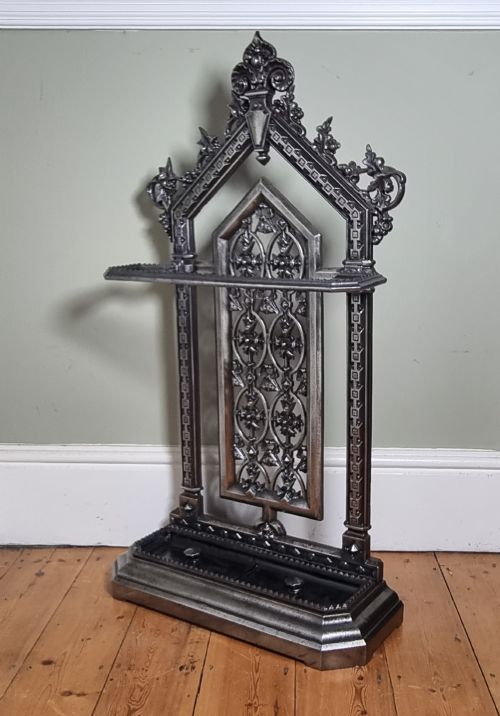
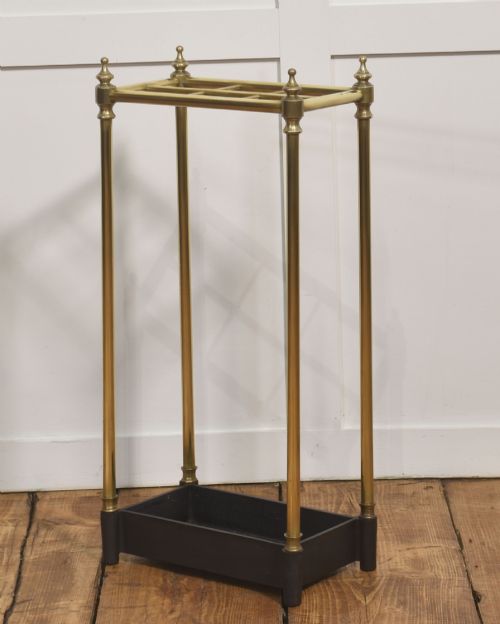
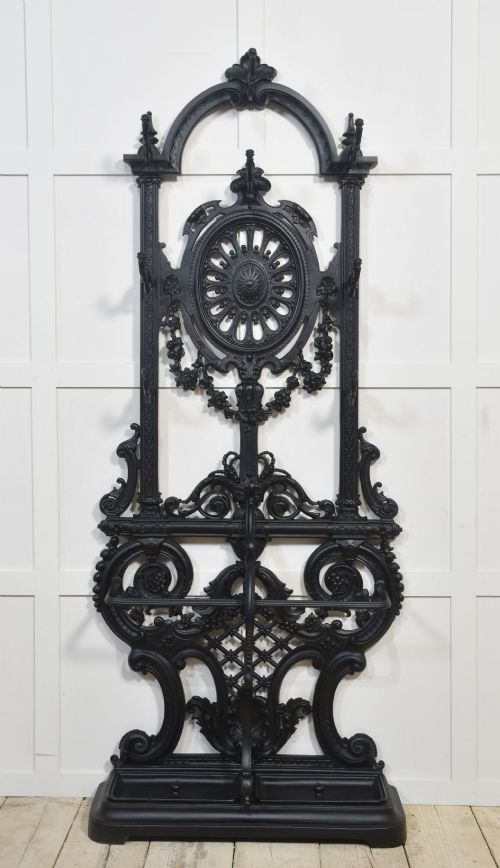
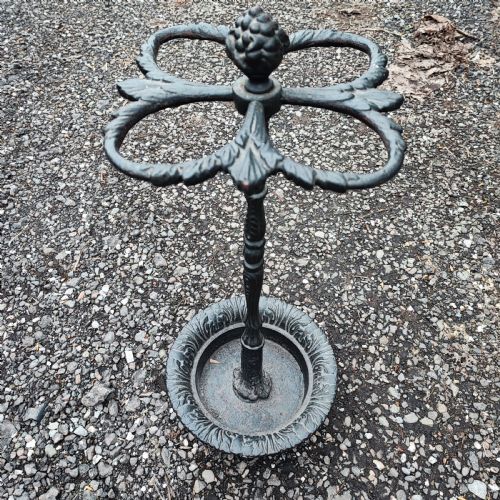
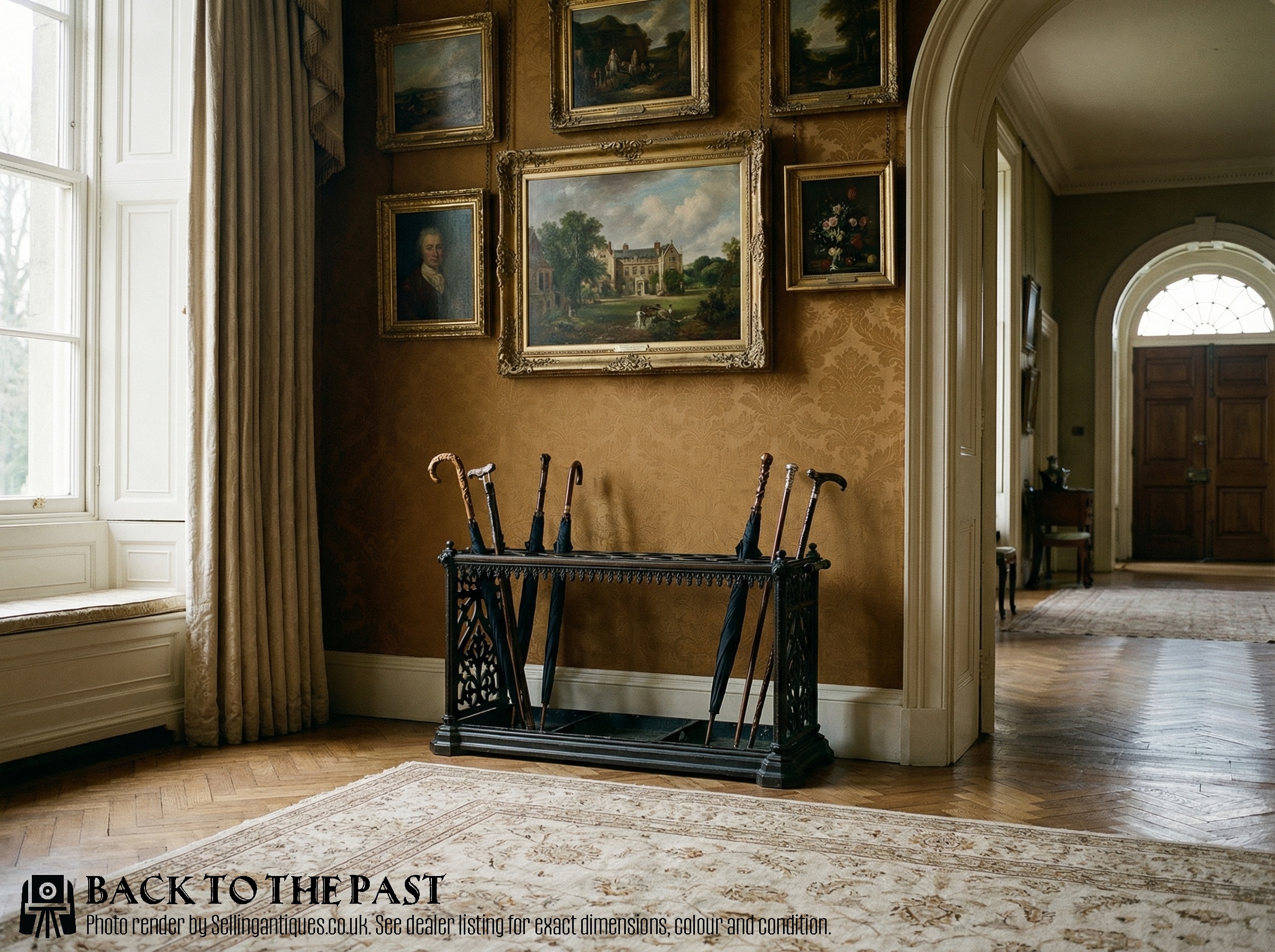
A black cast iron umbrella stand is a sturdy hallway accessory designed to hold wet walking sticks, canes, and umbrellas. The pieces on this page span from the nineteenth century through to the Art Deco period, taking forms such as dedicated stick stands, large hall stands, and demi-lune umbrella racks.
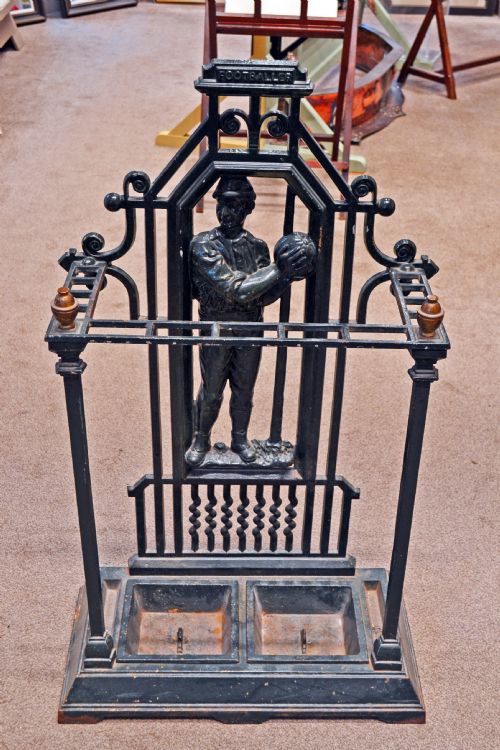
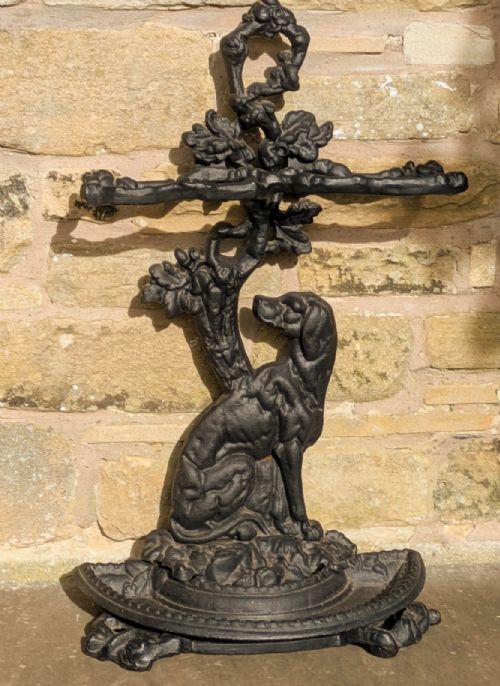
You are most likely to encounter Victorian examples finished in black paint, often featuring openwork scroll design, gothic motifs, or figural subjects like gun dogs and footballers. These heavy items were built to stand firmly in entrance halls without tipping under the weight of wet timber and metal shafts.
How they were made
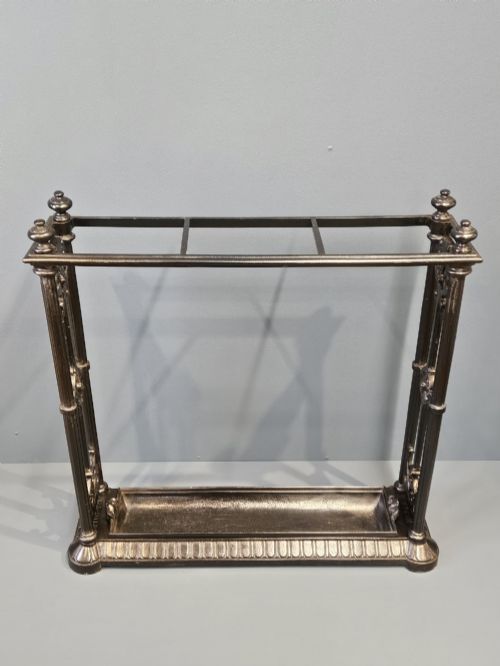
Foundries utilised sand casting to shape molten iron into intricate patterns, ranging from faux bamboo stalks to elaborate architectural porticos. Secondary materials such as brass, nickel plating, tubular metal, glass, and marble appear across the listings to provide drip trays, rails, or decorative contrast.
Pieces frequently carry a black painted finish applied over the raw cast iron to prevent rust and provide a uniform surface. Foundry marks or registration dates were sometimes stamped directly into the metal base during production.
Black Cast Iron Umbrella Stand Retail Price Guide 2026
Typical asking prices for black cast iron umbrella stand among the pieces listed under this phrase on Sellingantiques today, from the lower quarter to the upper quarter. They describe what is for sale here now, not the wider market.
Materials paired with cast iron across these items include brass, marble, glass, and nickel plating.
What varies in quality
Quality separates mass-produced utility items from foundry-marked artistic pieces through the crispness of the casting and the ambition of the design. Sharply defined foliage, clean figural details, and sophisticated styles like the Aesthetic Movement or Art Nouveau separate finer items from plain commercial variants.
The presence of original drip pans, secondary brass elements, and legible foundry stamps elevates an example. Structural integrity relies on the robust nature of the cast iron itself, though the survival of delicate openwork patterns without old repairs dictates the standing of individual pieces.
Coalbrookdale·Kenrick·Falkirk Foundry
The Black Cast Iron Umbrella Stand Glossary
- Cast iron
- An iron-carbon alloy poured into moulds to create rigid, heavy objects with high compressive strength. It formed the primary structural body for the vast majority of these hallway stands.
- Demi-lune
- A half-moon shape used for stands designed to sit flush against a hallway wall. This configuration saves floor space while accommodating multiple umbrellas.
- Hall stand
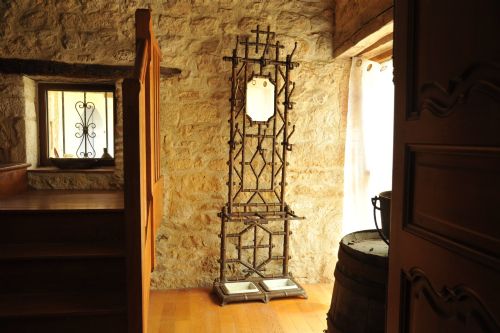
- A larger piece of entrance furniture combining a stick stand with coat hooks, a hat shelf, and occasionally a mirror or marble shelf. These items integrate umbrella storage into a comprehensive hallway unit.
- Faux bamboo
- A decorative moulding technique that mimics natural bamboo segments in cast iron. This style appears on nineteenth-century stands influenced by oriental design trends.
- Stick stand
- A term often used interchangeably with umbrella stand, reflecting the Victorian habit of carrying walking sticks alongside wet weather gear.
Black Cast Iron Umbrella Stand: Frequently Asked Questions
How do I stop rust on a cast iron stand?
Keep the iron clean and dry, wiping away moisture left by wet umbrellas before it settles into the metal pores.
Apply a light coat of paste wax or specialised oil to protect the black painted surface without altering its appearance.
Where should I place an umbrella stand?
Position the stand near the main entrance door so wet umbrellas can be stashed immediately upon entering the house.
Ensure there is a suitable tray at the base to catch water drips and protect your hallway flooring from moisture damage.
How can I tell a Victorian stand from a later piece?
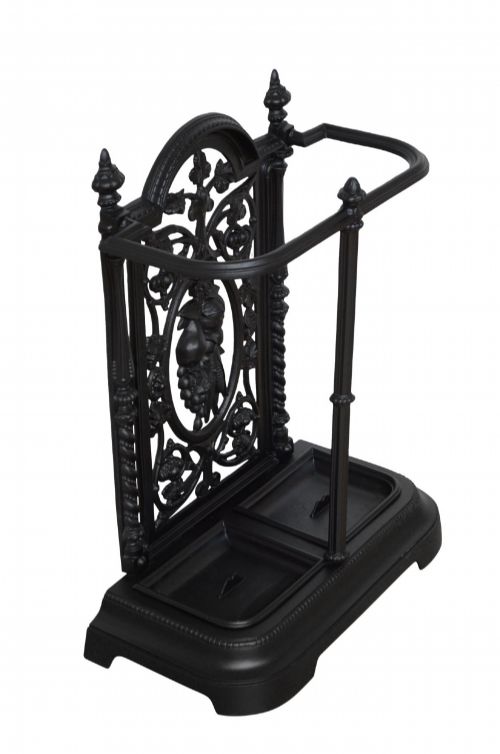
Victorian examples often display heavy gothic revival ornamentation, faux bamboo, or naturalistic plant motifs cast with deep relief. Look for registration numbers or nineteenth-century foundry marks stamped into the iron.
Later twentieth-century pieces shift towards streamlined Art Deco geometries and simpler structural divisions without the ornate Victorian foliage.
Are missing drip trays common?
Many antique stands lose their original metal or ceramic drip trays over decades of daily use and cleaning. Replacements are frequently utilised to make the stands functional again.
Check whether the base configuration relies on an inset tray or an open floor frame when assessing a piece.