



Victorian Cast Iron Hall Stand
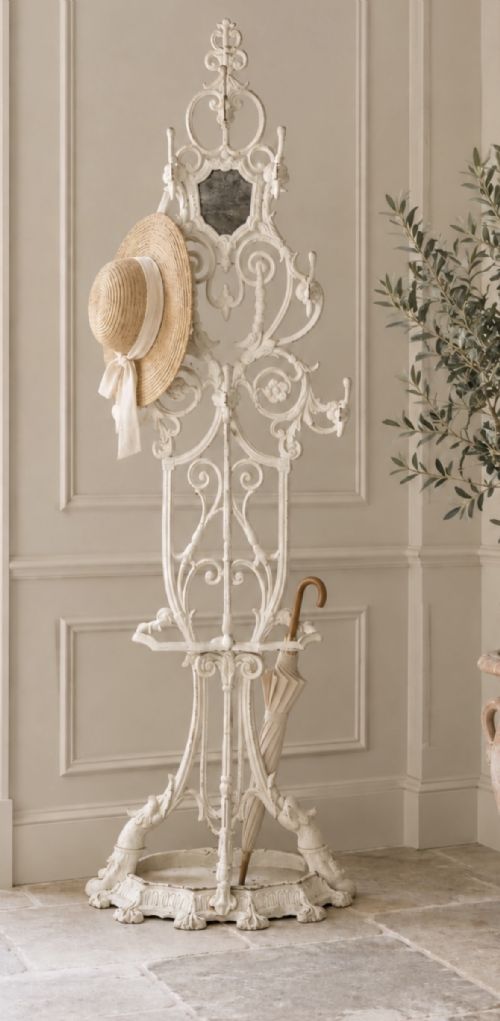
A victorian cast iron hall stand offers robust utility and distinct period character for an entranceway, combining heavy metal framing with practical umbrella and coat storage.
Victorian Cast Iron Hall Stand
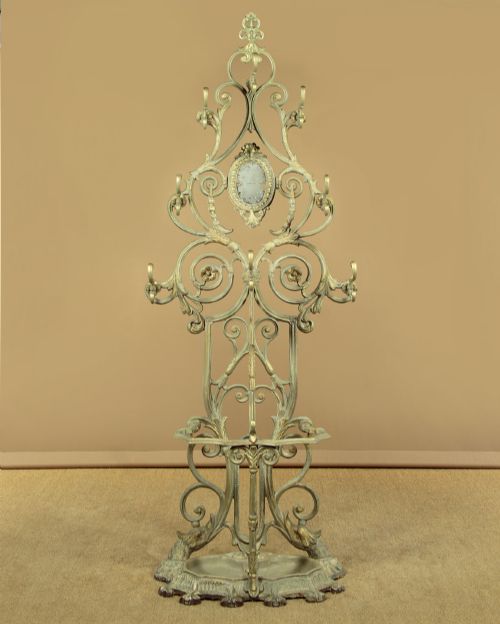
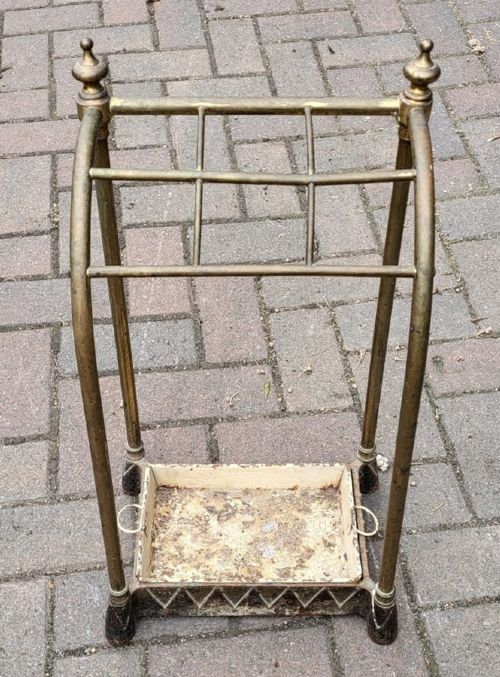
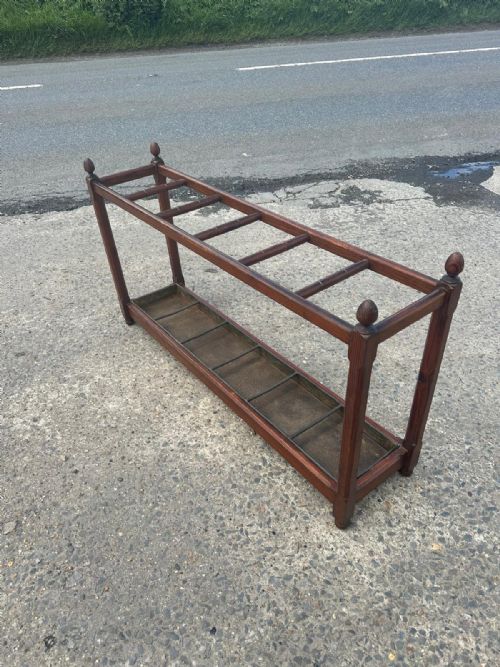
When searching for a victorian cast iron hall stand, a buyer encounters heavy hallway furniture designed to organise walking sticks, umbrellas, and outerwear in domestic entranceways. These pieces frequently appear as dedicated umbrella and stick stands alongside more comprehensive coat and umbrella combinations.
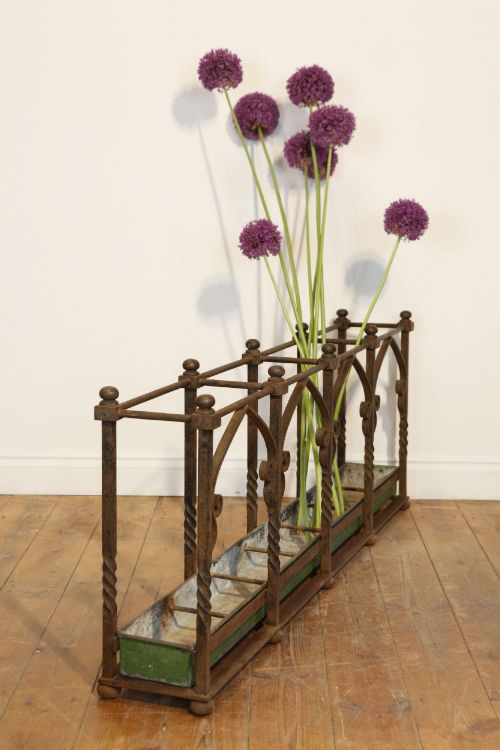
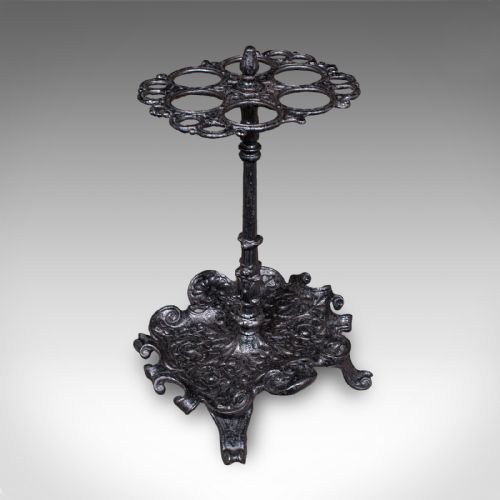
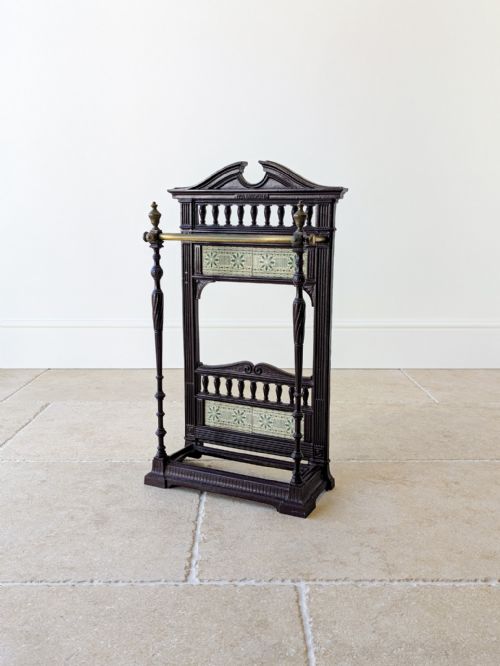
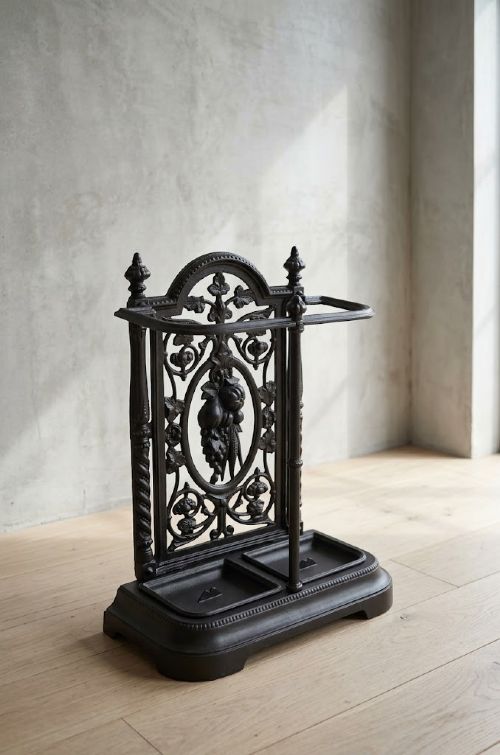
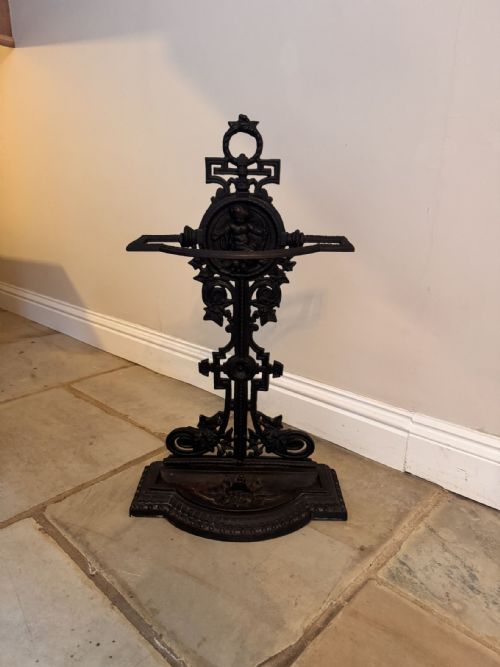
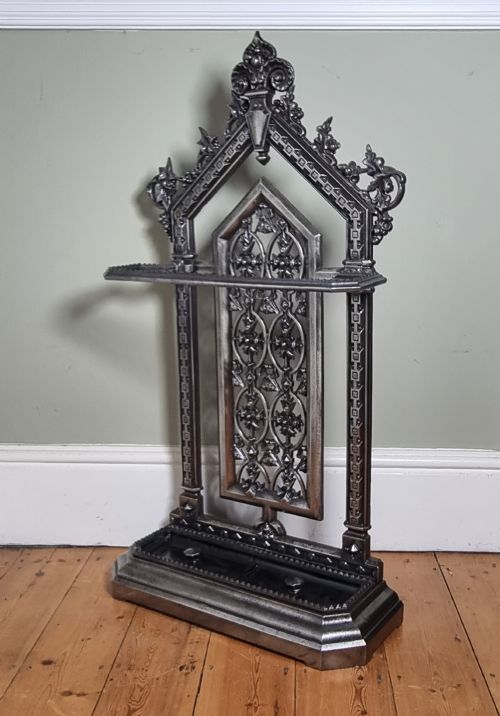
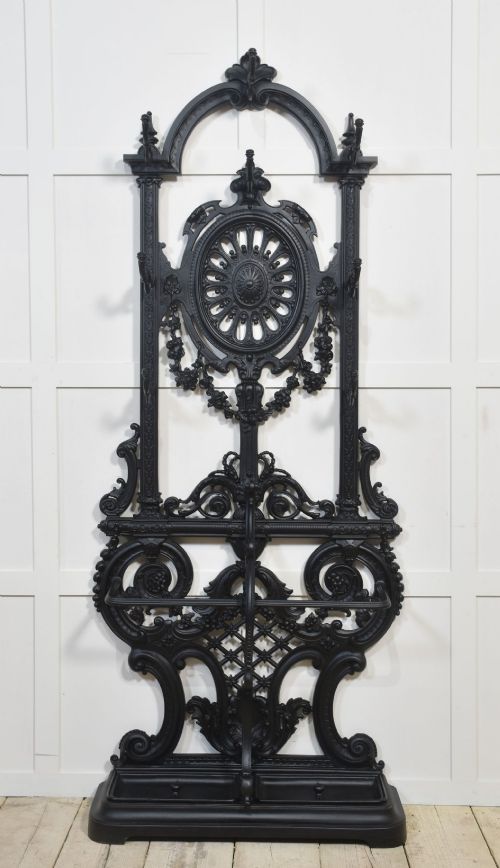
The most common examples on this page date from the nineteenth century, spanning Victorian and Edwardian periods, with styles ranging from plain utility to elaborate Gothic Revival and Aesthetic Movement designs. Makers utilised the malleability of cast metal to produce pierced lattice patterns, figural motifs, and architectural frames suitable for grand hallways and country houses.
Materials and Manufacturing Methods
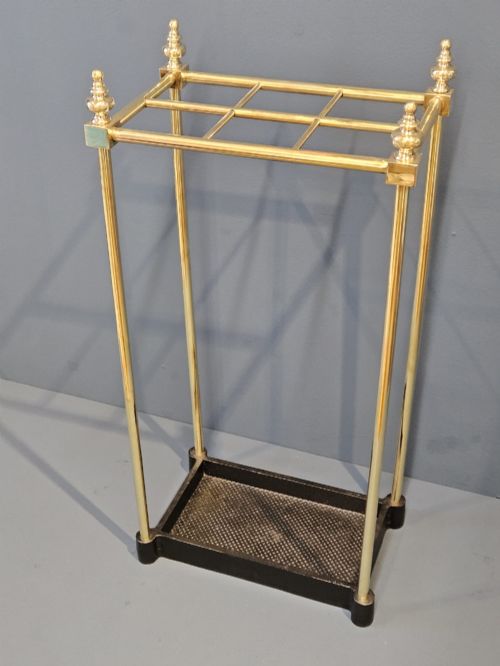
Foundries produced these objects by pouring molten iron into sand moulds, allowing for intricate surface relief and structural durability. Makers often combined this primary metal with brass rails, ceramic drip pans, and marble inserts to balance heavy industrial framing with refined decorative elements.
Surface finishes applied during manufacture typically included black paint or protective enamelling to prevent rust and highlight moulded details. Artisans incorporated secondary materials such as steel, pitch pine, and glass to complete multi-functional hall furniture designed for daily household use.
Victorian Cast Iron Hall Stand Retail Price Guide 2026
Typical asking prices for victorian cast iron hall stand among the pieces listed under this phrase on Sellingantiques today, from the lower quarter to the upper quarter. They describe what is for sale here now, not the wider market.
Some nineteenth-century models incorporate whimsical figural subjects, including gun dogs and literary characters like Jack and the Beanstalk.
Distinctions in Quality
The sophistication of the foundry work separates standard utility items from distinguished foundry pieces, visible in the crispness of moulded foliage, figural subjects, and geometric lattice. Pieces bearing registration marks or manufacturer stamps from established foundries demonstrate superior design ambition and metalcasting precision.
Structural integrity depends on the retention of original components, such as matching drip pans and uncompromised structural joints. The complexity of the assembly, including integrated brass loops and combined coat hooks, dictates the functional capability of the hall furniture.
Coalbrookdale·Thomas Jeckyll·Falkirk Ironworks·Kenrick·Falkirk Foundry·Shoolbred
The Victorian Cast Iron Hall Stand Glossary
- Cast Iron
- An iron-carbon alloy poured into moulds to create rigid, heavy objects with detailed surface ornament. This material formed the structural backbone of nineteenth-century hall furniture.
- Aesthetic Movement
- A late nineteenth-century design style emphasising visual refinement and asymmetrical pattern over historical revivalism. Pieces in this taste often feature stylised natural forms.
- Gothic Revival
- An architectural and decorative style drawing on medieval ecclesiastical motifs, visible in pointed arches and quatrefoil patterns. Ironfounders adapted these elements for domestic umbrella racks.
- Drip Pan
- A removable tray placed beneath stick loops to catch moisture from wet umbrellas. These accessories were commonly formed from metal or ceramic.
- Demi Lune
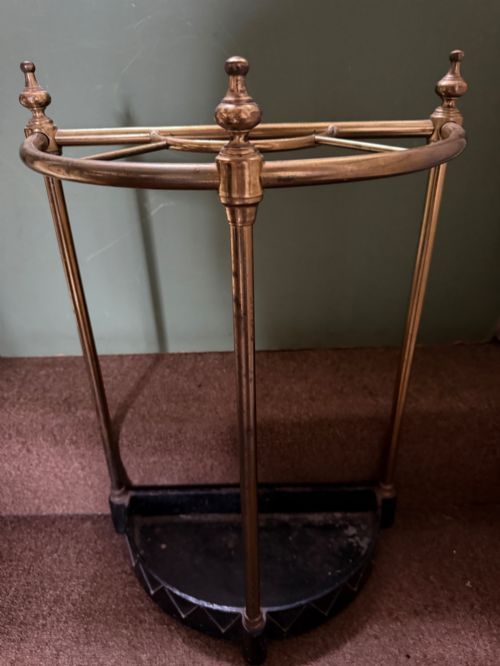
- A half-moon shape utilised for hall stands designed to sit flush against an entryway wall. This profile saved valuable floor space in narrow corridors.
Victorian Cast Iron Hall Stand: Frequently Asked Questions
What is a victorian cast iron hall stand?
A victorian cast iron hall stand is a heavy entryway piece built to hold walking sticks, umbrellas, and coats. It combines industrial metal casting with domestic utility.
Foundries produced these furnishings in various configurations, ranging from compact umbrella racks to tall combination stands featuring coat hooks and side tables.
How do I care for cast iron furniture?
Cast iron requires minimal maintenance, needing only gentle dusting and protection from damp environments to preserve the original painted or enamelled surface. Checking that drip pans remain clean prevents moisture accumulation near the base.
Avoid using harsh chemical cleaners that might strip historic paint finishes or damage integrated brass and ceramic components.
Where were these stands placed?
These stands stood in entrance halls, boot rooms, and reception corridors of Victorian and Edwardian homes. Their primary function was greeting visitors while containing outdoor wear.
Compact demi-lune versions suited narrower hallways, while larger architectural examples anchored grander domestic spaces.
How do I identify the period?
Period identification relies on stylistic clues such as Aesthetic Movement asymmetry, Gothic Revival arches, or registration and foundry marks stamped into the iron. Edwardian examples often display lighter brass framing alongside the iron base.
Design motifs and material combinations reflect the manufacturing trends prevalent during the nineteenth and early twentieth centuries.